
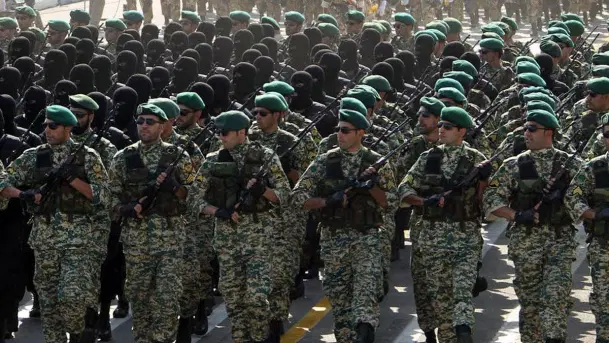
Iran has vowed to continue launching military strikes across the region for as long as it remains under attack, as the conflict with the United States expanded on Thursday with Tehran’s Houthi allies targeting Saudi oil tankers in the Red Sea.
The renewed hostilities have intensified fears of a prolonged regional conflict after a ceasefire that lasted only a few weeks collapsed, reigniting fighting over the strategically important Strait of Hormuz and disrupting global energy markets.
The Houthis, backed by Iran, officially entered the conflict this week, claiming responsibility for missile and drone attacks on two Saudi oil tankers after announcing a blockade of Saudi ports.
At the same time, Jordan and Kuwait reported intercepting projectiles, while Iran’s military and the Islamic Revolutionary Guard Corps claimed responsibility for strikes targeting American military assets in both countries.
Iran’s army spokesperson, Mohammad Akraminia, insisted that the country would not halt its retaliatory campaign while American attacks continued.
“The armed forces’ retaliatory attacks will continue as long as the US attacks on the country’s infrastructure and coastal areas continue,” Akraminia said, according to Iranian state television.
The latest developments came after the United States launched its twelfth consecutive night of airstrikes on Iranian military targets.
According to the United States Central Command, the operation was intended to “further degrade Iran’s ability to threaten civilian mariners and commercial vessels transiting regional waters.”
US President Donald Trump also escalated his rhetoric, warning that Washington would retaliate directly against Iranian infrastructure whenever Tehran attacked vessels in the Strait of Hormuz.
“Any time the Islamic Republic of Iran shoots at a ship in the Strait of Hormuz, whether it be by Missile, Rocket, Drone, or any other device or weapon, the United States will bomb and destroy ONE BRIDGE OR POWER PLANT,” Trump wrote on social media.
Responding to the threat, Iranian Foreign Minister Abbas Araghchi declared that Tehran would adopt a proportional response against American actions.
“Our defence doctrine is clear: eye for an eye,” Araghchi stated.
Iranian state media reported that an American strike killed two people in Shalamcheh, near the country’s border with Iraq.
The reports also claimed that two US missiles struck Bushehr Province, home to Iran’s only civilian nuclear power plant, which has repeatedly featured among Washington’s military targets since the conflict resumed.
Houthis Expand Conflict
The Iran-backed Houthi movement announced that it had launched coordinated missile and drone attacks on two Saudi oil tankers identified as the Encelia and the Layla after declaring what it described as a blockade of Saudi ports.
British maritime security agency UKMTO confirmed that the captain of a commercial tanker reported being struck by an unidentified projectile approximately 70 nautical miles southwest of Al Shuqaiq, triggering a fire onboard.
Saudi authorities later confirmed that the Encelia had been attacked but did not immediately comment on the reported strike involving the second vessel.
Although analysts remain uncertain about the Houthis’ ability to fully enforce a maritime blockade, they warned that any sustained attacks could significantly undermine Saudi Arabia’s efforts to bypass the Strait of Hormuz for crude oil exports.
Such disruptions would further compound existing pressures on global energy markets.
Within the Strait of Hormuz itself, Iran’s Revolutionary Guards claimed they intercepted and stopped three oil tankers attempting to transit the strategic waterway.
“The Strait of Hormuz is under our control… and any ship that is deceived by the US and intends to pass without coordination with the Islamic Republic of Iran will suffer the same fate,” the Revolutionary Guards declared.
The Strait of Hormuz remains one of the world’s most strategically significant maritime corridors, carrying roughly one-fifth of global crude oil exports before the current conflict erupted.
Oil Prices Rise Again
Growing fears over the security of global energy supplies pushed international crude oil prices higher.
Brent crude, the global benchmark, climbed approximately four per cent to about $97.80 per barrel on Thursday, renewing concerns about inflationary pressures and slower economic growth worldwide.
Speaking during a Southeast Asian summit in Manila, United States Secretary of State Marco Rubio accused Iran of dragging the Houthis deeper into the conflict.
“The Houthis largely were smart and stayed out of all this throughout the conflict, but they now apparently have gotten themselves suckered into this, going after Saudi Arabia and their ships,” Rubio said.
“I hope they will de-escalate, because I think the Houthis, frankly, got snookered into this thing by the Iranians.”
Meanwhile, Oman, which has long served as a mediator between Saudi Arabia and the Houthi movement, expressed deep concern over the deteriorating security situation in the Red Sea.
The Omani government said it was actively working to revive negotiations between both parties in an effort to prevent further escalation and restore stability to one of the world’s busiest maritime trade routes.