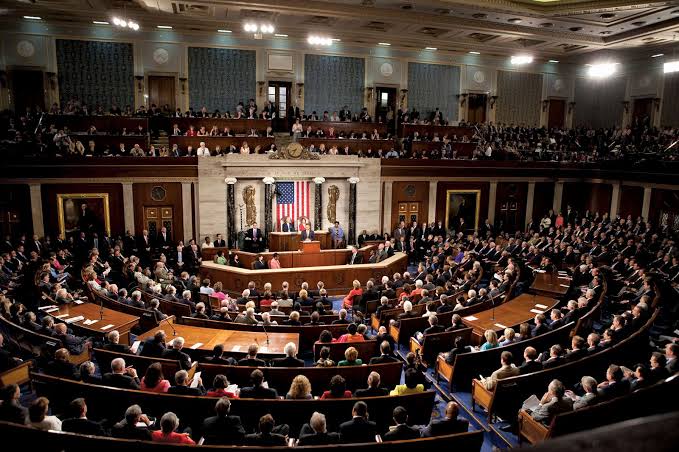
The United States House of Representatives on Wednesday narrowly approved a major defence policy bill authorising a record $1.15 trillion in Pentagon spending, as the country’s military involvement in the ongoing conflict with Iran continues to generate political divisions.
The 2027 National Defense Authorization Act (NDAA), which traditionally enjoys broad bipartisan support, passed the House by a slim margin of 216 votes to 212, reflecting the growing political polarization under President Donald Trump’s administration.
The legislation now moves to the Senate for consideration before it can become law.
If enacted, the bill would provide approximately $250 billion more than the 2026 defence budget and includes a pay increase of between five and seven per cent for members of the US armed forces.
House Speaker Mike Johnson defended the measure, describing it as essential to strengthening America’s military capabilities and supporting service members.
“This legislation provides our brave servicemembers with an overdue pay raise, strengthens our nuclear deterrence and missile defense — including construction of the Golden Dome,” Johnson said.
The proposed “Golden Dome” missile defence project is one of President Trump’s flagship national security initiatives.
The administration says the system is designed to protect the continental United States from missile threats and is modelled after Israel’s well-known Iron Dome air defence network.
Republican members of the House Armed Services Committee also backed the legislation, arguing that increased defence spending has become necessary due to the continued military campaign against Iran.
In a statement, committee Republicans said the funding would help replenish America’s “depleted stockpiles” after the US expended significant quantities of missiles and other munitions during operations linked to the Iran conflict.
Democrats, however, strongly criticised the bill, with many arguing that it authorises excessive military spending while supporting an unpopular war.
Representative Jerry Nadler opposed the legislation, accusing the Trump administration of pursuing reckless defence policies.
“I could not vote to give Trump and his Defense chief Pete Hegseth $1.15 TRILLION for their out-of-control military spending and irresponsible actions,” Nadler said.
“The NDAA is a costly, bad bill that funds an illegal war and undermines our democracy,” he added.
The legislation also became more controversial after House Republicans attached the proposed SAVE America Act to the defence bill through a procedural manoeuvre.
The SAVE America Act seeks to introduce new nationwide voting restrictions, a move that immediately drew objections from Democratic lawmakers and could complicate the bill’s prospects in the Senate.
Another contentious provision relates to expanded military cooperation between the United States and Israel.
The proposal has attracted increased scrutiny in recent weeks as lawmakers continue to debate Washington’s role in Middle East security and the broader implications of its alliance with Israel amid the conflict involving Iran.
Despite the controversy, Republican leaders insist the defence package is necessary to maintain American military readiness, modernise defence infrastructure and respond to evolving global security threats.
The Senate is expected to begin deliberations on the bill in the coming weeks.