The United States launched fresh military strikes against Iran on Friday, intensifying hostilities between both countries as Tehran accused Washington of targeting civilian infrastructure and warned of retaliatory attacks on strategic facilities across the Middle East.
The latest exchange marks the sixth consecutive day of fighting between the two rivals, with tensions once again centering on the Strait of Hormuz, one of the world’s most critical oil shipping routes.
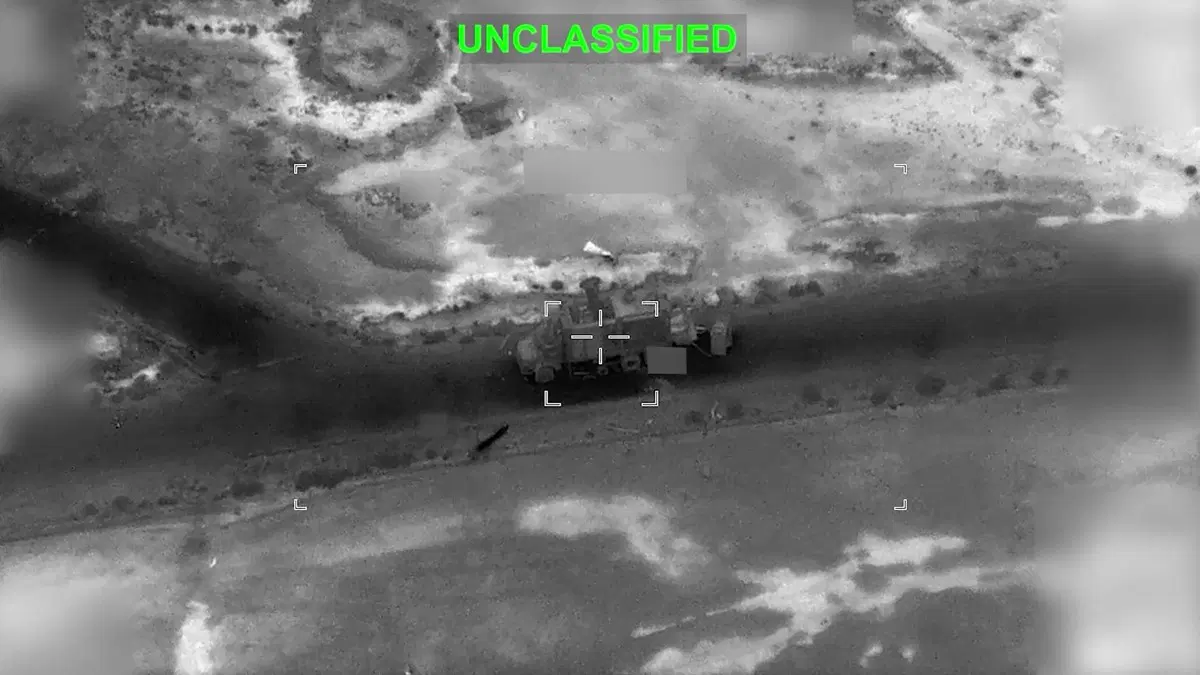
The US military said its forces carried out attacks on “dozens of Iranian military targets,” describing the operation as a response to recent assaults on commercial shipping in the Gulf.
The strikes represent Washington’s latest military action after a preliminary agreement reached with Tehran collapsed, plunging both countries back into open confrontation.
Iran, however, alleged that American forces struck civilian locations, including infrastructure near populated areas.
Earlier on Friday, Iranian authorities reported attacks on an airport, a railway station and two bridges, incidents they said resulted in the deaths of seven people.
“I officially declare that if the Americans strike the infrastructure of the Islamic Republic, then all infrastructure across the region will become legitimate targets for Iran,” Iranian state television quoted a senior armed forces spokesperson as saying late Thursday.
The renewed conflict comes only a month after both sides signed a preliminary agreement intended to de-escalate hostilities that began in late February following large-scale US-Israeli military strikes on Iran.
Despite the agreement, tensions resurfaced after Iran asserted greater control over the Strait of Hormuz, although the waterway had remained open to international shipping before the latest escalation.
Tehran had previously warned that any American attack on its infrastructure would trigger retaliation against strategic installations belonging to US allies across the region.
The White House maintained that President Donald Trump remained open to diplomatic engagement despite the renewed military confrontation.
Following the reported US attacks, Iran launched retaliatory strikes against countries hosting American military assets.
Authorities in Qatar and Kuwait confirmed missile attacks on Friday, while AFP correspondents in Doha reported hearing multiple explosions.
Iranian state media also claimed that the country targeted American helicopters and aircraft stationed at a military base in Bahrain.
According to Iranian officials, the attacks were carried out “in response to the enemy’s hostile action in targeting urban infrastructure and innocent people.”
The Bahraini government subsequently urged residents to remain indoors after activating emergency warning sirens.
The latest developments followed an announcement by Iran’s Revolutionary Guards on Thursday that ballistic missiles had been fired at a US military base in Jordan.
The Guards described the operation as retaliation for what they claimed was an American strike near a children’s cancer hospital close to Ahvaz in southwestern Iran.
Iranian authorities said the medical facility had been evacuated before the attack.
Foreign Ministry spokesman Esmaeil Baqaei condemned the reported US operation, describing it as “barbaric.”
Residents of Ahvaz also reported intense explosions.
Hani, a 34-year-old teacher living in the city, described the bombardment as overwhelming.
“My hands are shaking. There were at least 11, 12 explosions. My ears are exploding,” he said.
A senior Iranian military spokesman reiterated that Tehran would continue to defend its interests in the Strait of Hormuz and called on the United States to withdraw its forces from the region.
“We will never back down over the Strait of Hormuz,” the spokesman said.
The Strait of Hormuz serves as a vital maritime corridor through which a significant percentage of the world’s crude oil exports pass.
Although the waterway briefly reopened after the US-Iran agreement reached in June, Iranian authorities last week announced that shipping through the passage would again be restricted until what they described as American aggression ended.
The United States has also reinstated its naval blockade of Iranian ports.
On Thursday, the US military disclosed that its personnel boarded a vessel in the Gulf of Oman to “ensure full compliance,” adding that three ships had already been redirected since the blockade resumed.
Pakistan, which helped facilitate the preliminary agreement between Washington and Tehran, appealed for restraint.
Foreign Office spokesman Tahir Andrabi said Islamabad would continue encouraging all parties to end hostilities and return to technical-level negotiations.
However, Iran’s lead negotiator, Mohammad Bagher Ghalibaf, questioned the value of the agreement.
“A deal only has meaning when its clauses are valid and being implemented,” he said.
White House Press Secretary Karoline Leavitt insisted President Trump remained willing to pursue diplomacy while warning Iran that attacks on international shipping would attract consequences.
“They have expressed they still want to make a deal to the president. We’re talking to them, but again, the president is not going to allow them to fire on ships in the strait without paying a consequence for that,” she said.
Trump had earlier warned that Iran’s power stations and bridges could become military targets unless Tehran returned to negotiations.
Speaking to Fox News, he said: “Next week it gets really bad for them.”
Responding to those threats, a spokesman for Iran’s military headquarters warned that if the United States carried out further attacks, “all infrastructure in the region” would be “crushed.”
Iranian government spokesperson Fatemeh Mohajerani said the renewed US military operations since last week had resulted in at least 30 deaths inside the country.