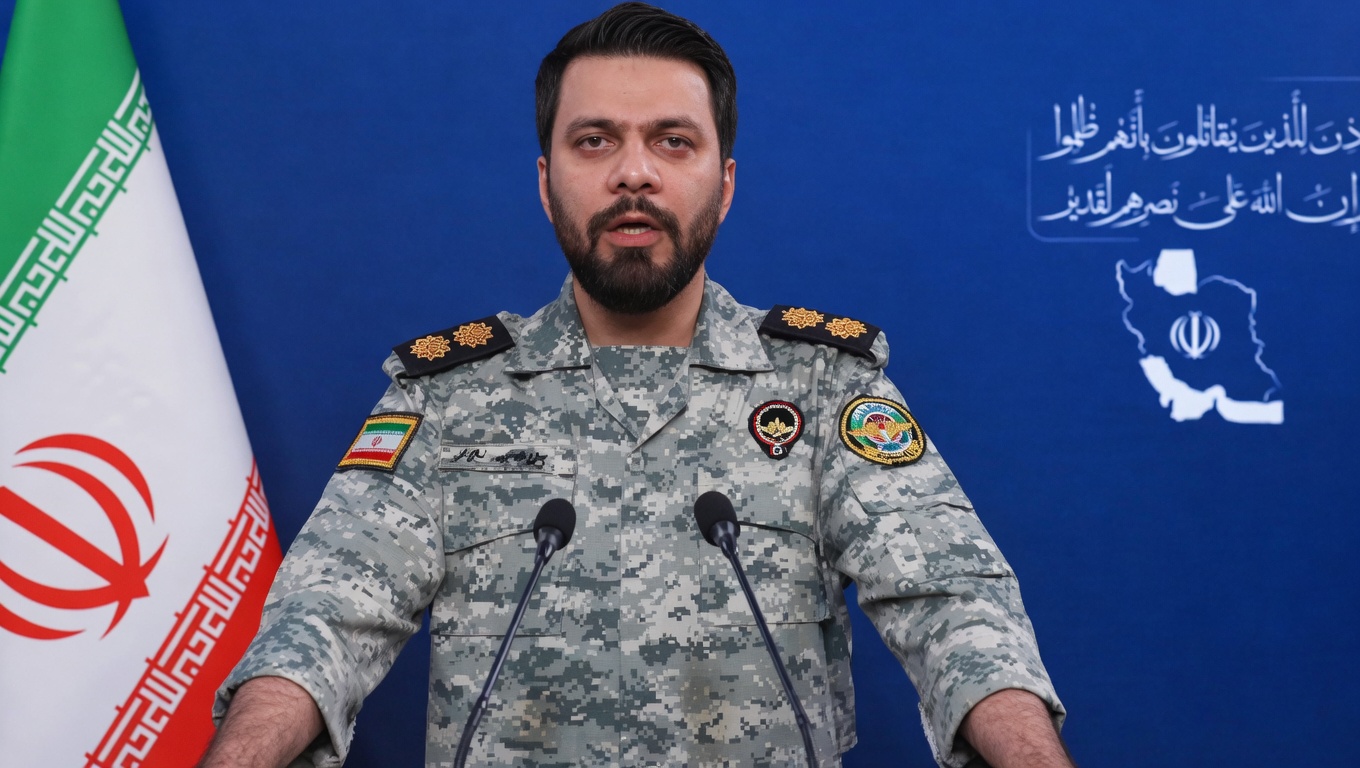
Iran’s military on Friday claimed that it launched “warning missiles” toward two United States Navy destroyers operating in the Gulf of Oman, alleging that the action compelled the vessels to withdraw from the area.
According to Iran’s state-run news agency IRNA, the military said the two destroyers departed the Gulf of Oman after Iranian forces fired warning missiles in response to what it described as provocative activities by the United States.
In a statement carried by the agency, Iranian authorities accused the US Navy of engaging in actions it characterised as “maritime misconduct and harassment, as well as the hijacking of commercial vessels and oil tankers by the terrorist naval forces of the United States.”
However, the claim was swiftly rejected by the United States military.
The US Central Command dismissed the report, insisting that no such confrontation occurred between American naval forces and Iran.
“Iranian forces did NOT attack or fire at US Navy warships. Doing so would be a gross violation of the ceasefire.”
The command further stated that American naval assets remain active in the region and continue to operate without restriction in international waters while enforcing measures linked to the US counterblockade on Iranian ports.
The conflicting accounts emerge amid a fragile ceasefire that was announced on April 8, bringing a significant reduction in hostilities involving Iran, the United States and Israel after the conflict that erupted on February 28 when allied forces launched operations targeting Iran.
Despite the ceasefire, diplomatic efforts aimed at achieving a broader resolution to the conflict have yet to produce a breakthrough, with both direct and mediated negotiations failing to secure a lasting agreement.
US Secretary of State Marco Rubio said earlier this week that Washington had effectively concluded its military campaign against Iran.
Speaking on Wednesday, Rubio stated that the United States was “no longer conducting sustained strikes” against Iran and noted that Operation Epic Fury, the codename for the American military campaign, had ended.
He further claimed that US operations had severely weakened Iran’s military capabilities, saying Washington had destroyed what remained of the country’s air force and had also “wiping out their entire conventional navy”.
Since the outbreak of the conflict, Iran has maintained a naval blockade around the Strait of Hormuz, a strategically important maritime route linking the Gulf to the Indian Ocean.
In response, the United States established its own counterblockade targeting Iranian ports.
The Strait of Hormuz remains one of the world’s most vital energy corridors, with approximately one-fifth of global oil shipments traditionally passing through the waterway during peacetime, making any military or political tensions in the region a matter of international concern.