Social Policy Manager of the United Nations Children’s Fund, UNICEF, in Lagos State, Mr Muhammad Okorie has called for the concerted efforts of all stakeholders to promote effective breastfeeding practice in Nigeria.
Okorie, who made the call yesterday in Lagos, said promoting effective breastfeeding practice requires a strong support system and the collective efforts of stakeholders including government, influencers, family members, employers, media and the general public.
Okorie said government could make policies that would cultivate a breastfeeding culture that encourages women to breastfeed their children exclusively for the first six months of life and then up to two years and beyond.
He emphasised the need for regulation on advertisements on alternative formula/substitutes, as it discourages some women from embracing breastfeeding practice.
He explained that government has a role to protect women from going for substitutes/alternatives to breastfeeding by ensuring the provision of a conducive and flexible working option for women, particularly those in the private sector.
“Creating a conducive working environment that encourages breastfeeding has become imperative in the face of multiple challenges faced by working class mothers, as they strive to practice exclusive breastfeeding.
“The six months maternity leave given to working mothers in some states and at the federal level should be applicable in all states of the federation including the private sector.
“This is because the window period gives ample opportunity for mothers to breastfed and take good care of the baby.
“For every safe delivery where the mother is alive, healthy and lactating well, there is no reason whatsoever to go for formula/substitutes to breast milk,” Okorie said.
For the family members, the expert said strong family support is key to effective breastfeeding practice, emphasising the family’s central role in providing consistent and effective support for mothers to effectively breastfeed.
According to him, the family is often the first point of contact and must ensure that support, communication, respect, love and understanding are always provided for mothers.
Okorie said families must create a peaceful and loving environment to help reduce and overcome the stigma, misinformation, cultural barriers and challenges associated with breastfeeding.
He described the family as society’s foundation, stressing that love, support and care are vital in promoting effective breastfeeding practice in Nigeria.
“To improve breastfeeding practice, families must adopt practices rooted in love, compassion and understanding, fostering a positive environment for breastfeeding mothers.
“Unfortunately, many new parents face challenges in initiating and continuing breastfeeding due to various factors ranging from limited guidance and wrong perceptions to societal stigma and lack of support.
“To bridge the gap, there is the need to create a conducive environment and support —at home, in healthcare and at workplaces —that support and empower women to effectively breastfeed.
“So, the father, mother and entire family members have a role to play in ensuring successful breastfeeding because for a mother to take care of a child and equally take care of the family is a difficult phenomenon,” he said.
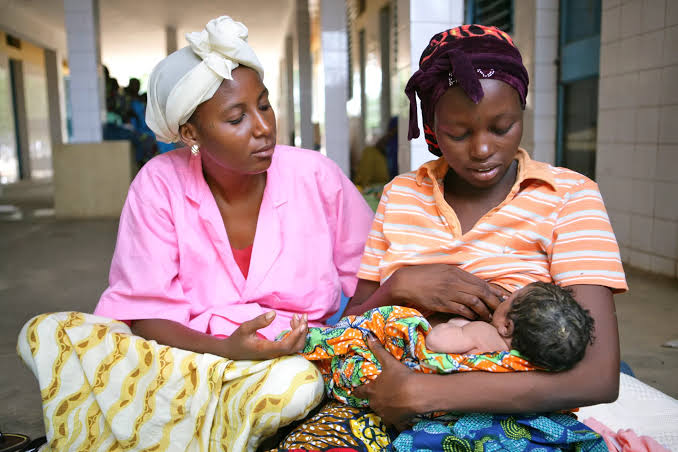
Okorie underscored the benefits of breastfeeding, urging mothers to ensure that they breastfeed their babies as long as they could and wished to do.
He urged them to ensure that they adopt the 1: 6: 24 ratio approach, which implies introducing breast milk to the baby one hour after birth, exclusively breastfeeding the baby for six months, and then introduce complementary foods alongside with breastfeeding for 24 months.
According to him, the benefits of breastfeeding cannot be overemphasised, as it not only strengthens physical and spiritual bonds between the mother and child, but is crucial for improving infant nutrition and preventing malnutrition.
The expert also highlighted the role of the media toward promoting breastfeeding practice, saying it behooves on the media to continually disseminate correct information about breastfeeding.
According to him, through the media, the cultural beliefs, barriers, stigma and misconceptions surrounding breastfeeding can be surmounted.