By Dickson Pat
Stakeholders at the just-concluded 19th Africa International Housing Show (AIHS) have called for urgent digitisation of African land registries and renewed commitment to affordable housing delivery.
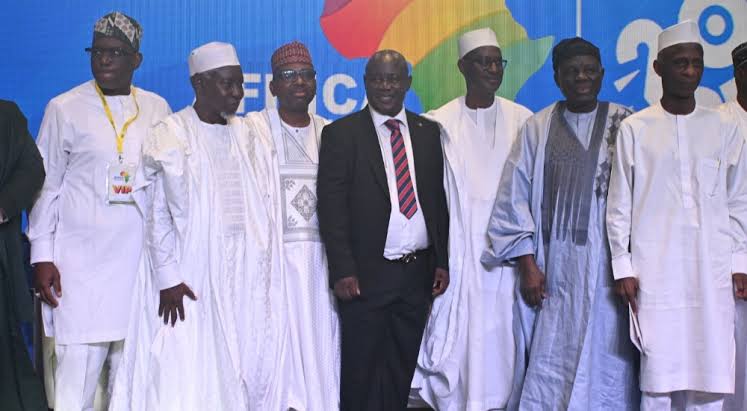
The six-day event, held from July 27 to August 1 at the Transcorp Hilton Hotel, Abuja, brought together ministers, governors, policymakers, multilateral agencies, industry leaders, and civil society from across the continent and beyond.
With the theme “Re-Imagining Housing Through Innovation, Collaboration and Policy”, the conference featured nine keynote presentations and several high-level panel sessions on issues such as sustainable building methods, industrialised construction, innovative financing models, gender-responsive policies, and digital land administration.
A communique issued at the end of the event, and a copy made available to Aljazirah Nigeria in Abuja on Tuesday, quoted the Minister of Housing and Urban Development, Architect Ahmed Musa Dangiwa, reaffirming that housing is a “fundamental pillar of national stability, productivity, and dignity” and highlighted ongoing interventions under the Renewed Hope Housing Programme.
The Keynote speaker, Mr. Fola Adeola, Chairman of FATE Foundation, who was represented by Mohammed Garuba, Co-founder of CardinalStone Partners Limited, urged stakeholders to view real estate as a viable investment opportunity rather than solely a social obligation.
“At the close of deliberations, stakeholders resolved that African governments must urgently digitise land registries and adopt GIS-based systems to improve transparency, accelerate property transactions, and unlock dormant land value.
“They further emphasised the need to recapitalise and strengthen the regulatory framework of mortgage institutions such as Nigeria’s Federal Mortgage Bank and Primary Mortgage Banks in Africa to expand access to affordable housing finance.
“Participants also called for the integration of local manufacturers into the housing value chain through targeted SME financing, tax incentives, and technical training programmes that can reduce construction costs and stimulate job creation.
“Gender inclusion emerged as a critical priority, with a call for policymakers to embed women’s participation in housing design, finance, policy formulation, and leadership roles at every level of the sector.
“Meanwhile, delegates also urged the establishment of robust institutional frameworks for slum upgrading, anchored on infrastructure-first urban renewal, secure land tenure, and community participation”, the communique read in part.
The conference highlighted the importance of expanding Nigeria’s MOFI Real Estate Investment Fund (MREIF) as a beacon of innovation and a replicable model for financing housing across Africa.
“Another major recommendation was the immediate rollout of the National Housing Data Centre to centralise data on land, housing, and finance for evidence-based policy-making.
“In a bid to ensure that AIHS resolutions lead to tangible outcomes, the gathering endorsed the establishment of a permanent Africa International Housing Show Secretariat to transition the event from an annual conference to a year-round continental movement.
“Delegates committed to sustained advocacy, follow-up with policymakers, and close collaboration among stakeholders to ensure that recommendations are implemented and progress is measurable”, it added.
The Convener of AIHS, Barrister Festus Adebayo, described the 2025 edition as “a turning point for African housing,” stressing that “this event is no longer just a conference; it is a movement for tangible change in how Africa plans, finances, and delivers housing.”