By Joel Ajayi
The Raw Materials Research and Development Council (RMRDC) has unveiled its second-generation database knowns as Nigerian Statistical Information System for Products, Raw Materials and Products platform aimed at strengthening investor, researcher, and stakeholder confidence while accelerating data-driven industrial growth in Nigeria.
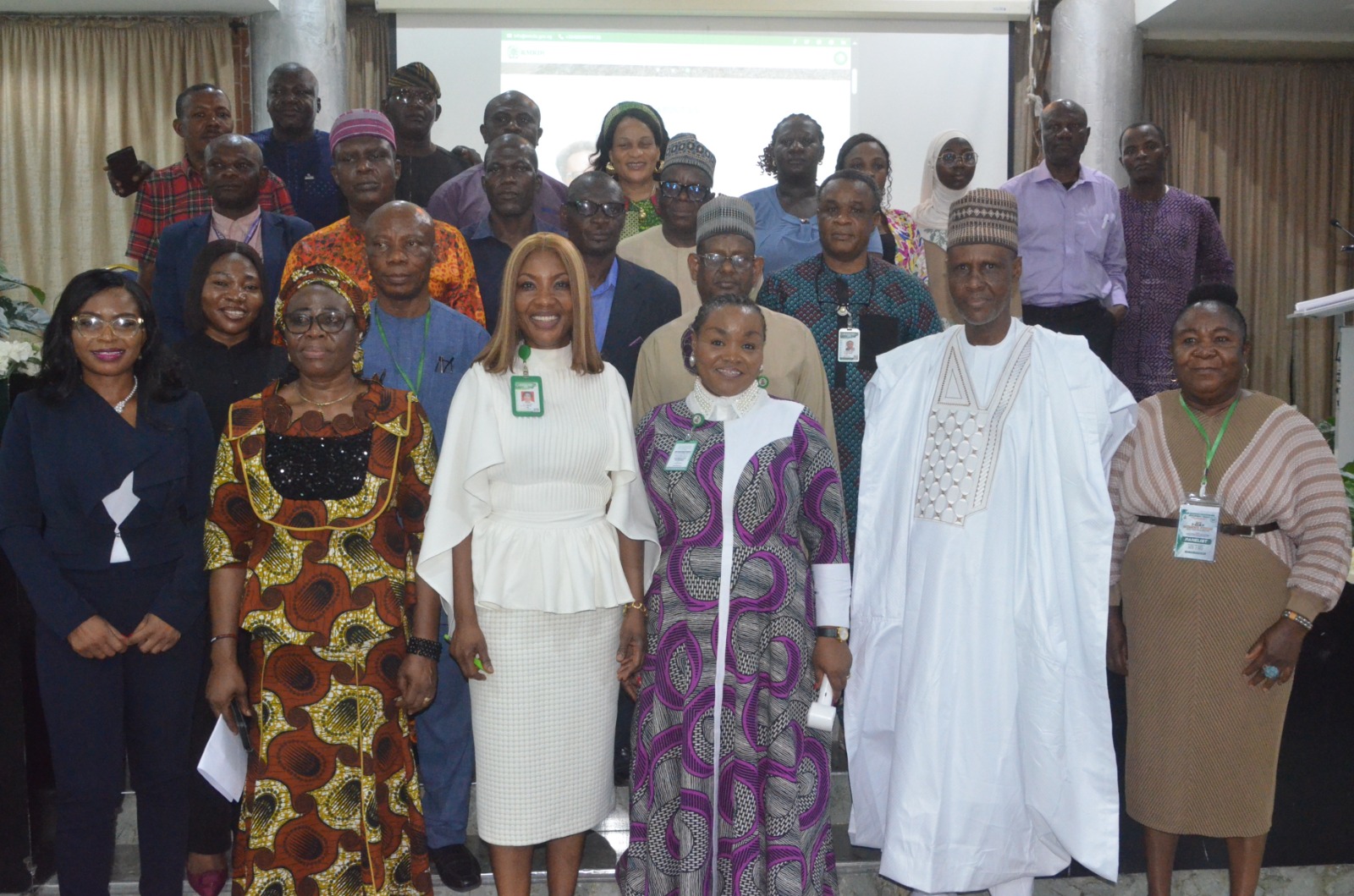
Speaking during the unveiling and media engagement tagged “Media Hug” in Abuja on Tuesday an initiative designed to showcase the Council’s achievements and deepen collaboration with the media, the Director-General and Chief Executive Officer of RMRDC, Nnanyelugo Martin Ike-Muonso, described the platform as a transformative tool for policy formulation, investment planning, and manufacturing development.
According to him, the new system marks a major improvement on the Council’s earlier Raw Materials Management Information System, which was built on a nationwide survey capturing data on raw material availability, investment climate, and security conditions across the country.
He noted, however, that the earlier platform had key limitations, including weak alignment with the global Harmonized System (HS) code classification, limited real-time functionality, and poor integration with other databases.
“These challenges informed the development of the second-generation platform—the Nigerian Statistical Information System for Raw Materials and Products,” he said.
Ike-Muonso emphasized that the new database is among the most robust data platforms in Nigeria, offering critical insights for manufacturers, investors, policymakers, and researchers. He added that the system is designed for continuous improvement and seamless integration with national data systems.
He disclosed that major institutions such as the Central Bank of Nigeria (CBN), Nigeria Customs Service, and the National Bureau of Statistics are already being integrated into the platform, alongside about 16 internal databases within the Council.
The DG further explained that the system will provide real-time data on raw materials, including quality, availability, characteristics, and geographic distribution across Nigeria—enhancing pricing decisions, enabling comparative analysis, and improving overall decision-making.
While noting that the platform is still being refined, he said it has been made available for early use to enable stakeholders—government, private sector players, and researchers—to begin leveraging its benefits.
He also revealed that international researchers have expressed interest in using the platform for Nigeria-focused studies, underscoring its growing global relevance.
“At the core of our mission is service to Nigerians. This is a national asset that must be accessible to all for development purposes,” he added.
Ike-Muonso used the occasion to highlight RMRDC’s broader contributions to Nigeria’s economic diversification and industrialisation agenda, aligned with the Federal Government’s Renewed Hope Agenda.
He said upon assuming office, the Council undertook a strategic review of its mandate, reaffirming its commitment to value addition, import substitution, backward integration, and improving the competitiveness of Nigerian products and services.
As part of this drive, he disclosed that RMRDC has engaged the National Assembly to amend its enabling Act to enforce local processing of raw materials before export—resulting in the proposed 30 per cent value-addition bill.
Describing the bill as a game changer, he said it has the potential to transform Nigeria’s manufacturing sector into a major engine of economic growth by: Generating higher national revenue.
Creating sustainable employment opportunities
Strengthening domestic industries
Reducing the export of raw materials in crude form Building globally competitive value chains.
He stressed that adding value to raw materials locally is critical for Nigeria’s transition from a resource-based to a value-driven economy.
Strengthening Research, Capacity, and Innovation.
The DG further revealed that RMRDC has signed Memoranda of Understanding with selected tertiary institutions to promote academic programmes in raw materials research and development.
One such collaboration is with Nasarawa State University, Keffi, where the Materials Development Institute (MDI) has been established to run postgraduate programmes in relevant fields.
To boost innovation, the Council has also launched the Raw Materials Innovation Challenge (RMIC), aimed at building staff capacity and identifying transformative ideas within the sector.
The initiative focuses on key areas such as process improvement, raw materials innovation, advisory services, blockchain and e-commerce solutions, value chain management, and sustainability within circular economy frameworks.
In addition, he announced that RMRDC, in partnership with the African Development Bank (AfDB) and other stakeholders, has developed a 10-year (2025–2034) Raw Materials Roadmap.
The roadmap aims to: Develop a robust national raw materials database
Achieve 30–95% value addition by 2034
Strengthen partnerships across sectors
Deliver 10,000 certifications and standards
He added that the Council is now ISO 9001:2015 certified, reflecting its commitment to global best practices.
In his remarks, the data consultant, Cyril Chinwenyi, described the platform as a centralized hub for raw materials data.
He explained that leveraging global HS codes enables users to access detailed information on production levels, locations, investment opportunities, and capacity utilisation for any raw material.
“This platform eliminates the burden of moving from one agency to another by providing a unified, one-stop system for informed decision-making,” he said.
Chinwenyi added that the system comprises over 15 modules covering pricing, production capacity, and fabricators’ data nationwide, and is designed to be scalable and integrative through APIs.
“Data is the foundation of effective decision-making. With accurate and accessible data, stakeholders can act with confidence,” he noted.
In her opening remarks, the Director of Corporate Affairs, Nani-Anum, Chinyere described the media as a critical partner in national development.
She said the Media Hug engagement was designed to strengthen collaboration, improve communication, and enhance public awareness of the Council’s programmes.
“Today’s gathering is both timely and strategic. It provides a platform to engage, inform, and reinforce our mutually beneficial relationship with the media,” she said.
She noted that under the current leadership, RMRDC has witnessed renewed momentum, including the launch of the Raw Materials 360 Online Newspaper and RMRDC Online Radio to improve information dissemination.
“We believe a well-informed media is essential for shaping public perception and mobilising support for national development. This engagement is also an opportunity to listen to your feedback and improve our communication strategies,” she added.
The unveiling of the second-generation database marks a significant milestone in Nigeria’s journey toward a more integrated, data-driven industrial ecosystem—positioning the country for smarter investments, stronger policies, and sustainable economic growth.