Mariam Sanni
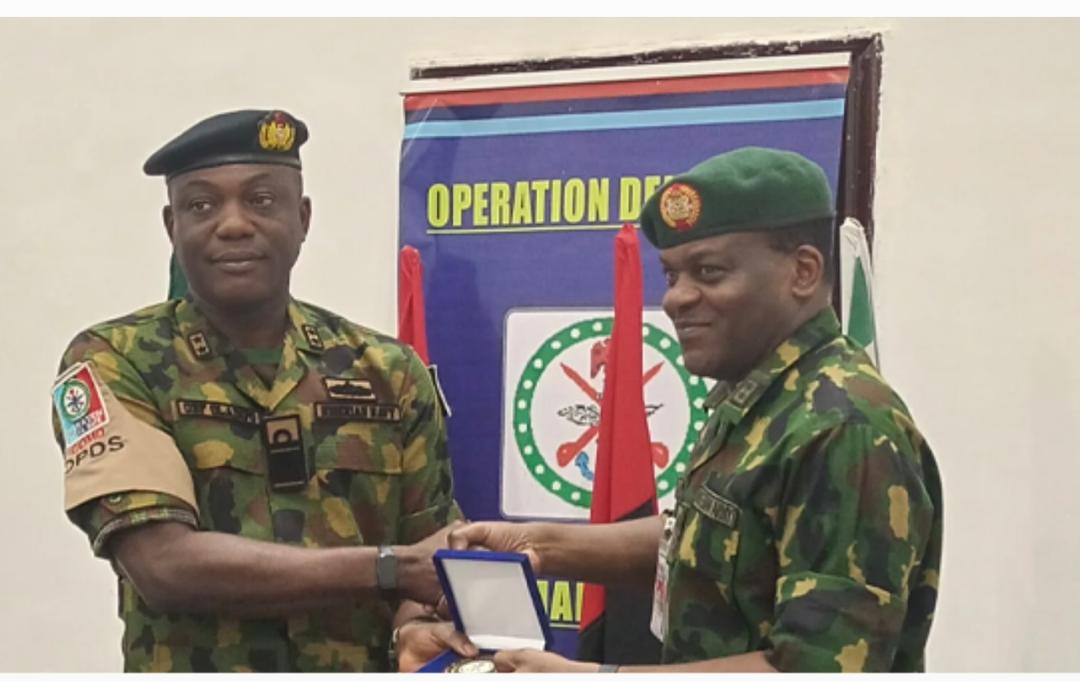
The Commander, Joint Task Force South-South, Operation Delta Safe (OPDS), Rear Adm. Olugbenga Oladipo, has announced that there is no more oil theft in pipeline in the Niger Delta Region, noting that troops has significantly degrading crude oil theft, illegal refining and sea robbery across the Niger Delta Region.
He made this known in Yenagoa during a Defence Media Operations tour and briefing on the activities of the task force.
He discussed the peaceful December in the south east and south south regions, attributing it to the efforts of the Chief of Defense Staff and various agencies.
According to him, the operations led by the Chief of Defense Staff ensured no incidents occurred, including no sit-at-home orders or Monday lockdowns.
He mentioned the ongoing efforts in January, with local communities sometimes being uncooperative, leading to challenges in gathering information.
The JTF commander clarified that they are working for the government and not any specific company or community, focusing on protecting oil and gas infrastructure, lives, and property.
These days the protection on the pipeline, there’s not much theft on the pipeline. The theft now is on the wellheads. The wellheads are 1000s, if you bring out all the armed forces in Nigeria, we can’t protect all the wellheads in Nigeria. Some places we walk in there, the swamp gets our chest, can’t really move. We are seeing the wellhead. You can’t get there. That’s how difficult the terrain is to get to this wellheads.
“You can’t imagine it. If we fly the helicopter go on to see places we can’t get to. We’ll have to take out the sites, because our mandate will destroy any legal refinery,” he said.
He explained the challenges in protecting pipelines, noting that theft has shifted from pipelines to wellheads, which are numerous and difficult to secure.
He lamented that the terrain makes it challenging to access wellheads, and even helicopters cannot reach some locations.
Rear admiral Oladipo mentiond the dynamic nature of theft methods, including the use of chemicals to mix with crude oil to produce AGO, which is an incomplete process and harmful to equipment.
He assured that the efforts to combat these new methods are ongoing, but the speaker acknowledges the difficulties and the need for public cooperation.
He noted the challenges of protecting the extensive pipeline network in the south south region and the need for advanced technology and human capacity.m
He highlighted the need for better infrastructure to support the human capacity, noting that the office failed accreditation initially due to insufficient infrastructure.
He emphasized the training of personnel abroad and the need for advanced technology to support operations.
The brief was presented by Asst. Commander A. Bako of the Nigeria Security and Civil Defence Corps (NSCDC), on his behalf.
He said sustained intelligence-driven kinetic and non-kinetic operations had strengthened the security of Nigeria’s critical oil and gas infrastructure, leading to improved crude oil production and export stability.
According to him, OPDS troops demobilised no fewer than 925 illegal refining sites, dismantled 1,228 storage facilities and destroyed 297 large wooden boats used for crude oil theft within the period under review.
“About 6.8 million litres of crude oil, 2.29 million litres of illegally refined diesel (AGO), as well as large quantities of PMS and DPK, were recovered or denied criminal elements,” he said.
“These mediation efforts involving companies such as Chevron, Aiteo, Oando and others helped prevent production shutdowns and fostered a more conducive operating environment,” he said.
In his remarks, the Director of Defence Media Operations, Maj.-Gen. Michael Onoja, underscored the central role of information operations in modern warfare, describing effective communication as a critical line of operation in ongoing military campaigns across the country.
Onoja said the Chief of Defence Staff (CDS), Gen. Christopher Musa, had placed renewed emphasis on strategic communication to strengthen public trust, improve perception management and enhance cooperation between the Armed Forces and the civil populace.
He reaffirmed the Armed Forces of Nigeria’s commitment to transparency and accountability, stressing that oversight and responsible media engagement would strengthen professionalism and operational effectiveness.
Sent from my iPhone