
France has announced the detention of a vessel believed to be linked to Russia’s so-called “shadow fleet,” marking another move by European authorities to enforce sanctions imposed on Moscow over the war in Ukraine.
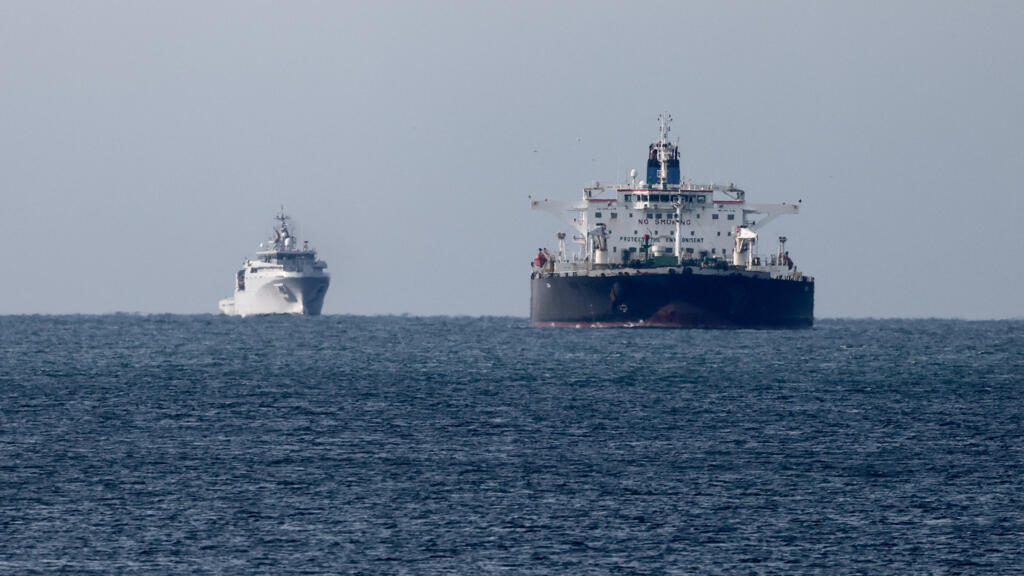
French President Emmanuel Macron disclosed on Monday that the tanker, identified as the Tagor, was intercepted in the Atlantic Ocean on Sunday with support from the United Kingdom and other international partners. The operation forms part of broader efforts by Western nations to crack down on ships suspected of helping Russia evade sanctions.
French maritime authorities revealed that the vessel had departed from Murmansk, a major Russian port city in the country’s northwest, before being stopped by French forces. Officials stated that the tanker was operating under a Cameroonian flag that authorities believe was being used improperly.
According to a spokesperson for the maritime prefecture, the ship was heading toward Limbe, a coastal city in western Cameroon, when it was intercepted.
“It is unacceptable for ships to circumvent international sanctions, violate the law of the sea, and fund the war that Russia has been waging against Ukraine for more than 4 years,” Macron said.
“These ships, which fail to comply with the most basic rules of maritime navigation, also pose a threat to the environment and to everyone’s safety,” he added, posting a video that he said was of the seizure, which showed commandos rappelling from a helicopter onto a ship.
Authorities said the operation took place more than 400 nautical miles, equivalent to approximately 740 kilometres, west of Brittany in international waters.
The Atlantic maritime prefecture explained that a review of the vessel’s documentation raised concerns regarding the legitimacy of the flag it was displaying.
“The examination of the documents confirmed doubts about the irregularity of the flag being flown,” the prefecture said.
Following the interception, the ship, carrying a crew of 23, was placed under escort by the French Navy and directed toward a designated anchorage area where additional inspections and verification procedures will be conducted.
The maritime prefecture stated that the vessel “was being escorted by the French navy to an anchorage point for further checks.”
Guillaume Le Rasle, spokesperson for the Atlantic maritime prefecture, disclosed that the tanker had already been sanctioned by both the European Union and the United States.
“It is a vessel that was known and tracked,” he told AFP.
“The decision to divert it was taken Sunday evening,” he added. “The objective of the diversion is to verify the validity of its flag.”
Le Rasle further noted that the tanker was carrying little to no cargo at the time of the operation.
Investigators have also observed that the vessel has frequently changed the national flags under which it operates, a tactic commonly employed by ships attempting to avoid detection and sanctions enforcement.
Data from maritime tracking service MarineTraffic showed that the vessel last transmitted an Automatic Identification System (AIS) signal about a week ago while sailing near Norway. At that time, it was reportedly registered under the flag of Madagascar.
Industry experts describe such repeated changes of registration as “flag-hopping,” a practice commonly associated with vessels operating within Russia’s shadow fleet. These ships often switch national registrations or use questionable documentation to conceal ownership and evade international monitoring.
The detention of the Tagor is not the first such action undertaken by France. Since September, French authorities have boarded several vessels suspected of participating in Russia’s sanctions-evasion network.
One of the earlier cases involved the tanker Boracay, which claimed registration in Benin. French authorities later prosecuted the vessel’s Chinese captain in absentia, and a court subsequently issued an arrest warrant alongside a one-year prison sentence.
French forces also seized the tanker Grinch in January. In March, another vessel, Deyna, which had sailed from Murmansk while displaying a Mozambican flag, was detained in Marseille.
Authorities indicated that the previously detained ships were eventually released after their owners paid financial penalties.
In response to growing concerns surrounding sanctions violations, France introduced measures in April aimed at strengthening maritime enforcement. The new policy doubles penalties against vessels operating without valid flags or refusing to comply with maritime regulations.
Western governments have significantly expanded sanctions targeting Russia’s maritime oil trade since Moscow launched its invasion of Ukraine in 2022. Hundreds of ships suspected of facilitating Russian oil exports outside established sanctions frameworks have been blacklisted.
European Union records indicate that nearly 600 vessels believed to be connected to Russia’s shadow fleet are currently subject to sanctions.
Meanwhile, Russian President Vladimir Putin has strongly criticized the detention of vessels linked to Russia, describing such actions as “piracy.”