
…As stakeholders reject Dangote’s direct fuel distribution, want joint supply
By Charles Ebi
Federal Government says it has mapped out plans to ensure an increase of about 810,000 barrels per day ,bpd, of crude oil from the country’s deepwater oil fields through a new cluster and nodal development initiative.
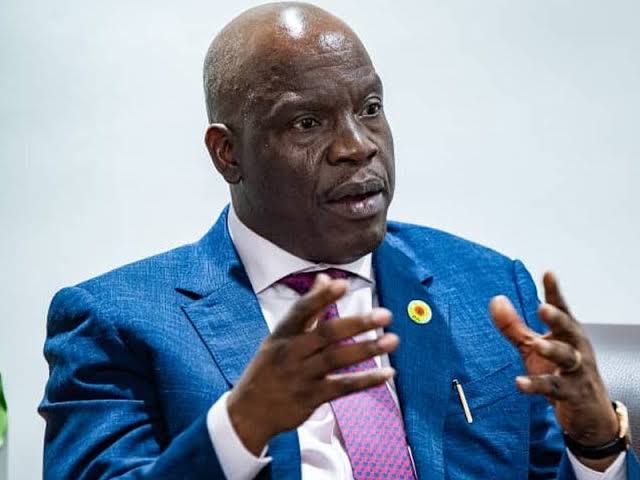
Mr Gbenga Komolafe, Commission Chief Executive ,CCE, Nigerian Upstream Petroleum Regulatory Commission, NUPRC, made this known in Abuja at its stakeholders’ workshop on deep/shallow water cluster/nodal development.
The new initiative which is being championed by the NUPRC is part of a broader effort to revive Nigeria’s offshore oil production, which has suffered a decline in recent years.
The workshop had as its theme, “Harnessing the potential of deep/shallow water, oil and gas accumulations through clusters/nodal development in Nigeria”.
Komolafe, represented by Mr Babajide Fashina, Executive Commissioner, Economic Regulation and Strategic Planning, NUPRC, said if fully implemented, the additional output could raise Nigeria’s total monthly crude production by 2.51mbpd with condensates.
This, he said would significantly strengthen the country’s revenue generation capacity and improve compliance with OPEC+ production quotas.
He said the plan was conceived in response to the industry’s dwindling offshore output and the need to harness untapped reserves for sustainable growth.
“At the peak of our deep water oil production in 2016, Nigeria was producing about 800,000bpd. Sadly, that figure has now dropped to below 500,000 bpd”, he said.
The CCE explained that its data showed that there are over 5.13 billion barrels of oil and 13.53 trillion cubic feet ,tcf, of gas still sitting untapped in the deep water acreages.
He said of this, 3.59 billion barrels fell under 2P reserves, meaning that they were proven and probable but yet undeveloped.
“A preliminary regulatory deep-dive through the Field Development Plans ,FDPs, approvals indicates that current developments-in-view could unlock around 1.55 billion barrels of oil and condensate and another 1.49 tcf of associated gas.
“Once these approved FDPs are executed, we could see peak oil production rise by as much as 810,000 barrels of oil per day.
“A new Shallow and Deep Water Cluster Development Committee was inaugurated within the NUPRC to work closely with International Oil Companies ,IOCs, and indigenous producers to identify and mature these opportunities.
“Through this collaborative approach, we want to maximise returns from existing assets, ramp up volumes, and reduce unit technical costs”, he said.
Komolafe expressed dissatisfaction that in spite of the huge potential, the deep water fields were underutilised due to challenges such as funding gaps, infrastructure limitations, regulatory bottlenecks and delayed project sanctions.
He said the eight Floating Production Storage and Offloading ,FPSOs, units, were grossly underutilised, adding that with collaboration, more would be achieved.
The CCE added that deep offshore reserves currently account for 18% of Nigeria’s total oil and condensate reserves, with major discoveries such as Bonga, Agbami, Egina, and Erha fields leading the way.
He said that currently the country had cumulatively produced over 4.4 billion barrels from deep water operations with contributory efforts from Shell, ExxonMobil, TotalEnergies, Agip and Chevron.
Komolafe, however, urged operators to embrace its collaborative model and commit to delivering results that would drive energy security, economic stability, and prosperity for all stakeholders.
The Executive Commissioner for Development and Production at NUPRC, Enorense Amadasu, said unlocking the production would rely on executing already-approved FDPs and adopting new cost-saving frameworks.
Amadasu, in a presentation said execution of the approved development plans in deep offshore fields was expected to bring in an additional 810,000 bpd.
“This is not just theoretical. We already have projects like Bonga North that have taken final investment decisions, and several more like the Owowo, Zaba Zaba, Eta, NAE, and others, are in view”, he said.
He said that multiple challenges including high technology costs, uneconomic standalone developments, and delays in Final Investment Decisions have slowed progress.
“We have identified over 20 key deep water assets such as Owowo, Nsiko, Bolia, Aparo, Bonga South West, Doro, Sheki, Akpo West, and others. While some may lack scale individually, they can become viable if developed together”, he said.
On government incentives, Amadasu cited ongoing interventions, including zero hydrocarbon tax on deep water fields under the Petroleum Industry Act, as well as Presidential Directives 40, 41 and 42.
These directives, he said would address the issue of tax incentives for non-associated gas, accelerate local content compliance and cost reductions in contracting cycles
Meanwhile, stakeholders in the Oil & gas sector under the aegis of Natural Oil and Gas Suppliers Association of Nigeria ,NOGASA, have called for the establishment of a joint distribution framework between the Dangote Refinery and existing downstream operators to avoid supply disruptions.
Speaking at NOGASA’s Annual General Meeting last week in Abuja, its National President, Mr Benneth Korie, urged the refinery to work with industry associations rather than bypass them through direct supply to retailers.
Mr Korie argued that such collaboration would protect jobs, ensure market stability, and safeguard the nation’s fuel supply chain, proposing a model in which the refinery focuses strictly on refining and bulk sales to depot owners and marketers, while distribution to the over 50,000 filling stations nationwide remains in the hands of established operators.
“Refining and distribution are two different specialisations. The best approach is for Dangote to refine, sell to marketers, and let us handle distribution. This way, the refinery stays focused on production while marketers maintain nationwide supply”, Mr Korie said.
He warned that bypassing marketers through direct supply could lead to massive job losses in the downstream sector, disrupt existing community relationships in volatile areas, and create bottlenecks that may trigger scarcity.
Mr Korie recalled that NOGASA has strongly supported the Dangote Refinery project in its formative years, even lobbying the Federal Government for intervention to ensure its completion.
“No one has supported the Dangote Refinery more than NOGASA. But we have to be honest, direct distribution will create more problems than it solves. We are proposing a win-win arrangement where all stakeholders benefit”, he added.
The NOGASA president further urged the refinery management to convene an urgent stakeholders’ meeting involving the Independent Petroleum Marketers Association of Nigeria ,IPMAN; Petroleum Tanker Drivers ,PTD; National Union of Petroleum and Natural Gas Workers ,NUPENG; and other industry players to agree on a sustainable distribution model.
Also speaking, the National President of the Petroleum Products Retail Outlets Owners Association of Nigeria ,PETROAN, Mr Billy Gillis-Harry, warned that Dangote’s plan to refine, store, transport, distribute and sell directly to the public amounts to a “forward integration strategy” that could crush competition and destabilise the downstream petroleum sector.
Mr Gillis-Harry likened the situation to the cement industry, where dominant producers now control both production and distribution, leading to steep price hikes from about N115 per bag years ago to over N10,000 today.
He alleged that Dangote was already selling fuel at below-cost prices to capture market share,a move he said could drive independent marketers out of business.
“When one company wants to refine, store, handle logistics, distribute and fix prices, it becomes both a businessman and a regulator. That is dangerous for competition and for the economy.
“This is not cement. This is PMS and AGO that run over 95 per cent of Nigeria’s energy needs. If one company controls it all, even the hairdresser will not work again”, he warned.
The PETROAN president urged the Federal Government to enforce clear role separation in the downstream petroleum sector as provided in the Petroleum Industry Act (PIA) and to ensure regulators have the capacity to monitor and prevent anti-competitive practices.
He also called for the reservation of at least one million barrels of crude oil daily for domestic refining, saying this would ensure local refineries, including smaller, regional ones, have adequate feedstock to operate efficiently.
Mr Gillis-Harry also suggested continuous stakeholder consultations involving the refinery, marketers, transporters, labour unions and regulators to design a distribution model that supports competition, prevents job losses and guarantees nationwide fuel availability.