…Validates updated national policy
By Yahaya Umar, Abuja
Federal Government has strengthened its fight against desertification, land degradation, and drought in Nigeria with the validation of an updated National Policy to combat the menace.
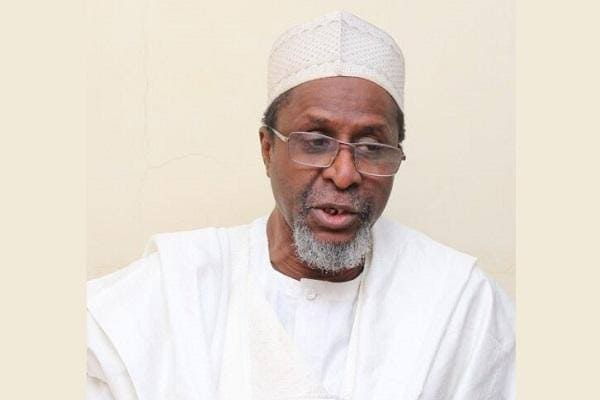
Minister of Environment, Malam Balarabe Lawal, disclosed this at the workshop on the ‘’Review of the National Policy on Desertification, Land Degradation, and Drought”.
Lawal who was represented by Permanent Secretary in the Ministry, Mr Mahmud Kambari, the said that the validated document would effectively address the menace of desertification, land degradation and drought and enhance environmental sustainability in the country.
According to him, “This occasion represents a vital milestone in our efforts to address Desertification, Land Degradation, and Drought in Nigeria. As you are aware, Drought and Desertification are not abstract environmental concepts.
“This validation workshop marks a critical stage in the policy review process as it provides a platform for stakeholders to carefully examine the revised policy document, assess its objectives, strategies, and implementation mechanisms, and ensure that it reflects a shared national vision”, Lawal said.
Besides, the Minister revealed that the objective of the validation is not merely about endorsement; but a collective ownership, asking hard questions, identifying gaps, and refining approaches so that the final document is practical, inclusive, and capable of delivering measurable results.
In this vein, he added that “It must encapsulate the realities at the national, state, and local levels. It must recognise the different ecological zones of the country and the unique challenges, land degradation is real and pressing challenges that affect millions of Nigerians, particularly in the arid and semi-arid regions of the country.
“These challenges threaten agricultural productivity, water availability, food security, biodiversity, and overall socio-economic stability.
“For farming and pastoral communities, drought means failed harvests, loss of livestock, increased poverty, and in some cases, loss of settlements.
“Desertification on the other hand steadily reduces the productivity of our land, weakens ecosystems, and places additional pressure on already scarce natural resources”, he said.
Lawal who expressed optimism that the policy have the potential to serve as a foundation for integrated, long-term solutions that benefit both people and the environment, pointed out that “The draft National Drought and Desertification Policy document before us today is the outcome of the review of the existing policy which commenced on July 2, 2025 with the inception workshop which brought stakeholders from the 36 states of the federation including the FCT.
“Government would provide the leadership needed for its full implementation but it must be complemented by strong partnerships with the private sector, civil society, research institutions, and local communities”.
Kambari was represented by the Director of Desertification, Land Degradation and Drought Management in the Ministry, Mrs Regina Nwaneri, said that the existing policy framework, while useful at the time of its development, must respond to new realities, emerging risks, and evolving national and international commitments.
“This necessity informed the decision to undertake a comprehensive review of the National Drought and Desertification Policy, which in all honesty is long overdue.
“The reviewed policy is expected to place stronger emphasis on early warning systems, preparedness, resilience building, and coordinated institutional action”, he said.
For his part, National Project Coordinator for Agro-Climatic Resilience in Semi-Arid Landscapes, ACReSAL, Mr Abdulhameed Umar, said that land degradation has been an environmental challenge which has been tackled by ACReSAL with the support of World Bank.
Umar represented by Expert Advisor for Landscape Restoration and Wetland Management ACReSAL, Alhaji Musa Shuaibu, commended the validation of the policy and expressed optimism that land degradation, desertification and drought would be addressed.
FAO representative, Mr Precious Agbesor, said that validation of this National Policy, which represents a significant milestone in Nigeria’s efforts to promote sustainable land management, climate resilience, and restored degraded ecosystems is a welcomed development.
“The policy aligns strongly with Nigeria’s commitments under global and regional frameworks, including the United Nations Convention to Combat Desertification, UNCCD, the Sustainable Development Goals, particularly SDGs one, two, 13 and 15.
“This inclusiveness is critical, as successful implementation will depend on shared ownership and coordinated action across sectors and levels”, Agbesor said.
Nwaneri, in her speech earlier, said that climate challenges have evolved, making it necessary to update the policy to address issues such as desertification, sand and dust storms, and drought.
“The validation workshop supported by ACReSAL and other partners we believe will produce an inclusive, realistic, and effective framework to tackle climate challenges at both local and national levels”, she said.