· About N32bn allegedly squandered
· AljazirahNigeria’s story behind probe – Sources
· As Nigerians await outcome
By David Maxwell
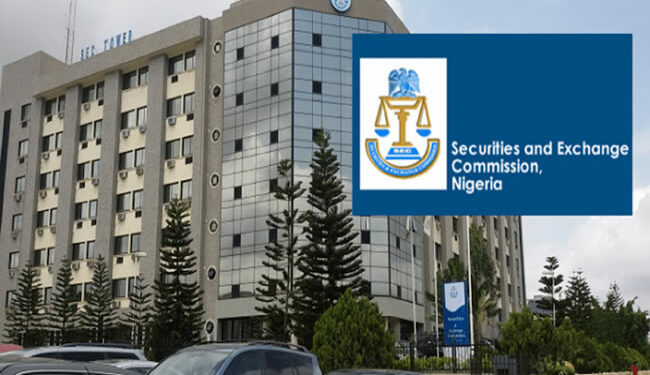
Following AljazirahNigeria’s exposé detailing alleged rot within the Securities and Exchange Commission, SEC, the federal agency mandated to regulate and develop the capital market in the interest of fairness, transparency and operational efficiency, the Economic and Financial Crimes Commission, EFCC, is set to commence a probe into the Commission’s affairs, authoritative sources have disclosed.
It will be recalled that in its editions of November 29 and December 1, 2025, AljazirahNigeria Newspapers published a series of reports alleging that the Commission squandered approximately N32 billion.
The reports chronicled a trail of questionable payouts, irregular approvals, unchecked allowances, dubious “generosity,” and a spending culture said to have openly flouted established financial regulations. In total, the Commission allegedly dissipated more than N32 billion through a range of questionable disbursements.
Speaking to this newspaper on condition of anonymity, an EFCC source confirmed that the anti-graft agency has initiated its own independent inquiry following the publication.
“I can confirm that investigations have commenced. As an agency, we do not act on reports from external sources; rather, we rely on our own in-house and independent inquiries. I assure you that this process is already under way, and Nigerians will be duly informed of the outcome of our probe.
“If our findings substantiate these allegations, we shall initiate prosecution and take steps to recover the funds on behalf of the Federal Government.”
Another source added: “Nigerians shall in due course find out the findings of our investigation which I can assure has begun.”
Public affairs analyst Shuna Fakum expressed profound concern over the allegations. “At times, I find myself wondering what manner of individuals occupy public office in Nigeria, because I struggle to comprehend the extent of their impunity. Ultimately, I believe it comes down to enforcement. We may have laws, but the failure to apply them rigorously emboldens wrongdoing. Otherwise, how could anyone brazenly perpetrate financial impropriety amounting to billions within a single financial year, unless they were confident of evading consequences? And one cannot place the blame solely on them, because countless offences are committed daily, yet only a few offenders are ever brought to justice.”
Similarly, Ndubisi Nwankwo told this newspaper: “I hold the government responsible for the perceived not too impressive performance of the police and other law enforcement and anti-corruption agencies such as the Economic and Financial Crimes Commission, EFCC, and the Independent Corrupt Practices and Other Related Offences Commission, ICPC, for these blatant abuses of office, ranging from the manipulation of contract awards to failure to declare assets and outright graft.
“This is largely because the government itself contributes to this impunity of public office holders by shielding its so-called sacred cows. Until the government demonstrates genuine resolve, these institutions will remain hamstrung, and without robust oversight, public office holders will continue to perpetrate fraud.
“Nevertheless, I perceive an unprecedented commitment from the current leadership of the EFCC under Olanipekun Olukoyede. Since assuming office on October 12, 2023, he has brought remarkable zeal and dedication to the Commission. It is evident that he is applying his more than 22 years’ experience with the EFCC as a lawyer and fraud examiner to his role. Consequently, I see a renewed sense of hope and confidence among Nigerians in the EFCC.”
In a previous report titled How SEC Squandered Over N32bn (Part 2), AljazirahNigeria alleged, among other infractions, that the Commission failed to deduct and remit N545 million in Pay As You Earn, PAYE, tax from its staff. In effect, public servants reportedly received gross salaries without statutory tax deductions, while the agency responsible for enforcing compliance across the capital market allegedly stood in breach of its own fiscal obligations – an action described as both an administrative failure and a violation of national tax laws.
There were also allegations concerning medical expenditures, including instances of double payments and lack of proper authorisation. Despite making mandatory annual contributions to the National Health Insurance Scheme, NHIS, the Commission reportedly disbursed an additional N173 million in medical bills to staff.
The so-called car-grant controversy further underscored what critics describe as excess and impunity within the Commission. Approximately N3.38 billion was reportedly paid to management staff as monetised car grants – a sum said to dwarf the value of the agency’s actual vehicle fleet.
Irregularities allegedly extended to gratuities and severance benefits, with retired staff said to have received N1.01 billion in payments processed outside statutory guidelines. The Commission has yet to clarify the beneficiaries of these payments or the basis upon which they were approved, particularly in relation to extant civil service rules governing retirement benefits.
Perhaps most striking among the alleged infractions is an extra-budgetary expenditure figure of N27.19 billion, widely regarded as the most significant component of the disputed disbursements.
“While we are happy with the performance of the EFCC so far, Nigerians are watching to see the outcome of this probe of a regulatory agency which remains central not only to Nigeria’s capital market, but also to the wider national economy, finds itself in this situation” Fakum added.