· Virgin Islands, UK, USA overtake Switzerland
· Investigation into over N48bn illicit transfers ongoing
· Real estate assets, legal entity registration, bank accounts top mechanisms for moving, hiding illicit funds
· As masses continue in penury
While Nigerians and indeed Africans, have had their eyes focused on Switzerland as the certain venue for laundered funds, recent findings have revealed that the Virgin Islands, UK, USA have overtaken that country as the preferred destination for such illicit funds, DAVID MAXWELL writes.
Illicit financial flows, IFFs, have long posed, and continue to pose, a significant challenge for developing countries in particular. They impede these nations’ capacity to achieve the United Nations Sustainable Development Goals by undermining fiscal systems designed to collect government revenue, thereby diminishing the resources available for development and the delivery of public services.
A significant proportion of the illicit capital outflow ends up in developed countries – frequently with the tacit or explicit knowledge of the authorities concerned – rendering recovery efforts exceedingly difficult, if not virtually impossible. Meanwhile, those responsible for these crimes often escape accountability.
Before now, Swis banks have always been fingered as the choice destination for illicit funds, but Transparency International, TI, recently carried out an assessment of 78 cases involving Illicit Financial Flows, IFFs, from Africa, many of which had been brought before courts across the globe. Drawing on data from court proceedings, leaked documents, investigative journalism, and other publicly available sources, the organisation uncovered not only the destinations of Africa’s stolen or concealed wealth, but also the mechanisms and instruments used to transfer and obscure it.
“Our analysis is based on cases of corruption substantiated by court rulings, as well as credible allegations concerning the concealment of wealth offshore,” TI stated. “Our findings identify the key destinations, techniques, and assets most commonly utilised by corrupt individuals to launder illicit funds. They also underscore the urgent necessity of addressing the loopholes that facilitate such practices.”
From these 78 cases alone, TI identified over US$3.7 billion in corruption-related African assets hidden across 74 jurisdictions – most notably within affluent nations.
“This figure almost certainly represents only a fraction of the actual total, as it reflects solely those assets traceable through publicly available information.”
TI’s findings align with those of other organisations, such as the Tax Justice Network, which are dedicated to combating illicit financial flows and promoting financial transparency. The organisation revealed that as much as 80% of the assets in question were transferred abroad – frequently to locations far removed from the sites of the original corruption.
Anonymous companies, bank accounts, and real estate have long been favoured by criminals as instruments for laundering illicit funds, deliberately placing assets beyond the reach of the law.
Transparency International identified the British Virgin Islands, Panama, and Seychelles as the primary jurisdictions for incorporating companies intended to conceal stolen assets. France, the United Kingdom, the United Arab Emirates, and the United States emerged as the preferred destinations for acquiring property linked to questionable transactions, while Hong Kong, Switzerland, the UK, the UAE, and the US were key locations for bank accounts used to pay bribes and move or store illicit proceeds.
These affluent countries have, for years, facilitated the concealment of dirty money – as exposed in high-profile leaks such as the Panama Papers, Swiss Leaks, Pandora Papers, and Dubai Uncovered, among many others.
According to TI, in 85% of the cases examined, companies and trusts were employed to obscure the true ownership of assets. “Frequently, complex cross-border corporate structures or layers of shell companies were utilised to distance corrupt individuals, and their ill-gotten gains, from the asset in question.”
The use of secrecy jurisdictions for company registration plays a crucial role in preventing the disclosure of beneficial ownership information.
Real estate in jurisdictions such as the UK, US, and France – where regulatory loopholes allow ownership to be masked – remains a popular vehicle for laundering illicit wealth. TI identified 121 properties, worth at least US$560 million, the majority of which are located overseas and are often owned through corporate or trust structures.
“In France, foreign companies can acquire property without disclosing their beneficial owners—a loophole the EU’s Sixth Anti-Money Laundering Directive seeks to close,” TI notes. “In the UK, property ownership can be obscured via offshore companies controlled by trusts, while in the US, non-financial professionals involved in real estate transactions are not obliged to carry out customer due diligence or report suspicious activity.”
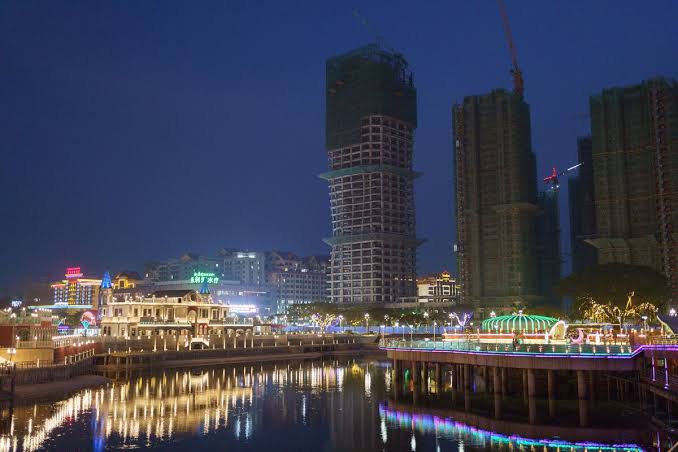
Recent research has highlighted a major shift in global IFFs, with activity increasingly moving away from the United Kingdom towards what researchers are calling the “Dubai-Kong axis,” referring to Dubai and Hong Kong, which is emerging as a new global hub for dirty money, whether linked to corruption, organised crime, or the evasion of international sanctions.
Academics at the University of Sussex have uncovered significant changes in the global landscape of IFFs. Their findings detail how various forms of illicit wealth, including proceeds from drug trafficking, corruption, fraud, and other criminal enterprises, are laundered and moved across borders.
In the last week of May, the Nigerian Financial Intelligence Unit, NFIU, sounded the alarm over suspicious international financial transfers amounting to approximately N48 billion, traced from Nigeria to destinations such as Dubai and Hong Kong.
According to the Nigerian Lawyer reports, the transactions, which shows signs of money laundering and potential terrorism financing, raised red flags due to their volume, structure, and lack of clear economic justification. Many of the entities involved are currently under investigation.
Speaking before the Senate Committee on Anti-Corruption and Financial Crimes, Hafsat Bakari, NFIU Director disclosed that the agency had been tracking a surge in questionable overseas fund movements. She noted that Dubai and Hong Kong were increasingly being used as havens for illicit finance, largely due to what she described as “loophole-prone” regulatory environments.
The report released in May revealed revealed that it received 401 suspicious transaction reports, STR, linked to both regions between January 2021 and September 2024, with the total value of the flagged transactions exceeding N48bn. While only 185 of the STRs were connected to Dubai, they accounted for the bulk of the total value-N29.6bn.
The remaining 216 STRs were traced to Hong Kong, valued at N18.6bn.
Despite these verifiable records of widespread corruption, poverty remains wide spread in Nigeria. According to a 2014 World Bank report, the country’s performance is at odds with the general international trend of poverty reduction.
The greater percentage of the Nigerian masses have continued to wallow in penury, while a few continue to fritter away the wealth of the nation.