By Paul Effiong, Abuja
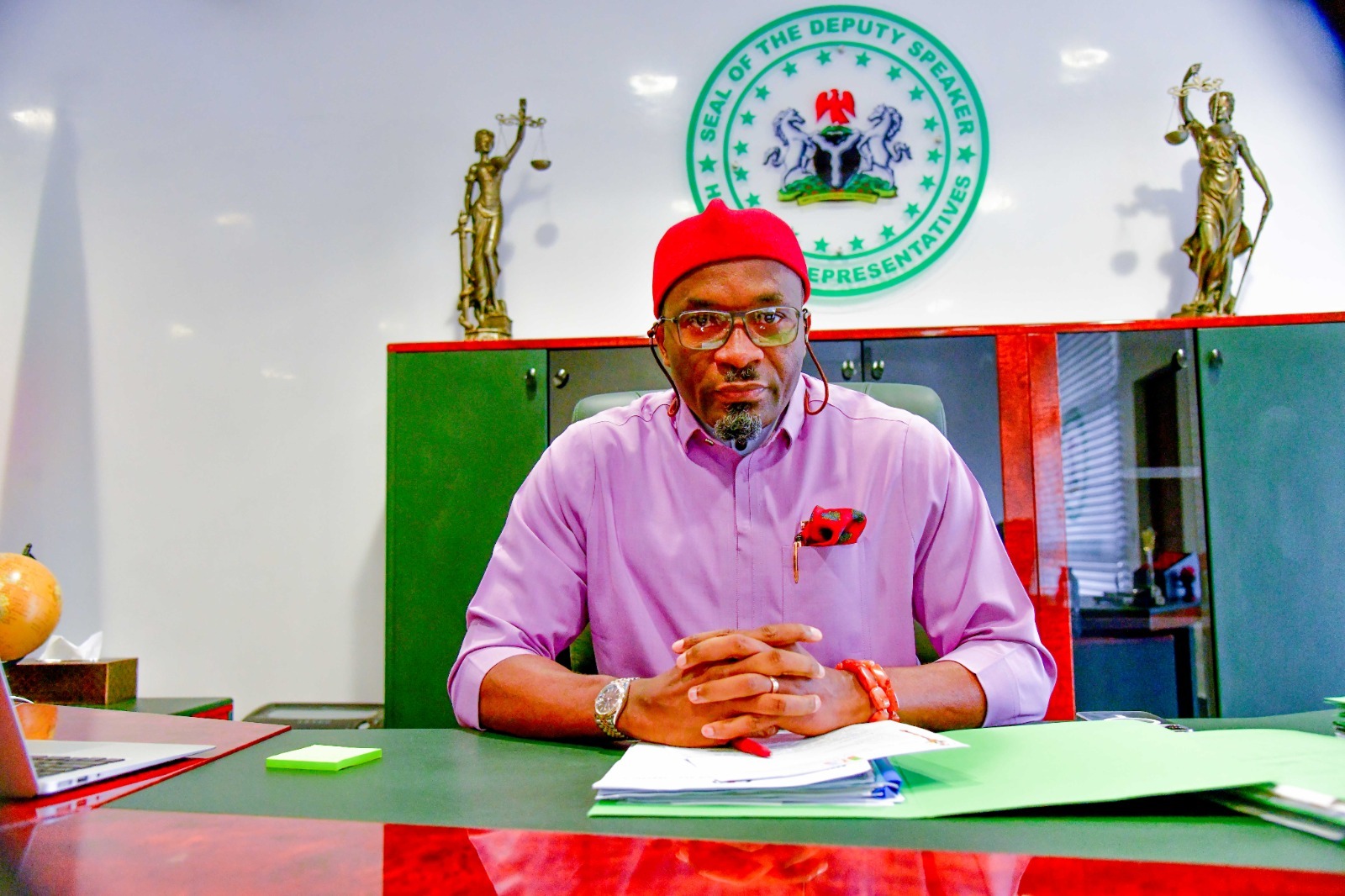
Deputy Speaker of the House of Representatives, Hon. Benjamin Okezie Kalu, has called on Nigeria’s defence industry to strengthen indigenous arms production and reduce the country’s dependence on imported military hardware, while also urging the financial sector to intensify efforts to curb criminal and terrorist financing.
Kalu made the call on Saturday while speaking at the Nigeria People’s Strategic Conference and Defence Exhibition 2026 in Abuja. The conference, themed “Building a Modern Security Ecosystem: Integrating Private Sector Capacity into Nigeria’s National Security Architecture,” brought together key stakeholders from the defence, financial and security sectors, as well as civil society organisations.
The Deputy Speaker stressed that Nigeria must develop a robust, home-grown defence ecosystem capable of meeting the country’s security needs, creating employment opportunities and reducing strategic vulnerabilities associated with overreliance on foreign military equipment.
He also challenged financial institutions to reinforce due diligence measures and strengthen transaction monitoring systems to cut off illicit financial flows that fuel organised crime and terrorism.
According to him, the conference should not end as a mere platform for dialogue, but should produce concrete and measurable commitments from all stakeholders involved in safeguarding the nation.
“Every sector represented in this room must leave with a specific, measurable role in Nigeria’s security architecture,” Kalu said. “The defence industry must deepen local capacity so that we do not import what we can produce. The technology sector must provide platforms for intelligence sharing and community-based early warning systems. The financial sector must tighten the chokepoints through which criminal and terrorist financing flows, while civil society must continue to build the bridges between communities and government that make sustainable peace possible.”
He added that the National Assembly would continue to provide the legal framework necessary to strengthen the country’s security architecture through constitutional reforms, budgetary appropriations and effective legislative oversight.
“And the legislature will continue to provide the legal scaffolding on which all of this is built. We will continue to review the Constitution where necessary, appropriate resources where they are required, and provide oversight to ensure that what is promised is delivered. We will legislate not for public applause, but for the protection of lives and the dignity of every Nigerian,” he stated.
Kalu also referred to the House of Representatives‘ recent vote in support of the proposed constitutional amendment on state policing, revealing that 289 lawmakers voted in favour, while only two voted against the measure.
“I am proud to serve in an Assembly that, just two days ago, voted 289 to 2 in favour of a safer Nigeria. That near-unanimity was not partisan; it was patriotic. It must now be matched by an equal unity of purpose in this room today,” he said.
He expressed optimism about the country’s future, insisting that Nigeria’s challenges should not be mistaken for failure.
“There is a Nigeria on the other side of this season. That Nigeria is not a promise; it is a project—a project that belongs to all of us: the legislature and the executive, the uniform and the suit, the community and the corporation, the government and the governed. We are a people worth fighting for. This republic is worth building, and let this be the moment we decide, formally and finally, to build it together,” Kalu declared.
Dismissing claims in some quarters that the country was failing, the Deputy Speaker maintained that Nigeria’s enduring resilience remained one of its greatest strengths.
“Nigeria is not failing; Nigeria is fighting. There is a difference. A failing country stops trying, but Nigeria has never stopped trying. That is our heritage and our irreducible character. However, resilience must be matched by structure, courage by sound policy, and the sacrifices of the Nigerian people by a security ecosystem worthy of those sacrifices,” he added.
The event attracted participants from the defence industry, financial institutions, security agencies and civil society organisations, all of whom explored ways of strengthening collaboration in building a more effective and sustainable national security framework.