By Abdullateef Bambgose and Paul Effiong, Abuja
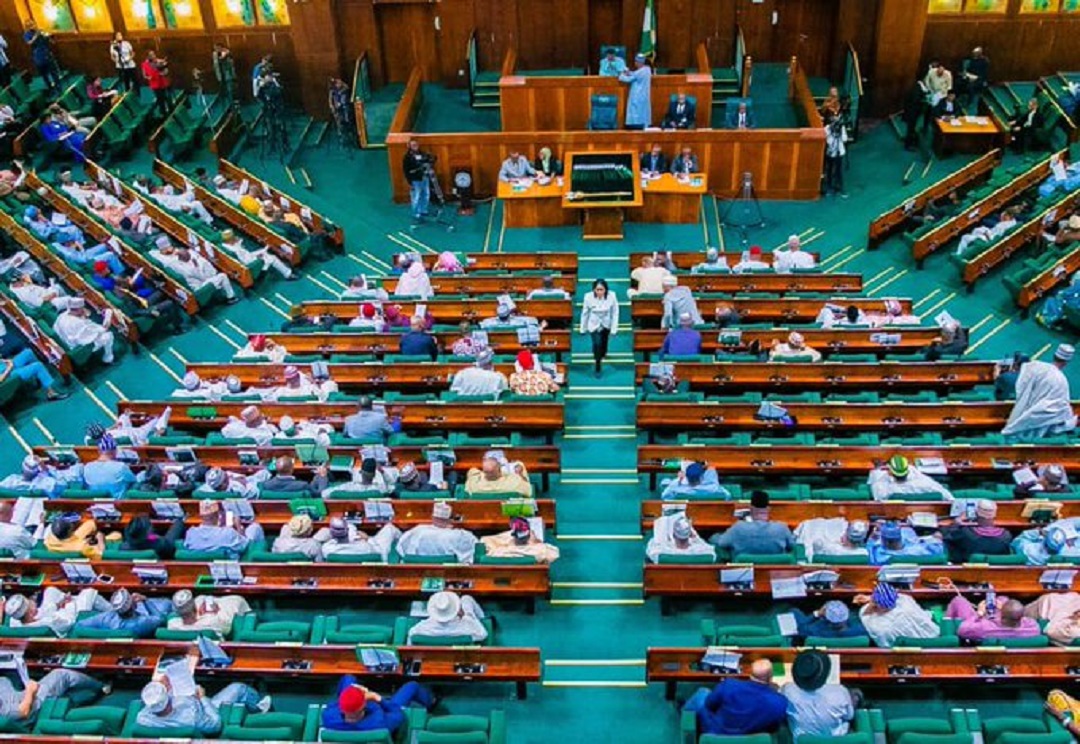
House of Representatives has finally passed the long awaited constitutional amendment bill which seeks to establish state police across Nigeria into law.
With this legislative landmark several decades of debate for or against decentralising of policing across the country has been brought to a halt.
Before the adoption and eventual passage of the bill entitled: “A Bill for an Act to Alter the Constitution of the Federal Republic of Nigeria, 1999 to Provide for the Establishment of State Police and for Related Matters (Sixth Alteration) Bill, 2026,” The Speaker House of Representatives, Hon Tajudeen Abbas pleaded with all members in attendance to participate actively in the manual voting process.
Deputy speaker and chairman, House Committee on Constitution Review, Hon. Benjamin Kalu, while presenting the report of his committee on the proposal canvassed for support from lawmakers. emphasising the need for a more decentralised policing framework across the country to effectively tackle Nigeria’s rising insecurity.
Announcing the result of the votes by members present during the exercise, Speaker Tajudeen Abbas said a total of 289 out of 290 lawmakers voted in support of the bill while one member abstained from it and none voted against it.
However, in another twist, Hon. Usman Zubairu raised a point of order on the matter but was ruled out by the speaker.
The lawmaker who represents Birnin/ Gwari Federal Constituency of Kaduna State lamented that he was not provided with any document for the voting exercise.
Zubairu had pointed out that in a critical national alteration of the constitution, each member should have been provided with documents earlier before plenary for adequate consideration and suggestions over the subject matter.
Meanwhile, one of the major synopsis of the bill is to alter Section 214 of the 1999 Constitution to formally establish the Federal Police and State Police.
Under the proposal, the National Assembly would be empowered to prescribe the structure, organisation, administration and powers of the federal police while also providing the legal framework and minimum standards for the establishment and operation of state police services across the country.
The expected law also stipulates that no state police formation shall commence operations unless it is established through a law enacted by the relevant State House of Assembly and certified as complying with national minimum standards to be prescribed by an Act of the National Assembly.
Again, the bill limits federal intervention in the internal security affairs of states stating that the federal police may only intervene where there is a complete breakdown of law and order, upon the request of a governor, or where a state police force becomes unable to function due to administrative, financial or other challenges.
Again, under the proposed law, the Commissioner of Police would be appointed by a governor on the advice of the Nigeria Police Council from among serving officers of the state police, subject to confirmation by the respective State House of Assembly.
The bill empowers governors to issue lawful directives to State Commissioners of Police on matters relating to public safety and the maintenance of law and order. However, where a commissioner considers such directives unlawful or inconsistent with accepted policing standards, the matter may be referred to the Nigeria Police Council, whose decision shall be final.
The passage of the bill into law by Green Chamber represents one of the most far-reaching security reforms contemplated since the return to democratic rule in 1999 and is expected to rekindle nationwide debate on issues relating to funding, accountability, operational control and safeguards against abuse.
Upon the House’s approval, the constitutional amendment bill will then proceed to the red chamber for concurrence after which it must secure the endorsement of at least two-thirds of the state Houses of Assembly and receive presidential assent before becoming part of the Constitution of the Federal Republic of Nigeria.
Consequently, the House also adjourned plenary until the 7th of July 2026 to enable lawmakers visit their constituents and provide them with more democracy dividend.
In another development the bill seeking to establish state police and decentralised policing powers to subnational governments as part of efforts to strengthen Nigeria’s internal security architecture has passed second reading in the Senate.
The proposed legislation, which received broad support from senators across party lines, was subsequently referred by the President of the Senate, Senator Godswill Akpabio, to the Senate Ad-hoc Committee on the Review of the 1999 Constitution for further legislative consideration.
Leading debate on the bill, Senate Leader, Senator Opeyemi Bamidele, described the proposal as a strategic response to Nigeria’s worsening security situation and the increasing pressure on the Nigeria Police Force.
Bamidele noted that Nigeria continues to grapple with multiple security threats, including terrorism, violent extremism, banditry, mass abductions, farmer-herder conflicts, cultism, gang violence, armed robbery, pipeline vandalism, economic sabotage, communal clashes and emerging cyber-enabled crimes.
According to him, growing public support for state police reflects concerns that the current centralised policing structure is no longer sufficient to address increasingly localised and evolving security challenges.
He explained that the bill seeks to modernise the country’s security framework through the creation of both Federal and State Police structures, with clearly defined operational responsibilities.
The legislation also proposes the establishment of State Police Service Commissions, introduces institutional oversight mechanisms, transfers policing from the Exclusive Legislative List to the Concurrent Legislative List and promotes cooperative federalism in security administration.
Bamidele maintained that the proposed amendment would strengthen rather than weaken national unity.
“This amendment does not weaken national unity. Instead, it strengthens the federation by enabling each tier of government to effectively discharge its constitutional responsibilities,” he said.
Addressing concerns about possible abuse of state police by state governments, Bamidele stated that the bill contains safeguards designed to guarantee accountability and prevent political misuse.
These safeguards include the creation of State Police Service Commissions, federal oversight through the Federal Police Service Commission, uniform national policing standards and legislative confirmation of senior appointments.
Other provisions include strengthened constitutional procedures for the removal of state commissioners of police, periodic certification and review of state police operations, as well as federal intervention mechanisms where there is a complete breakdown of law and order.
According to him, these measures are intended to balance operational independence with constitutional accountability.
He further argued that localised policing would improve intelligence gathering, enhance rapid response to security incidents and strengthen public trust through community policing.
Bamidele also said state police would ease operational pressure on the Federal Police, allowing it to focus more on interstate crimes, terrorism, organised criminal networks, border security, cybercrime and protection of national assets.
Drawing comparisons with other federal systems, he cited the United States, Canada, Australia and Germany as examples of countries operating successful multi-layered policing structures.
Following the lead debate, senators from different political backgrounds expressed support for the proposal, describing state police as a possible long-term solution to Nigeria’s security challenges.
In his contribution, Senate Chief Whip, Senator Tahir Monguno, said the bill would provide a legal framework for regulating and coordinating the activities of vigilante groups across the country.
He added that the proposed state police structure would improve security delivery while ensuring proper oversight and accountability.