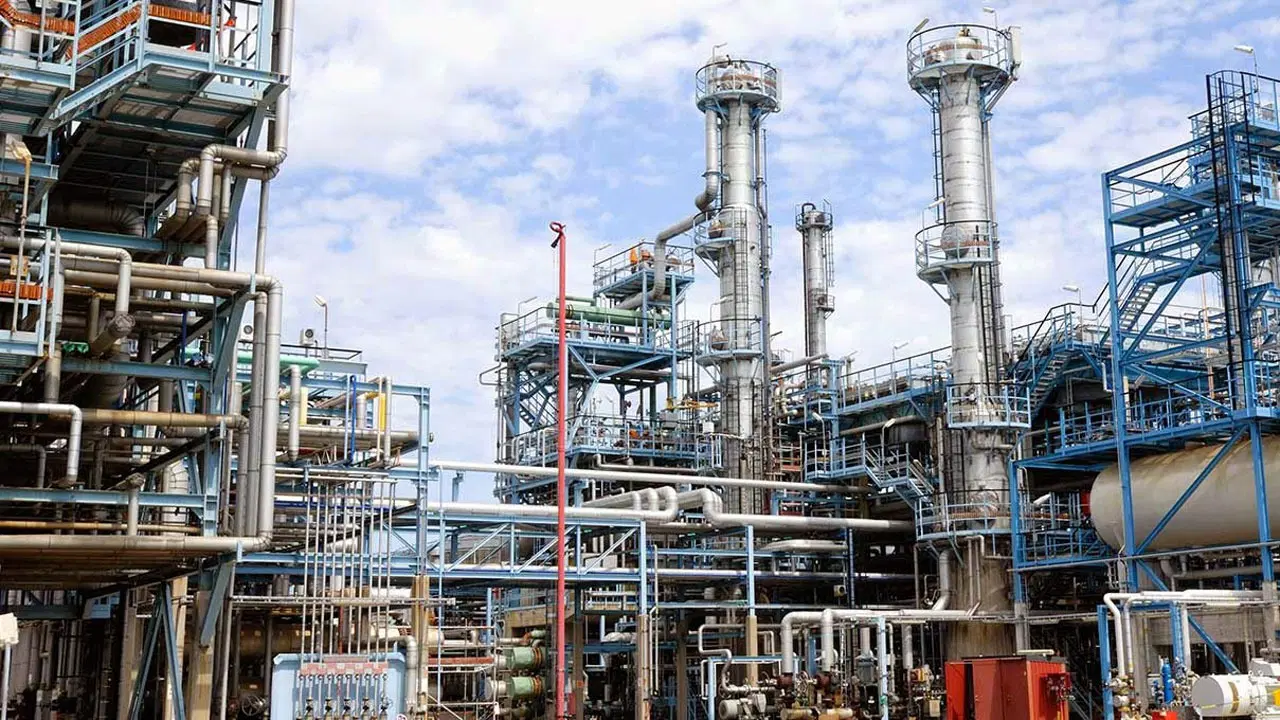
With Nigeria’s refineries tottering on the brinks of utter collapse despite several efforts by successive governments to revamp them, they have remained unproductive. It would be stating the obvious that several billions of dollars have gone down the drain in unending turn-around maintenance.
But for the entry of Dangote Refinery, which came on stream recently, the nation had depended largely on imported petroleum products despite its huge residue of crude oil.
The situation of the nation’s refineries may have defied all ‘known home-grown remedies’, including the squandering of humongous billions of dollars on turn around maintenance that never yielded results.
The concern over the parlous state of the refineries was indeed an issue for the Petroleum and Natural Gas Senior Staff Association of Nigeria, PENGASSAN, which called for urgent reforms in that sector while cautioning against political interference in the oil and gas sector.
PENGASSAN’s President, Festus Osifo, in Abuja at the 4th PENGASSAN and Labour Summit 2025, themed “Building a Resilient Oil and Gas Sector in Nigeria: Advancing HSE, ESG, Investment and Incremental Production” urged for a more pragmatic approach in tackling the issue of the nation’s refineries.
His postulation hinges on the need to operate the refineries under a model similar to the Nigeria Liquefied Natural Gas, where the government holds minority stakes while competent private operators take majority control to ensure efficiency.
According to him, while Nigeria’s workforce possesses the expertise to manage refineries, the absence of proper tools and the persistence of political interference have led to inefficiency, waste, and recurring breakdowns.
“Government must divest majority control of the refineries, just as in the NLNG model, where private partners hold 51% while government retains 49%”, he said.
There are wrong signals he noted, should Nigeria’s 37 billion barrels of crude reserves remain at the underutilised hovering around two million barrels per day production, urging authorities to intensify drilling and exploration to emerge from the woods.
The PENGASSAN President stressed that oil revenues should be reinvested in infrastructure, education, and healthcare to promote diversification, citing Dubai’s transformation funded by Abu Dhabi’s oil wealth as a model Nigeria could replicate.
With four major state-owned refineries located in Port Harcourt, Warri, and Kaduna, most of which were built between the 1960s and 1980 these facilities have no doubt been beaten by time and age, making them inefficient. They require more than the cosmetic overhaul they are receiving despite the humongous sums being expended on them. Analysts say the turn-around maintenance is often mired by selfish interests of officials who in the guise of fixing the refineries fleece the nation of its depleting resources.
We state clearly that any response on the refineries that would not see them operate above 50% of installed capacity is a mere colossal waste of resources at the expense of the public till.
While the essence of fixing these refineries are imperative for a better economic value, the other complements including safe pipelines across oil-producing regions, especially in the Niger Delta must not be compromised. Should the refineries come on full stream with limited resources of crude oil to function, it would end being an effort in futility.
With the withdrawal of subsidies, it is believed that market forces would drive the cost of refined products but that impact is still being awaited as many experts believe it would take time for the move to yield expected dividends.
With the tedious nature of the operating environment of the refineries, it would take more than a government bureaucratic setting to push them to profitability. They should be privatised in line with the Dubai-model being canvassed in some quarters where the government holds only a marginal share. A private sector driven system no doubt would engender efficiency and as a corollary profitability.
We stress that an eclectic approach is necessary if we must get it right, including modernising infrastructure, encouraging private sector investment, improving security, and developing robust policies to support refinery efficiency. A well-functioning refining sector would reduce dependence on imports, stabilize the domestic economy, and create numerous jobs in the sector, outside ancillary services.