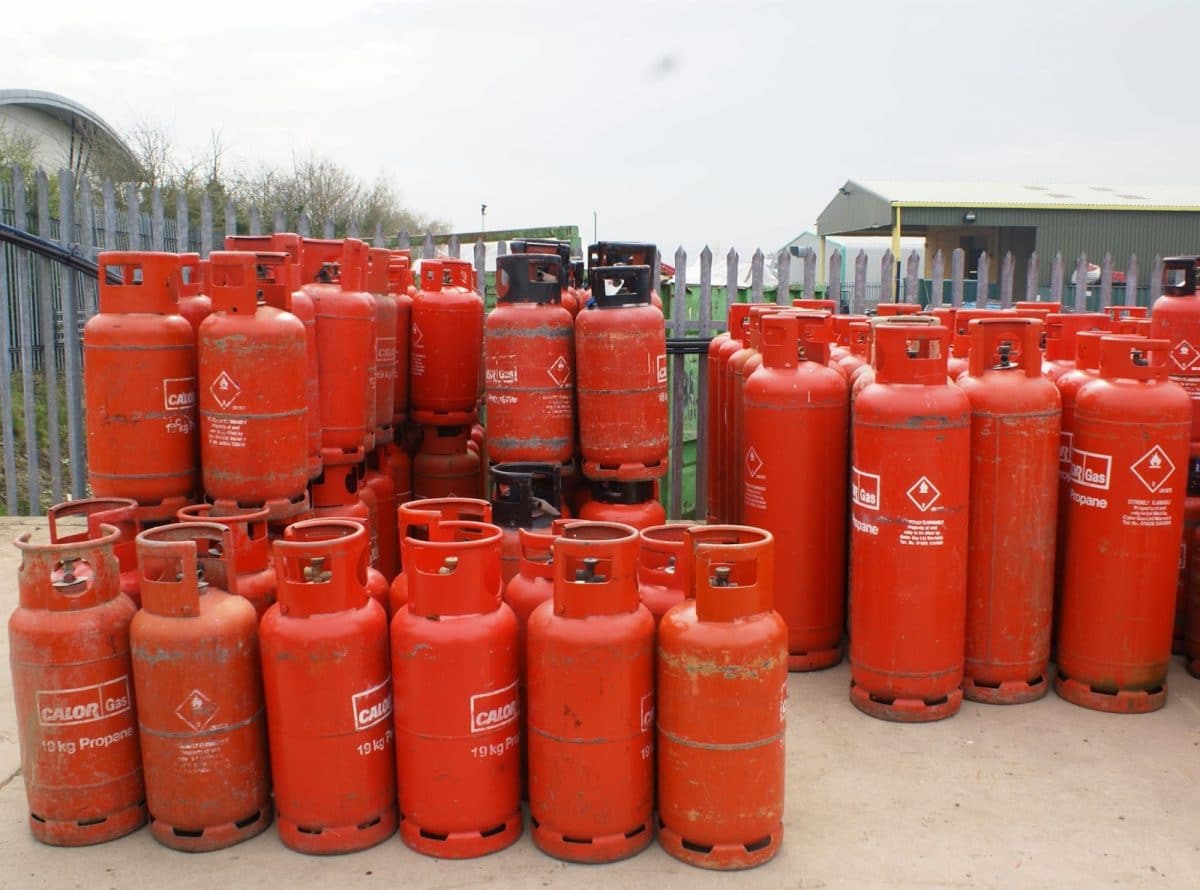
It is becoming worrisome that Liquefied Petroleum Gas ,LPG, also locally called cooking gas has become an issue to consumers despite the much touted need to dissuade many from using firewood, charcoal for cooking.
The traditional reliance on the use of firewood would take a toll on the environment amid concomitant concerns.
There is no doubt that many consumers have lately either reduced consumption or ditched gas for cheaper and readily available alternatives such as charcoal and firewood given its rising cost and sometimes unavailability.
According to unverified statistics current national annual consumption of gas is put at between 1.3mn and 1.5mn metric tonnes, a far cry from the Federal Government’s, FG, annual target of 5mn metric tonnes.
Despite repeated assurances by the government that it is pursuing a National Gas Expansion Programme which seeks to deepen local gas usage within the next decade, this ambitious effort is still not looking up.
Some Nigerians have expressed concern over the dwindling purchasing power of average citizen, thus stifling their crave for gas which is cleaner and more sustainable, given that it is a residual component from our large resource of oil.
Some stakeholders believe that lack of government policy to drive demand also formed part of the reason for the situation. Others whose position appears implausible blame the situation on the Russia-Ukraine war which has crippled supply of gas to international consumers.
We are averse to the situation where between 55-60% of gas utilised in Nigeria is currently being imported by independent marketers, while the Nigerian Liquefied Natural Gas Limited ,NLNG, supplies just 40% . The government must do the needful to reverse that trend by energizing the various segments in the value chain to make gas which is a residual product from oil available at reasonable cost.
If we have been described as a gas producing country with approximately 207 trillion cubic feet (Tcf) of proven gas reserves, ranking 9th in the world and accounting for about 3% of the world’s total natural gas reserves of 6,923 Tcf, it is then unthinkable that we are in short supply of the product back here.
Natural gas is estimated as the fastest growing fossil fuel in the world, and is projected to overtake coal by 2030, as the second largest source of energy.
The Federal Government at a time said that the value of Nigeria’s proven gas reserves of about 206.53 trillion cubic feet was over $803.4tn.
We align with stakeholders who insist that we need to deepen domestic production of gas to bring down prices and increase local consumption, as affordability is an issue here.
It is natural that if we import the product, the international pricing will also apply because freight charges and import duty would further hike the price.
The state comparisons showed that the highest average retail price for the refilling of a 12.5kg cylinder of cooking gas was recorded in Oyo, followed by Bayelsa, and Ogun.
Conversely, the lowest average price for the refilling of a 12.5kg cylinder of the product was recorded In Yobe, followed by Borno and Ebonyi respectively.
However, all the foregoing data have been overtaken by events as a 12.5 kg sells within the average of N12 to N15K across the country depending on location.
The nation must think out of the box to reverse this trend, particularly that we have the reserve in abundance.
With the surge in price of gas across the country, we fear that an unmitigated environmental concern stares us ominously. Disturbingly, the most common alternative to gas- kerosene is almost gone extinct and prohibitively expensive if even seen.
AljazirahNigeria urge the government to take deliberate steps to walk the talk on its ambitious gas policy.