FROM SAMSON ALFA, MINNA
Traditional institutions and religious bodies have been admonished to play their roles as leaders in curbing Gender based violence to build a safer communities.
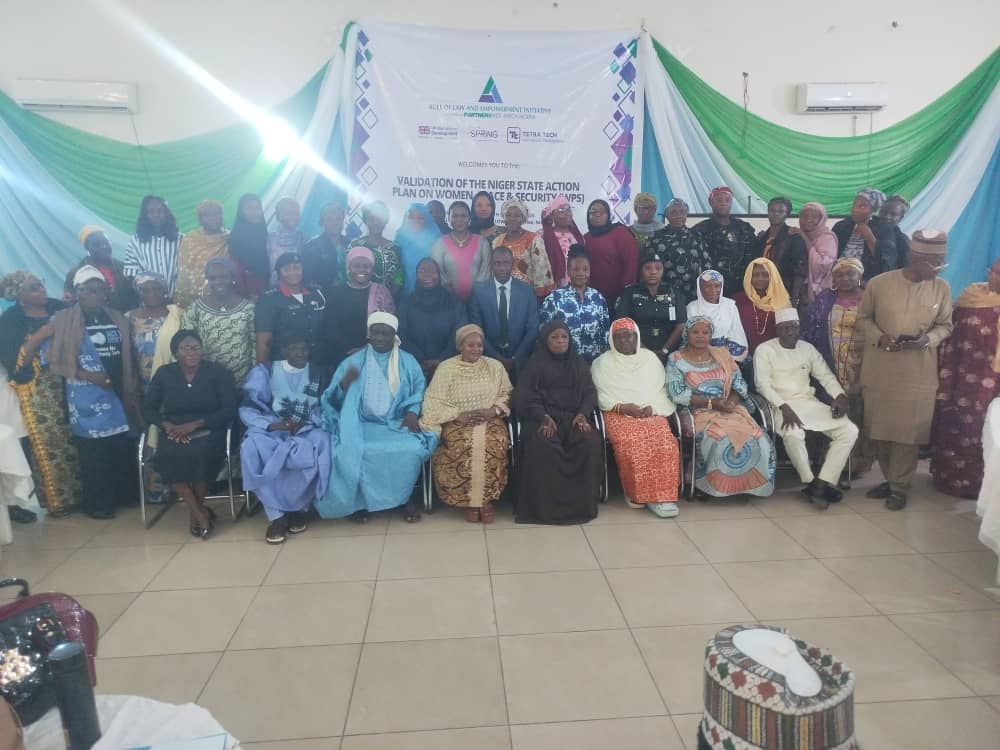
The Executive Director Genda. equality peace and Development centre, Professor Patricia Donli stated this at a sensitisation seminar held on Monday at the Haske Hotels in MINNA.
According to professor Patricia,the objective is on Women peace and security which was unanimously adopted in October 2000 in which every country is expected to develop a National action plan for the implementation of UNSI 2025 to be domesticated by every state in Nigeria.
She disclosed that about 16 States have been domesticated,making Niger State the 17th as part of the initial plan by PWAN to reach out to every states in the country.
“This is a call to action to build and break the silence by publicly condemn and say No To GENDER – BASED Violence,(GBV) from our platforms, should also partner with authorities to ensure survivors get justice.”
Professor Patricia, further explained that common forms of GBV in our communities includes, slapping,beating, punching, killing, others are sexual violence, forced marriage, female genital mutilation (FGM).
She attributed the root causes of GBV to societal beliefs that men should be in control than women and misinterpretations of culture and faith that justify violence and descrimination and archaic cultural practices that have lost their essence and violate human rights.
In her remark at the seminar,the state commissioner for women affairs,Hajiya Hadiza Idris Kuta,said anything you do,you need to secure good foundation therefore the importance of the workshop is over emphasised as the foundation of every home is a woman.
On the Gender based violence on woman, Hadiza lamented that a lot of women are still not aware on how to get help to punish the offenders of such acts, “there is need to educate our communities by creating a safe environment where survivors can seek help without fear of blame.”