
President Bola Ahmed Tinubu has reaffirmed Nigeria’s determination to remove all obstacles limiting the full potential of its agricultural sector, especially in livestock production, to pave the way for food self-sufficiency and export growth.
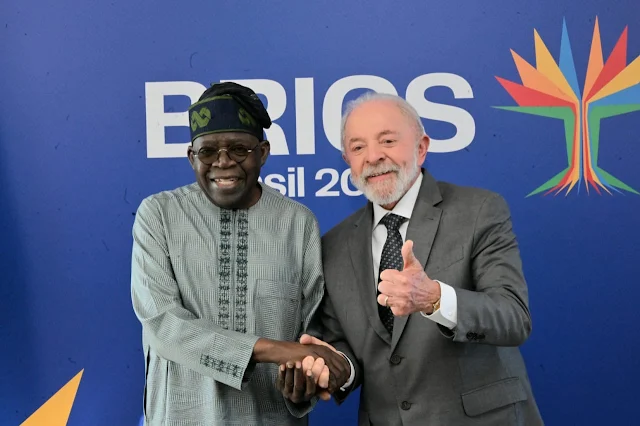
He made this commitment during a bilateral meeting with Brazilian President Luiz Inacio Lula Da Silva and cabinet members from both nations at the Copacabana Forte in Brazil.
In a statement released by Special Adviser on Information and Strategy, Bayo Onanuga, President Tinubu highlighted that bureaucratic hurdles have significantly contributed to delays in harnessing the sector’s vast opportunities.
He explained that Nigeria is actively implementing reforms aimed at restructuring the economy to enhance global competitiveness, particularly in agriculture, where the country already enjoys a strong advantage.
Tinubu assured President Da Silva that pending technicalities in agreements between both nations would be simplified and expedited across key sectors such as trade, aviation, energy transition, food and agricultural development, mining, and the exploration of natural resources.
He commended Brazil’s accomplishments in agricultural research and development, describing the South American nation as one of the world’s leading producers of food and agricultural commodities.
Regarding livestock production, Tinubu pointed to his administration’s ongoing efforts to stimulate investment in poultry, cattle farming, and fisheries. He also underscored the potential of Nigeria’s blue economy to foster long-term collaboration with Brazil in areas such as aquaculture and maritime-based food production.
According to him, Nigeria is fully prepared for an active partnership that will trigger immediate improvements in food production and distribution.
The President also emphasised the important role that Nigeria’s subnational governments play in supporting agricultural growth. He called on state leaders to align with the federal agenda of using agriculture as a strategic avenue for employment creation and national development.
Responding to President Tinubu’s remarks, President Lula assured that all agreements with Nigeria would be revised and ratified promptly. He said relevant Memoranda of Understanding (MoUs) would be updated and formalised during Tinubu’s next official visit to Brazil.
Lula added that outdated bureaucratic processes between the two countries must be dismantled to ensure swift progress and expressed Brazil’s readiness to work with Nigeria in advancing livestock research and farming systems.
Senator Abubakar Kyari, Nigeria’s Minister of Agriculture, reiterated that President Tinubu remains unwavering in his commitment to ensuring food security through meaningful domestic and international partnerships.
Kyari further pointed out that Nigeria already holds a competitive advantage in fertiliser production, which can be scaled up through enhanced collaboration.
Minister of Livestock Development, Idi Mukhtar Maiha, identified three key areas where Nigeria seeks cooperation with Brazil: livestock health and disease control, improved sanitary standards, and collaborative research into animal genetics and breed enhancement.
A delegation of state governors was also present at the bilateral meeting, including Hyacinth Alia (Benue), Dapo Abiodun (Ogun), Mohammed Umar Bago (Niger), Sheriff Oborevwori (Delta), and Babajide Sanwo-Olu (Lagos). The meeting also included Nigeria’s Minister of Foreign Affairs, Ambassador Yusuf Tuggar, and the Director General of the National Intelligence Agency (NIA), Mohammed Mohammed.
Governor Dapo Abiodun of Ogun State voiced the collective commitment of Nigeria’s subnational governments to support the federal government’s roadmap for agricultural revitalisation.
He praised the inclusion of a business forum in the diplomatic visit, saying it would introduce innovative ideas and attract new investments that could accelerate agricultural transformation across the country.