By Paul Effiong, Abuja
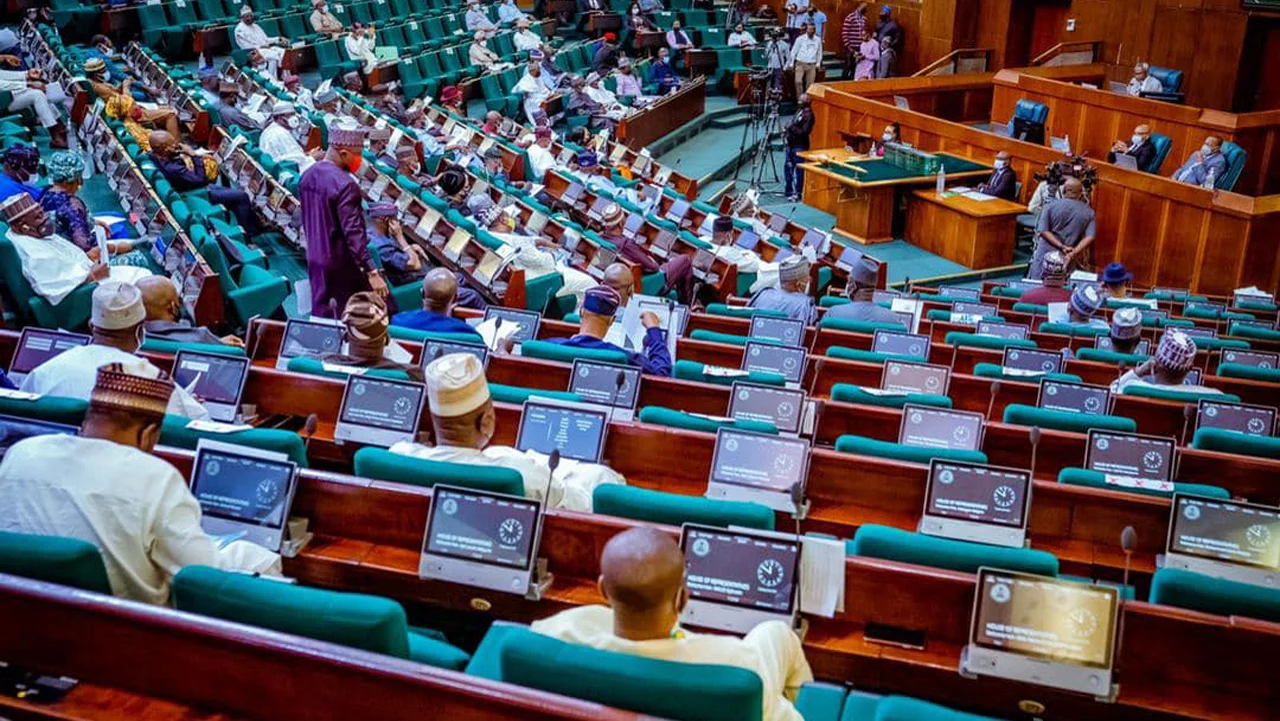
The House of Representatives Committee on Science and Engineering has suspended consideration of the 2026 budget proposal of the National Centre for Technology Management, NACETEM, warning that the agency risks receiving zero allocation in the forthcoming fiscal year.
The committee further resolved to recommend the removal of NACETEM’s Director-General, Dr Olushola Odusanya, for failing to appear before the panel to defend the agency’s estimates and for neglecting to submit the requisite documents for legislative scrutiny.
The decision was reached during Thursday’s 2026 budget defence session in Abuja.
Chairman of the committee, Inuwa Garba (PDP, Gombe), declared that no presidential appointee should consider himself above legislative oversight. He noted that if President Bola Tinubu could personally present the national budget before the National Assembly, it was unacceptable for agency heads to disregard invitations from lawmakers.
He stressed that the committee would not condone any conduct deemed disrespectful to the Constitution, the legislature, or the principles of democratic governance. According to him, the action taken against NACETEM would serve as a clear warning to other public officials who might contemplate similar disregard for parliamentary authority.
In a related development, the committee also expressed strong reservations over the 2025 budget performance and 2026 proposal of the Nigerian Council of Food Science and Technology,.NiCFOST.
Lawmakers criticised the council’s low Internally Generated Revenue (IGR), which stood at approximately ₦385,000 in 2024 and ₦285,860 in 2025. They also queried the sharp rise in projected overhead expenditure, which increased from ₦95.40 million in 2025 to ₦195.73 million in the 2026 estimates.
Responding, the Registrar of NiCFOST, Mrs Veronica Nkechi-Eze, explained that the council’s revenue is derived solely from registration fees and annual professional dues. She stated that the council charges ₦5,000 for registration and ₦2,000 as annual dues from its roughly 10,000 members.
However, she acknowledged that she could not account for the significant increase in overhead costs, adding that the revised figure did not form part of the council’s original submission to the Budget Office.