By Paul Effiong, Abuja
House of Representatives has called for stronger financial reforms for the country.
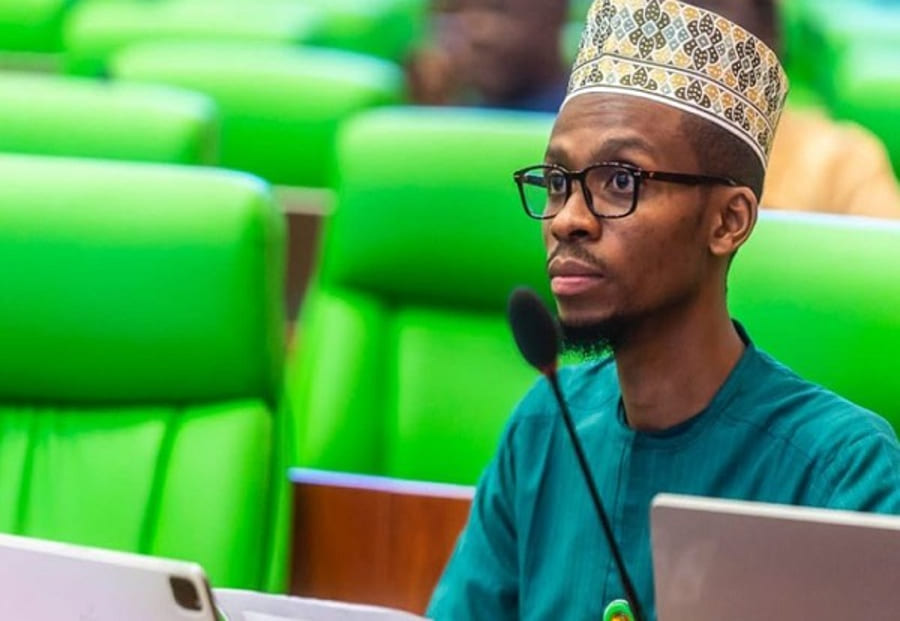
The Chairman, House Committee on Banking Regulations, Mohammed Bello El-Rufai made the call yesterday in his welcome address at the committee’s public hearing on two key financial bills held at the National Assembly in Abuja.
While commending stakeholders, the chairman also reiterated the commitment of the National Assembly to strengthen Nigeria’s financial system through progressive legislation.
One of the bills is aimed at regulating factoring and receivables financing, while the other has to do with a proposed amendment to the Banks and Other Financial Institutions Act, BOFIA, 2020.
El-Rufai informed that the first bill titled ‘A Bill to Regulate Factoring, Purchase of Receivables and Establishment, Operation, and Control of Factoring and Receivables Financing Businesses, HB. 516, aims to expand access to finance for Small and Medium Scale Enterprises, SMEs, across the country.
According to him, the legislation when passed into law, will promote liquidity in the economy and align Nigeria’s trade finance framework with global best practices.
He expressed optimism that the proposed legislation when passed and assented to by President Bola Tinubu will boost business competitiveness within and beyond Nigeria.
The second bill titled ‘A Bill to Amend the Banks and Other Financial Institutions Act, BOFIA, 2020 (HB. 1160),’ according to the committee is sponsored by Moses Fayinka.
The committee members noted that it seeks to strengthen consumer protection by addressing the rising cases of fraudulent withdrawals from customers’ accounts, as well as hold financial institutions accountable for lapses in system security.
Stakeholders who spoke during the public hearing emphasised that both bills share a unified purpose which is to enhance transparency and quality banking services, as well as resilience within Nigeria’s financial and banking ecosystem.
“These reforms will not only protect consumers, but also build investors confidence and ensure fairness across the financial value chain,” El-Rufai said.
The chairman solicited a robust engagement from all stakeholders.
In his contributions, the governor of Kaduna State, Uba Sani expressed optimism that the Factoring Bill would boost SME Financing and Economic Growth in Nigeria.
Governor Sani, who was represented by his Special Adviser on Research, Documentation and Strategy, Fabian Okoye, described the bill as a transformative legislation that would expand access to finance and stimulate Nigeria’s productive economy.
Commending the lawmakers for the public hearing, Sani noted that the proposed legislation is a timely intervention for the purpose of empowering Micro, Small and Medium Enterprises, SMEs, struggling with cash flow challenges.
He noted that factoring provides an effective financial tool that allows businesses to convert receivables into immediate liquidity, enabling them to sustain operations and drive growth.
Governor Sani, who previously sponsored a similar bill during his time as Chairman of the Senate Committee on Banking, Insurance and Other Financial Institutions, emphasised the importance of establishing a clear legal and regulatory framework for factoring in Nigeria.
He explained that around the world, factoring has become a vital instrument for trade finance and SME expansion, unlocking billions of dollars in emerging markets and supporting competitiveness in export driven economies.
According to the governor, Nigeria can replicate this success by ensuring that the law promotes transparency, protects small businesses and aligns with existing financial regulations such as the Secured Transactions in Movable Assets Act and the Companies and Allied Matters Act.