By Abdul-Azeez Suleiman
The passing of a leader, particularly one as significant as former President Muhammadu Buhari, evokes a profound sense of loss and reflection within the nation. President Bola Ahmed Tinubu’s orchestration of Buhari’s funeral serves as a poignant case study in leadership, revealing not only his moral compass but also his vision for a united and progressive Nigeria.
Muhammadu Buhari’s presidency, marked by both triumphs and tribulations, left an indelible mark on the Nigerian landscape. His tenure was characterized by a relentless pursuit of peace and security, even amid a backdrop of economic challenges and social unrest. The announcement of his death resonated deeply within the hearts of Nigerians, prompting a collective mourning that transcended political affiliations. In this moment of national grief, the manner in which a sitting president honors the legacy of his predecessor becomes a litmus test of his values and vision for the nation.
Bola Ahmed Tinubu, upon assuming the presidency, recognized the weight of this responsibility. He understood that a funeral is not merely a ceremonial event but a significant opportunity to reflect on the contributions of the deceased and to foster a sense of collective identity among the living. By conducting a funeral befitting Buhari’s status, Tinubu demonstrated a profound respect for the office of the presidency and for the sacrifices made by those who have served it.
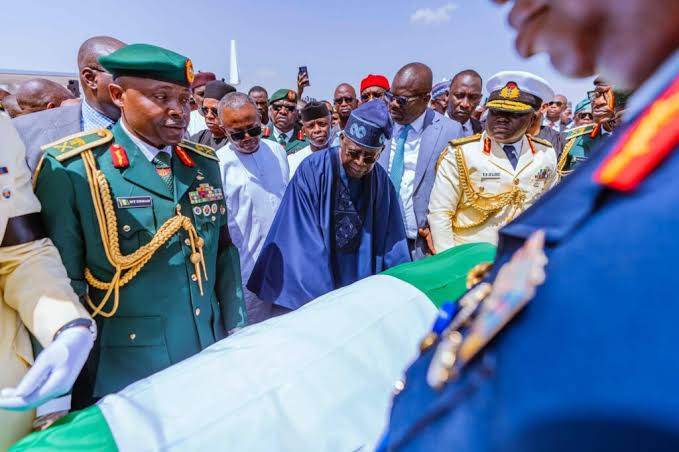
The funeral service for Muhammadu Buhari was marked by an air of solemnity and dignity, reflecting the high esteem in which he was held. Tinubu’s leadership during this event was characterized by a meticulous adherence to protocol and tradition, ensuring that all formalities were observed in honoring the former president. This attention to detail was not merely a matter of decorum; it was a manifestation of Tinubu’s understanding of the historical significance of the occasion.
Tinubu articulated the essence of Buhari’s contributions, reminding the nation of the strides made in improving security and fostering national cohesion during his tenure. This acknowledgment served a dual purpose: it paid tribute to Buhari’s legacy while simultaneously reinforcing Tinubu’s commitment to building upon that foundation. By framing Buhari’s achievements within the context of ongoing national challenges, Tinubu effectively positioned himself as a leader who respects history and is determined to navigate the complexities of governance with integrity.
In the wake of Buhari’s passing, Nigeria faced a myriad of challenges, including ethnic divisions, economic instability, and social unrest. It was within this context that Tinubu seized the opportunity to advocate for unity among the Nigerian people. His emphasis on solidarity, despite the nation’s diverse backgrounds, underscored a critical aspect of leadership: the ability to transcend differences and foster a collective identity.
Tinubu’s call for unity was not merely rhetorical; it was a reflection of his understanding that a nation’s strength lies in its ability to embrace diversity while working towards common goals. By invoking the spirit of togetherness during the funeral, Tinubu not only honored Buhari’s legacy but also laid the groundwork for a more cohesive national narrative. This approach resonates with the ideals of good governance, where leaders prioritize the well-being of the collective over individual or partisan interests.
Tinubu’s conduct during the funeral exemplified a maturity that is often sought but not always realized in leadership. His ability to navigate the complexities of national sentiment while honoring a predecessor illustrates a nuanced understanding of the political landscape. In a time when political polarization often overshadows the common good, Tinubu’s actions served as a reminder of the importance of respectful discourse and historical acknowledgment.
Moreover, Tinubu’s leadership style during the funeral reflects a broader commitment to ethical governance. By demonstrating respect for Buhari’s contributions, he set a precedent for future leaders to honor the legacies of their predecessors. This is particularly significant in a country where political rivalries can lead to the erasure of historical narratives. Tinubu’s approach signals a desire to cultivate a political culture that values continuity, respect, and integrity.
In conclusion, President Bola Ahmed Tinubu’s conduct during the funeral of former President Muhammadu Buhari reveals a leader deeply aware of the responsibilities that accompany his office. Through a dignified farewell, he not only honored Buhari’s legacy but also articulated a vision for a united and progressive Nigeria. His emphasis on unity amidst diversity, coupled with a commitment to historical acknowledgment, positions him as a leader who aspires to transcend the challenges facing the nation.
As Nigeria navigates its path towards development, Tinubu’s leadership serves as a beacon of hope for meaningful change. It underscores the necessity of respecting history and recognizing the contributions of those who have come before. In a world often marked by division, the values of dignity, unity, and respect for legacy will be instrumental in shaping a future where all Nigerians can thrive. Thus, as the nation moves forward, it is essential to support leaders who embody these principles, ensuring that the aspirations of the Nigerian people are met with good governance and a commitment to collective well-being.