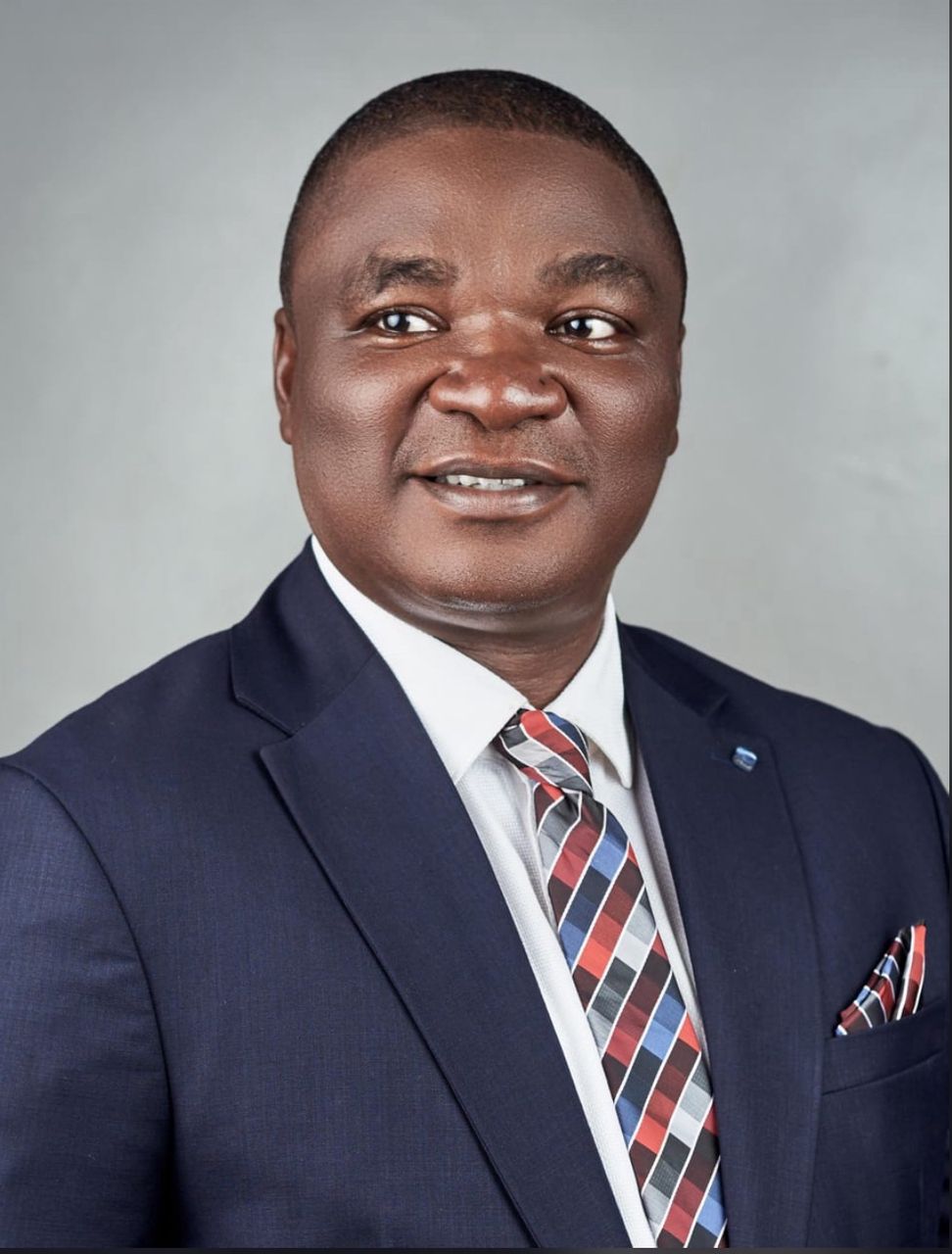
By Dr. Rotimi Mathew
‘Nigerias governance crisis is, at its core, a mentorship crisis. Until we build deliberate systems that transfer wisdom from seasoned statesmen to emerging leaders, the cycle of poor governance will persist.“
Introduction
Nigeria, Africas most populous nation and largest economy, stands at a defining crossroads. Endowed with extraordinary human capital, abundant natural resources, and a youthful demographic dividend, the country has nonetheless struggled to translate its vast potential into sustained, transformative governance.
Decades of political instability, corruption, weak institutions, and the recycling of a narrow political elite have frustrated the aspirations of over 200 million citizens. At the root of this crisis lies one chronically underexamined variable: the near-total absence of deliberate, structured political mentorship.
In mature democracies, the transmission of political wisdom, from ethical statecraft to institutional memory and crisis management, occurs through well-established mentorship pipelines. In Nigeria, this pipeline is broken. This article interrogates that failure, examines its governance consequences, and charts an actionable path forward, drawing on the instructive experience of Lagos State and global best practice.
Godfatherism: The Perversion of Mentorship
What has long passed for mentorship in Nigerian politics is, in the main, godfatherism, a transactional arrangement in which a political patron funds and elevates a protégé in exchange for future access to power and resources.
The fractious relationship between former Governor in the east and his godfather in the early 2000s, and similar dynamics across Kwara, Rivers, Kano and Oyo states, illustrate how this system substitutes private loyalty for public accountability.
Authentic political mentorship, by contrast, is values-driven. It transfers institutional knowledge, democratic norms, policy competence, and ethical leadership , not personal fealty.
This distinction is not semantic; it lies at the heart of Nigerias governance deficit. Godfatherism produces leaders who are politically connected but governmentally incompetent, personally loyal but publicly unaccountable, and structurally incapable of breaking the cycle they were born into.
Lagos State: A Model of Political Mentorship, Democracy, and Development
In the landscape of Nigerian governance, Lagos State stands apart. Over twenty-five years, it has undergone a remarkable transformation , from a megacity on the verge of implosion into one of Africas most dynamic, fastest-growing, and best-governed urban economies.
That transformation was not accidental. It was the deliberate product of structured political mentorship, institutional continuity, and an unwavering long-term development vision sustained across successive administrations.
The Lagos model began with Governor Bola Ahmed Tinubu (19992007), who inherited a state receiving just ₦600 million monthly from the Federation Account and transformed its internally generated revenue (IGR) infrastructure from the ground up.
Crucially, Tinubu identified, cultivated, and mentored a cadre of technocrats and political successors , foremost among them Babatunde Fashola, his Chief of Staff, who ascended to the governorship in 2007.
Fasholas tenure (20072015) accelerated the transformation: the Bus Rapid Transit system was launched, urban renewal reshaped Lagos Island and Mainland, and the states IGR reached historic levels. The tradition deepened through Akinwunmi Ambode (20152019) and continues under Babajide Sanwo-Olu (2019present), whose administration is anchored on the THEMES+ development framework spanning transportation, health, education, economy, entertainment, security, and agriculture.
Technocratic Continuity. Unlike most Nigerian states, Lagos has maintained a core of institutional continuity across administrations. Key agencies in revenue, planning, and urban development have retained their professional leadership, ensuring reforms are built upon rather than abandoned.
The Chief of Staff Pipeline. Lagos has institutionalised the Chief of Staff role as a succession pathway, ensuring that each governor first internalised the machinery of government as a senior advisor before assuming executive responsibility.
Party as a Governance School. The dominant political party in Lagos has functioned, at its best, as an internal school of governance, drawing candidates from pools of individuals who have served in party committees, local government oversight roles, or state advisory positions.
Revenue and Fiscal Innovation. The Lagos Internal Revenue Service (LIRS) has evolved into one of Africas most sophisticated sub-national tax authorities , a product of mentored institutional development across multiple administrations, not the creation of any single administration.
The Governors Advisory Council (GAC). A cornerstone of Lagoss mentorship architecture is the Governors Advisory Council , an influential body of former governors, senior party leaders, and seasoned statesmen that provides strategic counsel, institutional memory, and continuity guidance to the sitting governor.
Unlike godfatherism, the GAC operates within a framework oriented toward collective development outcomes. It is a living repository of governance wisdom, ensuring that hard-won lessons are never lost to political transition.
The GAC has institutionalised mentorship at the highest level of executive governance and stands as one of Nigerias most replicable democratic innovations. Other states and the federal government would do well to study and adapt it urgently.
The results are internationally recognised. Lagoss GDP, were it a sovereign nation, would rank among Sub-Saharan Africa’s top five. Its IGR exceeds ₦500 billion annually, the highest of any Nigerian state. Lagos is proof that political mentorship, when institutionalised and aligned with a development vision, can produce governance outcomes that materially transform citizens lives.
Global Evidence: Where Political Mentorship Has Delivered Results
Nigeria is not alone in demonstrating the connection between mentorship and governance quality. The global evidence is compelling and consistent.
Singapore under Lee Kuan Yew developed a rigorous system for identifying and mentoring leaders through the ruling party, producing a city-state that rose from Third World to First World status within a generation. Lees careful succession planning , mentoring Goh Chok Tong and then Lee Hsien Loong , ensured policy continuity without political stagnation.
South Koreas Confucian civil service tradition of leadership through learning produced the technocratic cadre that guided rapid industrialisation and democratic consolidation, transforming one of the worlds poorest nations into the twelfth largest economy.
Ghana illustrates how mentorship embedded in party and civil society structures deepens democratic consolidation. Its repeated peaceful electoral transfers of power between competing political parties reflect a political class that has internalised democratic norms through sustained mentorship.
Finlands world-leading governance reflects decades of investment in political mentorship through party youth wings, policy institutes, and parliamentary apprenticeship programmes that produce leaders with genuine policy depth.
Rwandas post-genocide transformation , driven by the Rwanda Leadership Academy, structured public service training, and a national Vision 2050 framework , is among the most dramatic demonstrations on the African continent that deliberate investment in leadership formation produces measurable development results.
Key Benefits of Political Mentorship.
The evidence converges on six specific, measurable benefits. First, institutional memory and policy continuity: mentorship enables governments to build on past achievements rather than perpetually starting from scratch. Second, governance competence: mentored leaders arrive better equipped to navigate budgetary processes, legislative procedures, and the mechanics of policy implementation.
Third, democratic consolidation: mentorship transmits democratic norms across generations, producing greater electoral stability and constitutional respect. Fourth, economic development: governance quality and economic outcomes are directly correlated, and mentorship raises governance quality.
Fifth, reduced corruption: leaders formed within cultures of accountability are measurably less susceptible to the transactional temptations that pervade patronage-driven systems. Sixth, youth inclusion: structured mentorship creates merit-based pathways into political life for young Nigerians, infusing governance with fresh ideas and generational energy.
Challenges to Effective Political Mentorship in Nigeria
Despite the compelling evidence, building an effective mentorship culture in Nigeria confronts serious structural obstacles. The persistence of godfatherism and its entrenched incentive structures remains the primary barrier. Weak political institutions , characterised by internal party undemocracy and monetised candidate selection , undermine sustainable mentorship infrastructure. The dominance of money politics crowds out competence as a political currency.
Short-termism born of electoral cycle pressures militates against the patient, long-term investment mentorship requires. Gender and inclusivity gaps mean that existing informal mentorship networks overwhelmingly exclude women and youth. Finally, Nigerias federal complexity demands a mentorship architecture flexible enough to serve thirty-six states with vastly differing governance contexts while maintaining common standards.
Moving Forward: Building Nigerias Mentorship Architecture
Overcoming these challenges requires coordinated action across seven fronts. Constitutional and legal reform should mandate structured pre-service governance training as a condition of assuming executive office. A non-partisan National Political Leadership Institute (NPLI) , with campuses across Nigerias geopolitical zones , should provide mandatory training for incoming elected officials and continuing development for serving office holders. Electoral finance reform must reduce the dominance of money in politics, creating space for competence to compete with financial power.
Gender-responsive mentorship programmes must actively dismantle the structural exclusion of women from political pipelines.
Civil society and private sector partnerships should build mentorship infrastructure outside state control. Nigerian universities must bridge academic governance theory and public service practice through structured fellowship pathways. And critically, the Lagos model , particularly the GAC innovation , must be studied, adapted, and replicated across Nigerias federal architecture.
Finally, I will say the Nigerias governance crisis is, in significant measure, a leadership preparation crisis rooted in the absence of structured, values-driven political mentorship.
The evidence from Lagos, Singapore, Ghana, Finland, and Rwanda is unambiguous: where political mentorship has been deliberate, sustained, and aligned with a long-term development vision, governance improves, economies grow, and citizens benefit.
Lagos States twenty-five-year trajectory , from fiscal dependency to continental economic leadership, sustained through the GAC, the Chief of Staff pipeline, technocratic continuity, and the LIRS institution-building culture , offers the most accessible and instructive model available to Nigerias states and federal government.
The transformation required is not beyond Nigerias reach. What has been lacking is not capacity, but political will. Building a Nigeria that works demands that we invest as deliberately in the formation of political leaders as we do in the construction of roads, hospitals, and schools. The time for that investment is not tomorrow. It is now.
References
Acemoglu, D., & Robinson, J. A. (2012). Why nations fail: The origins of power, prosperity and poverty. Crown Publishers.
Rotberg, R. I. (2014). Good governance means performance and results. Governance: An International Journal of Policy, Administration, and Institutions, 27(3), 511518. https://doi.org/10.1111/gove.12084
Fashola, B. R. (2013). Governance and development in Lagos State: The journey so far. Office of the Governor, Lagos State Government.
Lee, K. Y. (2000). From third world to first: The Singapore story 19652000. HarperCollins.
Adeyemo, D. O., & Salami, A. O. (2008). A review of political succession, mentoring, and institutional memory in sub-Saharan African governance. African Journal of Political Science and International Relations, 2(4), 7078.
Mathew, R. (2024). Political mentorship and leadership development in Lagos State (Unpublished doctoral dissertation). Abuja Leadership Centre, University of Abuja.
About the Author
Dr. Rotimi Mathew is the Director General of the Chartered Institute of Mentoring and Coaching and Co-Founder of the Institute of Africa Life Coaches and Mentors.
A governance analyst, mentoring expert, lobbyist, and public policy and leadership consultant, he brings extensive research experience in political leadership development and institutional reform across the private, public, military, and regimental sectors.
He writes regularly on mentorship, coaching, governance, politics, and development across African and international platforms. + 234 8069633082