
By Charles Ebi
Petroleum and Natural Gas Senior Staff Association of Nigeria ,PENGASSAN, has recommended that private operators handle a chunk of operations in order to drive efficiency in Nigeria’s oil and gas sector.
President of PENGASSAN, Mr Festus Osifo, made this assertion in Abuja at the ongoing 4th PENGASSAN and Labour Summit 2025, themed Building a Resilient Oil and Gas Sector in Nigeria: Advancing HSE, ESG, Investment and Incremental Production.
Mr Osifo said Nigeria’s refineries should operate under a model similar to the Nigeria Liquefied Natural Gas, where the government holds minority stakes while competent private operators take majority control for efficiency.
According to him, while Nigeria’s workforce possesses the expertise to manage refineries, the absence of proper tools and the persistence of political interference have led to inefficiency, waste, and recurring breakdowns.
“Government must divest majority control of the refineries, just as in the NLNG model, where private partners hold 51% while the government retains 49%”, he said.
He further warned that Nigeria’s 37 billion barrels of crude reserves risk remaining underutilised if production continues to hover around two million barrels per day, urging authorities to intensify drilling and exploration.
The PENGASSAN president stressed that oil revenues should be reinvested in infrastructure, education, and healthcare to promote diversification, citing Dubai’s transformation funded by Abu Dhabi’s oil wealth as a model Nigeria could replicate.
Mr Osifo commended the recent marginal field bid round, describing it as the most transparent in Nigeria’s history, unlike previous politically influenced allocations that, he said, hindered development due to incompetence.
He also condemned alleged anti-labour practices, singling out 11PLC for reportedly forcing workers to sign agreements barring union membership, warning that PENGASSAN would resist any attempt to suppress workers’ rights.
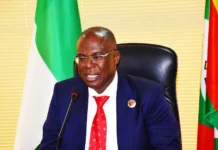
In his remarks, the Executive Secretary of the Nigerian Content Development and Monitoring Board ,NCDMB, Mr Felix Ogbe, underscored the need for human capacity development as the bedrock of Nigeria’s oil and gas growth.
Mr Ogbe said the sector’s sustainability depends not only on reserves and infrastructure but also on equipping Nigerians with critical skills in engineering, safety, automation, and digital technologies.
He highlighted NCDMB’s investments in training, research, and technical innovation, noting that every major oil and gas project must include skill-transfer components, stressing the importance of prioritising STEM education, vocational training, and collaboration between government, industry, and labour to prepare a workforce that can adapt to energy transition and automation.
“Human capacity is the true oil that will sustain Nigeria’s industry for generations”, Mr Ogbe said.