Joel Ajayi
The High Commission of the Islamic Republic of Pakistan in Abuja has strongly condemned India’s continued illegal occupation of Indian Illegally Occupied Jammu and Kashmir (IIOJK), reaffirming Pakistan’s unwavering political, diplomatic, and moral support for the Kashmiri people in their quest for self-determination.
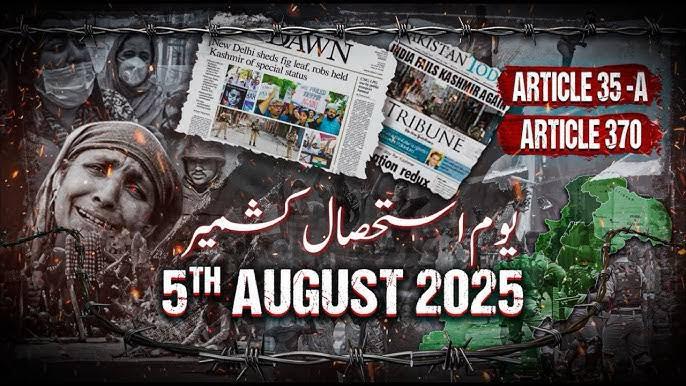
In a statement issued on the occasion of Youm-e-Istehsal observed annually on August 5 — the Pakistani High Commissioner to Nigeria on Teusday in Abuja, described India’s 2019 abrogation of Article 370 as a blatant violation of international law and a direct assault on the rights and identity of the Kashmiri people.
“August 5 marks a dark chapter in Kashmir’s history,” the High Commissioner said, recalling India’s unilateral move to revoke the region’s special constitutional status and bifurcate it into two so-called Union Territories. “These unconstitutional measures were taken to forcibly integrate a disputed territory and alter its demography, in clear contravention of United Nations Security Council resolutions and India’s own prior commitments.”
The statement emphasized that Article 370 had granted Jammu and Kashmir a special autonomous status — allowing it to make laws independently in most matters and restricting land ownership to residents. Its revocation, the High Commission noted, has led to increased repression, daily human rights violations, and a loss of identity for the region’s inhabitants.
“Since the illegal move of 2019, Kashmiris have endured relentless crackdowns, arbitrary detentions, restrictions on movement and expression, and widespread abuses at the hands of Indian security forces,” the High Commissioner added. “India’s narrative of restoring normalcy and development stands hollow in the face of these grim realities.”
Highlighting the broader context of the Kashmir dispute, the statement recalled that Jammu and Kashmir remains an unresolved issue from the partition of the subcontinent. It noted that India’s founding leadership, including Mahatma Gandhi, had pledged a plebiscite — a commitment further endorsed by UN Security Council Resolution 47. The High Commission criticized the current Indian administration under Prime Minister Narendra Modi for pursuing a politically motivated agenda aligned with the right-wing RSS ideology, aimed at altering the region’s demographic and political fabric.
The High Commission further noted that this year’s Youm-e-Istehsal carries added importance in light of India’s recent provocations against Pakistan. It praised the successful response of Pakistan’s armed forces in Operation Bunyan-ul-Marsoos, describing it as a demonstration of the country’s unity and resolve in the face of aggression.
Reiterating Pakistan’s steadfast position, the High Commissioner concluded:
“Pakistan will continue to stand shoulder to shoulder with the Kashmiri people. We remain committed to supporting their just struggle through all possible political, diplomatic, and moral means, until they achieve their inalienable right to self-determination, as enshrined in international law and the collective conscience of humanity