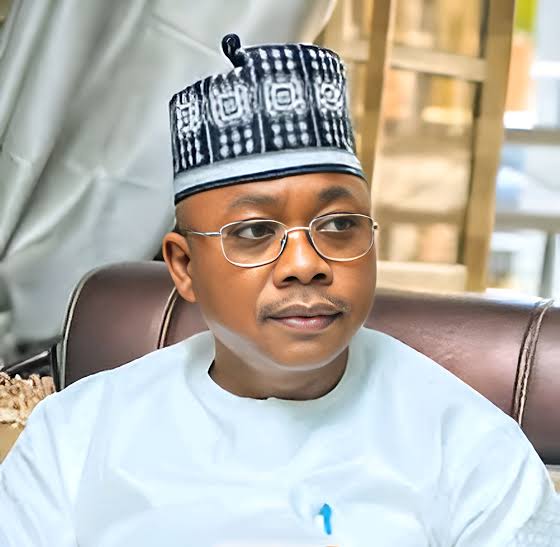
Kingsley Femi Fanwo
When Governor Ahmed Usman Ododo assumed office, he was described in some circles as “stingy”, It was a tag coined by those who expected government resources to continue flowing into the pockets of political power brokers and godfathers. But months into his tenure, that very “stinginess” is turning into a golden virtue, fueling a revolution in rural infrastructure, healthcare, education, and public utility. If stinginess to political rent-seekers translates to generosity to the people, then Kogi may be witnessing the dawn of a new era of meaningful development.
Just recently, the Kogi State Government took delivery of a number of transformers to boost electricity supply across the state, with a special focus on rural communities. For decades, large portions of our rural areas operated in darkness, both literally and economically. That tide is now turning.
Electricity is not just about light; it is a catalyst for rural development. With improved power supply, small-scale food processors can now add value to agricultural products like cassava, yams, rice, and groundnuts. This will not only improve household income but also reduce post-harvest losses. For artisans such as welders, hairdressers, tailors, mechanics, who depend on electricity to run their businesses, this is liberation. It allows them to operate from their own communities, discouraging the rural-urban migration that has for long robbed our villages of their youth and productivity.
Clean water access will also see improvement, as many boreholes and water pumping systems depend on electricity. In turn, this reduces the burden on women and children who travel long distances to fetch water, and most importantly, helps prevent waterborne diseases like cholera and typhoid. What some call stinginess, we call surgical prudence. The Government is saving funds from frivolity and redirecting them to where they are truly needed.
The same transformative story is unfolding in healthcare. Across the 21 Local Government Areas of the state, over 200 Primary Health Centres are currently being remodeled. But this is not just a coat of paint or a patch job. These health centres are being equipped to handle secondary healthcare functions, bringing life-saving services closer to rural communities. This is unarguably the most audacious investment in the rural healthcare system in the history of Kogi State.
Villages like Otafun, Ayede, and many others; places that had never felt the touch of state investment, are now witnessing gleaming new health centres rise from the ground. Residents no longer have to travel hours to get basic medical attention. Antenatal care, immunization, minor surgeries, treatment of chronic diseases, these are now within reach. In a time when many states are struggling to keep urban hospitals open, Kogi is quietly building a healthcare safety net across her most remote communities.
Education, too, is benefitting from the Governor’s “stinginess”. Take Government Day Secondary School, Takete-Ide, for instance. Founded in 1980, its classrooms built by the community, had for decades stood as a testament to grassroots sacrifice. But two months ago, something changed. The school took delivery of modern classrooms with tiled floors, sturdy roofs, beautiful walls, electric fittings , and secure doors and windows. For the first time in over four decades, the students and teachers could truly feel the presence of the government. And this is not an isolated incident. Across the state, similar transformations are underway, turning schools from makeshift sheds into true centres of learning.
But it is not just about buildings. The State Government under Governor Ododo has declared education a public right, and backed that declaration with action. Primary and secondary education in the state is now tuition-free. The Government also pays for both internal and external examinations such as WAEC, NECO, and more. Tertiary students are not left out, with bursaries now being disbursed to help them stay focused on their studies rather than their school fees.
This means that from the first day in primary school to the final day in a university lecture hall, the children of the poor feel the hand of government behind them. This is what governance should be; lifting burdens, not creating new ones. And it is only possible because the Governor refuses to play the game of “settling” the politically entitled at the expense of the voiceless masses.
The transformation does not stop at electricity, healthcare, and education. The state’s rural and urban infrastructure is also receiving unprecedented attention. From the ongoing erosion control works in parts of Kogi East, Kogi West and Kogi Central to road projects connecting farming communities to markets, the Governor’s approach is strategic and sustainable. Every kobo is being stretched to serve the highest number of people. Contractors are selected for competence, not connection. Projects are designed for utility, not media hype.
Security, another critical component of development, has also seen a remarkable boost under Governor Ododo. His administration has made heavy investments in the procurement of logistics for security agencies and supported the training and deployment of community-based security operatives. These local personnel, who serve as the first line of defense in their communities, have been instrumental in disrupting criminal operations before they escalate. Flashpoints that once made headlines for violence and banditry are now witnessing relative calm. This improved security climate is not accidental—it is the result of deliberate, focused investment in protecting lives and livelihoods.
In addition, the Governor has thrown his weight behind wealth creation through the Kogi Enterprise Development Agency ,KEDA. By funding the agency adequately, the government is empowering small and medium-scale businesses especially those run by women and youth. Soft loans, training, and technical support are being extended to aspiring entrepreneurs across the state. This is “stinginess” that puts capital in the hands of the people and confidence in the heart of the economy. Wealth creation at the grassroots isn’t just a policy under Governor Ododo, it’s a movement.
Furthermore, his administration has taken steps to digitize land administration through the Kogi Geographic Information System ,KOGIS, making land documentation more transparent, accessible, and investor-friendly. This will unlock real estate value and provide sustainable revenue for the state another result of prudent leadership.
Governor Ododo’s approach is simple but rare: if it doesn’t benefit the people, it doesn’t deserve their money. This is the stinginess that should be emulated.
The naysayers who once complained that he wasn’t “spending” enough on things that arr frivolous are now confronted with a government that is not only spending, but spending wisely.
In a time when some politicians still believe governance is about pleasing a few, Governor Ahmed Usman Ododo is proving that real leadership is about standing with the many, even when it means disappointing the selfish few. He has redefined stinginess as a public virtue when it is deployed to protect the commonwealth from the greedy hands of self-serving political dealers.
So, is Ododo’s stinginess rewarding Kogi? The answer lies in the newly lit villages, in the remodeled health centres, in the transformed schools, in the relieved faces of parents who no longer have to pay school fees, and in the empowered hands of artisans and farmers who are finally seeing the dividends of democracy.
May Kogi continue to have Governors who are stingy to the selfish, but generous to public good.
Fanwo, Kogi State Commissioner for Information and Communications, writes from Lokoja.
Buhari Gave N’Delta PIA, A’Ibom Oil Community, IYC Mourn
From INIOBONG SUNDAY, Uyo
As the world continues to pay glowing tributes to former President Muhammadu Buhari, who passed on about a week ago, the coastal oil – bearing Ibeno ethnic nationality in Akwa Ibom State and the Ijaw Youth Council, IYC, worldwide, have joined in mourning the man they described as “a friend of Niger Delta”.
Consoling President Bola Tinubu, the late Buhari ‘s family, the government and people of Katsina state and Nigeria at large, elders, youths and stakeholders of Ibeno, lamented over the demise of the ex-Nigerian President, saying his patriotic and detribalised disposition to national issues would be sorely missed.
The leaders, who spoke under the aegis of their socio-cultural association, Mpono Nnito Ibono Progressives Association, MNIPA, recalled that the former President interventionist regime by approving the Petroleum Industry Act, PIA, has contributed largely to dousing tension in the region.
Spokesman for the group, Chief Eshiet Okpo, extolled the sterling qualities of the deceased former president, describing him as a man who was hated for standing up for the truth.
Chief Okpo, who read the communique arising from their extraordinary meeting in Upenekang, headquarters of Ibeno local government area at the weekend pointed out that “the late President Buhari was a detribalised leader who hated injustice with zero tolerance for marginalisation”.
They noted that “his quest to address years of injustice against the people of Niger Delta motivated him to push for the then PIA Bill through all the legislative processes and then gave his assent to become a law in 2021”.
“The PIA has brought fresh breath into the oil and gas industry and most importantly, the host communities through Host Communities Development Trust Fund, HCDTF.
“As one of the LGAs benefiting from the PIA, lots of life-touching projects and social empowerment schemes have come to Niger-Delta including Ibeno LGA
“The administration under Buhari was serious in making the host communities to oil and gas companies to have a stake in the wealth from their domain devoid of any political sentiments or ethnic discrimination.
“Buhari was a friend of the Niger Delta, who believed the Goose, that lays the Golden Eggs must be rewarded without any bias to language, culture, and locations.
“Late President Buhari was a true Nigerian leader and a patriot who understood the pains of Nigerians across the six geo-political zones. Despite his shortcomings as human, he was totally committed to addressing the challenges of poverty, unemployment, and equity in resource distribution.
“Now, that he has passed unto eternal glory, the people of Ibeno, Niger Delta and the entire Nigeria will remember him for those legacies”, the communique read in part.
The group, however, commended President Tinubu for renaming the University of Maiduguri after the late Buhari, to immortalise the him, and praised the humane dispositions of some past Northern Nigerian leaders, who had variously touched the lives of marginalised Nigerians in the Delta region, recalling how these leaders have contributed to the transformation of the region and Ibeno in particular.
One of such moment they recalled, was the creation of Ibeno LGA by the late General Sanni Abacha, thereby giving them an identity as a people, praying that, such feelings of nationalism should also touch President Tinubu, in their agitation for the creation of Obolo State to douse the long years tension borne out of of neglect, marginalisation.
In the same vein, the IYC worldwide, expressed their condolences to the former first family and expressed solidarity with the Obolo people in their demand for a separate state, stating the need for more equitable distribution of resources and greater representation.
They prayed God to continue to grant president Tinubu the courage to continue to right the wrongs in the country.