By Joel Ajayi
The National Population Commission (NPC) has commended the United Nations Population Fund (UNFPA) for its unwavering support in advancing reproductive health, strengthening demographic data systems, and promoting youth empowerment in Nigeria.
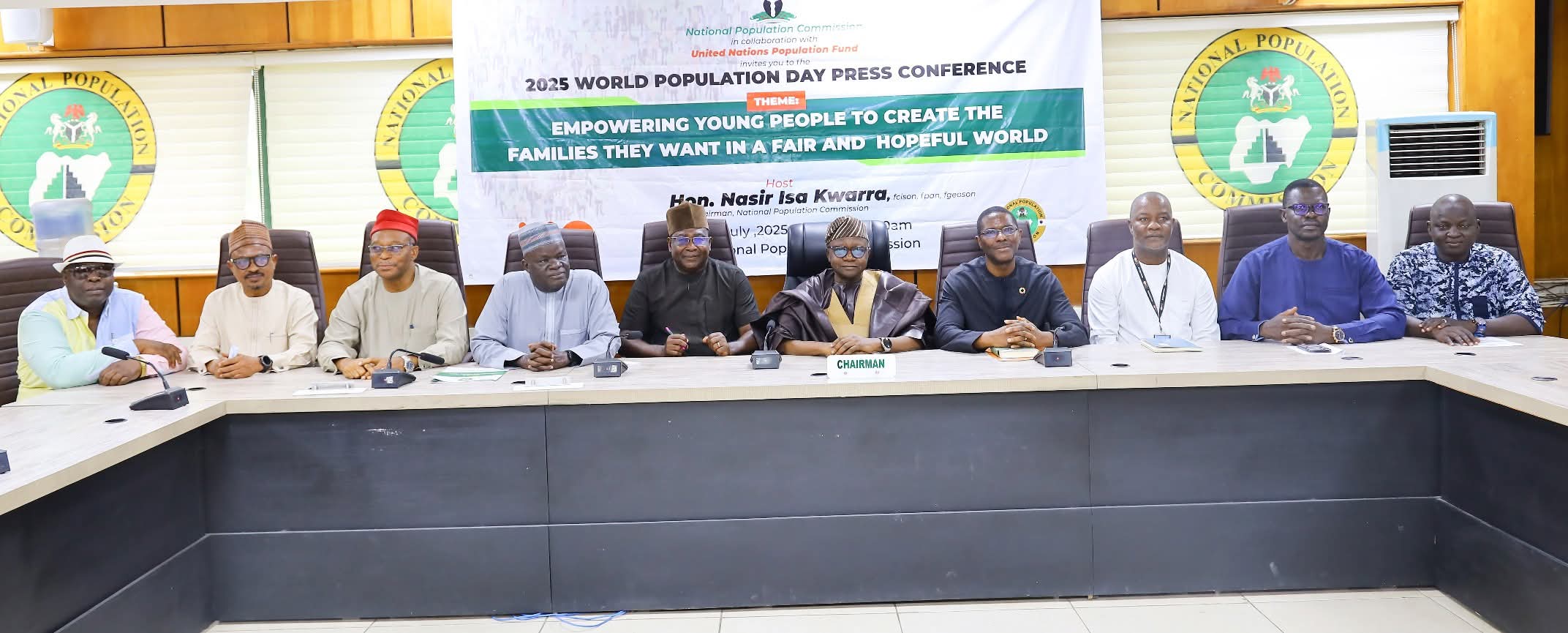
Speaking on Thursday in Abuja at the commemoration of the 2025 World Population Day, NPC Chairman, Hon. Nasir Isa Kwarra, thanked stakeholders and emphasized the importance of this year’s theme: “Empowering Young People to Create the Families They Want in a Fair and Hopeful World.”
He noted that with over 60 percent of Nigeria’s population under the age of 30, the country is at a pivotal point in its demographic transition—one that presents both vast opportunities and significant challenges.
To harness the full potential of this youthful population, the Commission stressed the need to eliminate structural barriers such as limited access to quality education and healthcare, unemployment, gender-based discrimination, and social marginalization. Hon. Kwarra stated that empowering young people with accurate information and the freedom to make informed reproductive choices is essential to building a prosperous and equitable society.
At the heart of this agenda, he said, is reliable data. As the agency constitutionally mandated to generate demographic statistics for national planning, the NPC is focusing on three strategic pillars:
“Revitalization of the Civil Registration and Vital Statistics (CRVS) System, In collaboration with the Federal Ministry of Health, the Ministry of Interior, and development partners, the NPC is digitizing birth and death registration nationwide. By deploying digital registration points in healthcare facilities and communities, the Commission aims to ensure that every Nigerian child is counted and protected from birth—unlocking access to essential services such as education, healthcare, and social protection.
Implementation of a Fully Digital Population and Housing Census, Preparations are underway for Nigeria’s first digital population and housing census. This landmark initiative will provide comprehensive and disaggregated data on age, gender, education, housing, and access to basic services. Such data, Hon. Kwarra noted, is critical for planning and delivering targeted interventions in key sectors such as education, health, and employment.
Development of the National Geospatial Data Repository, This innovative platform integrates census and CRVS data with geospatial tools to visualize population trends, identify underserved communities, and support targeted development efforts—especially in areas with high youth populations and limited infrastructure.
The NPC Chairman described UNFPA as a strategic and longstanding partner whose technical and financial support has been pivotal in advancing these initiatives. From capacity building to stakeholder engagement, he said UNFPA has played a vital role in enhancing the Commission’s ability to fulfill its mandate and drive inclusive development.
As part of the 2025 World Population Day observance, the NPC, in collaboration with UNFPA and other stakeholders, organized a series of activities including youth consultations, stakeholder dialogues, media engagements, and community sensitization forums.
Hon. Kwarra also acknowledged the critical role of the media in shaping public discourse, commending journalists for their continued efforts in bridging the gap between data, policy, and the people.
He concluded by reaffirming the Commission’s commitment to youth development, stressing that investing in young people is not optional—it is a national imperative. Through collective action, data-driven policies, and sustained partnerships, he said Nigeria can build a future where every young person is informed, empowered, and able to realize their full potential.