By Uzochukwu Maduike
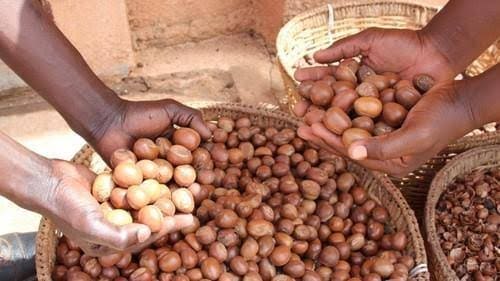
Market data shows that shea nuts prices in Nigeria are stabilizing after a brief dip following the Federal Government’s ban on raw exports. Prices, which fell sharply in the days immediately after the announcement, have steadily rebounded as domestic processors stepped in to absorb supply.
Today, average prices are approaching pre-ban levels, signaling growing confidence in the policy.Market data shows that shea nuts prices in Nigeria are stabilizing after a brief dip following the Federal Government’s ban on raw exports. Before the policy was announced, prices averaged around ₦850 per kilogram. In the days immediately following the announcement, prices fell sharply to about ₦570 per kilogram as traders and middlemen adjusted to the new market realities.
However, by mid-September, prices had rebounded to ₦710 and ₦800 per kilogram towards the end of September, indicating renewed confidence and an emerging balance between supply and demand. As of today, the average market price for shea nuts stand at approximately ₦1,000 per kilogram, reflecting both recovery and growing stability.The policy is anchored in the Renewed Hope Agenda and reflects President Bola Ahmed Tinubu’s Nigeria First Economic Policy, which prioritizes domestic value addition as the pathway to growth.
Though, the country supplies more than a third of the world’s shea, it captures less than 1% of the US$6.5bn global market because raw nuts have historically been exported with minimal processing. By securing raw material for over 20 local plants, many of which had been operating below 30% capacity, the ban is strengthening industries, safeguarding jobs, and boosting economic