Katsina State government said it will provide industrial tools to repentant bandits, as part of the social reintegration programme.
It also planning to provide 152 houses/business support for displaced households in Jibia Local Government Area.
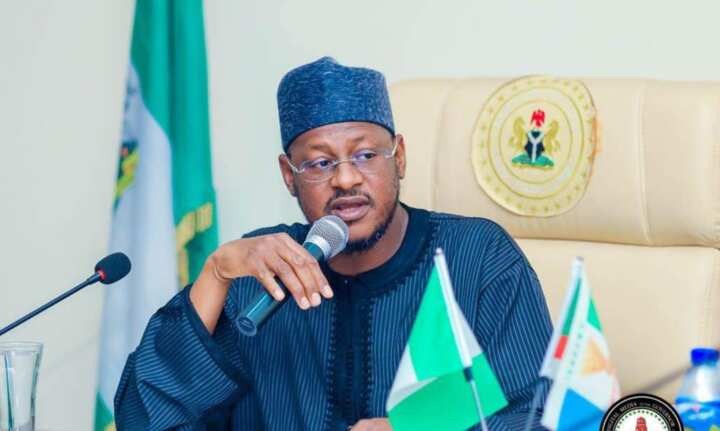
Government Dikko Radda said this yesterday in a statement signed by the Commissioner for Information and Culture, and Director-General on Media to the governor, Dr Bala Zango and Maiwada Dammallam, respectively, while hosting a high-level consultation meeting to discuss security, governance and development.
“The state government is planning to provide 152 IDP homes in Jibia for displaced families, plus business support packages, cattle and industrial tools for repentant individuals, preventing violence relapse,” he said.
Radda reiterated that security tops his development blueprint alongside education, agriculture, health, MSME support and revenue generation, admitting that he acknowledges criticisms, while emphasising openness to constructive feedback.
The statement also quoted the Deputy Governor, Faruk Lawal-Jobe, as saying the state government had created 35,903 jobs in various sectors under its Building Your Future Policy.
He listed teachers recruitment; ward head appointments, engagement of community watch members, vigilantes, hunters and religious leaders actively driving peacebuilding initiatives, as some of the feat achieved under the scheme.
Lawal-Jobe said the Katsina State Urban Renewal project covering Daura, Funtua and Katsina Senatorial Districts gulped N74.9 billion.
“Major infrastructural development include the 24-kilometre Eastern Bypass construction, eight other dualisation roads in Katsina town and reconstruction in Daura and Funtua, plus completion of key rural roads.
“Also, 160 new classrooms were built, 258 rehabilitated, 18,000 teachers trained, three model schools established, 152 schools upgraded under the AGILE project, examination fees fully settled and N6.18 billion awarded in scholarships to 174,451 students, including overseas sponsorships.
“The administration also distributed 400,000 bags of subsidised fertilisers annually, procured 400 tractors, provided 4,000 irrigation pumps and launched the Goat Rearing Initiative,” Lawal-Jobe said in the statement.
On workers welfare, the deputy governor said the state government paid N24 billion in gratuities, wage awards, Ramadan packages, civil service reforms and large-scale food distribution.
He said under the healthcare transformation programme, 260 ward-level primary health centres were built or upgraded, general hospitals renovated, dialysis and diagnostic centre established, pharmaceutical production unit created and international medical equipment donations secured.
The deputy governor said the state government also injected N14.6 million in water projects, ensuring the completion of major dams and irrigation schemes, while hand pumps were converted to solar-powered boreholes in rural areas.
He said the administration equally modernised land administration, initiated the development of a new masterplan; procured heavy machinery and paid N3.17 billion compensation to the affected landowners.
“The energy sector recorded N3.84 billion worth of solar mini-grids completion, 74km of solar streetlights installation, high-tension power line restoration, and community-level transformer upgrades.”
The statement quoted on the the Commissioner for Internal Security and Home Affairs, Nasiru Mu’azu, as attributing banditry, kidnapping and cattle rustling to greed; envy, natural resource conflicts due to climate change, and long-standing social injustices.
According to Mu’azu, banditry spread from five local government areas between 2011 and 2015, to 25, following the collapse of the amnesty programme implemented from 2015 to 2023.
He said the state government did not initiate the peace agreements in DanMusa, Jibia, Batsari, Kankara, Kurfi, and Musawa Local Government Areas, stressing that “it was entirely community-driven.” (NAN)