…Upgrades Nigeria’s 2025 growth forecast to 3.4%
…Economic raise not sustainable with electricity crisis—Rewane
By Charles Ebi
International Monetary Fund ,IMF, has warned Nigeria and other Sub-Saharan Africa ,SSA, countries not to prioritise higher earnings over the poor living condition of their citizens so as not to trigger social unrest.
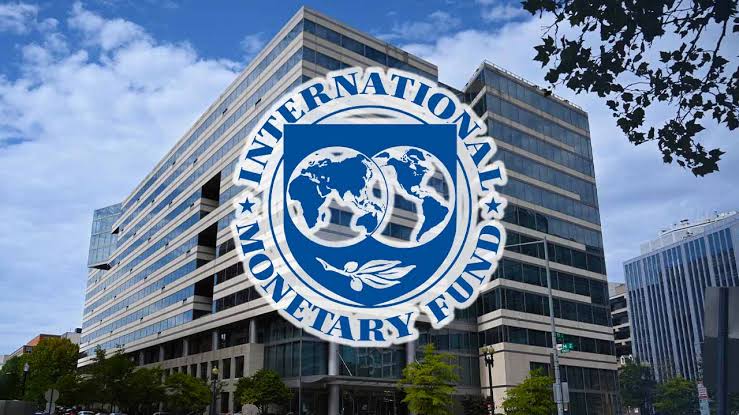
This call came from the Bretton Woods institution in its World Economic Outlook ,WEO, July 2025 edition, where it upgraded its forecasts for Nigeria’s economic growth for 2025 and 2026 to 3.4% and 3.2% respectively.
In the same vein, the IMF raised its forecast for the Sub-Saharan African region to 4.0% for 2025 and 4.3% for 2026, representing a 0.2 percentage point and 0.1 percentage point increase from 3.8% and 4.2%, respectively, projected in the April 2025 WEO.
“Growth is expected to be relatively stable in 2025 in sub-Saharan Africa at 4.0%, before picking up to 4.3% in 2026″, the IMF said.
However, the multilateral institution called for urgent structural and institutional reforms across SSA as the region grapples with a complex mix of economic challenges.
Commenting on the SSA region, Division Chief, Research Department, Ms Deniz Igan said: “Given the challenges Sub-Saharan Africa is facing, this is an important pillar for renewed growth in the region. There’s a need for both structural and institutional reforms. And what we mean there is to give some specific examples.
“Further, regional trade integration is one. More investment in infrastructure transportation is another one. And reform of state-owned enterprises, again, especially in the energy sector and transportation sector, is another priority”.
Ms Igan also stressed the importance of equitable fiscal reforms, noting that efforts to raise revenues must avoid deepening inequality or triggering social unrest.
She advocated the removal of poorly targeted tax exemptions, greater reliance on progressive income taxes, and the need to build public trust through transparent governance. According to her, engaging with stakeholders and sequencing reforms carefully would be essential to protect vulnerable groups and ensure broad-based support for policy changes.
“Now we understand that on the fiscal front, with high debt levels as well, there’s a need for mobilising revenues, and that can generate a sense of unfairness and inequity that could create social backlash.
“And on that front, our advice has been for the design of fiscal reforms that are equitable, that are efficient, and more specifically, there. What we have in mind is removing poorly targeted exemptions in the tax code, making use of progressive income taxes much more, and building trust and support, as we had covered in detail in our October 2024 report in one of our analytical chapters, by engaging with stakeholders, hearing what they need, improving governance and protecting the vulnerable, and at same time, bundling, sequencing and pacing different measures to make sure that the most vulnerable in the society are protected”.
Similarly, International Monetary Fund ,IMF, has adjusted Nigeria’s 2025 economic growth prediction to 3.4%, reflecting a 0.4 percentage point rise from the 3 per cent estimate in its April 2025 World Economic Outlook ,WEO.
In the July 2025 WEO Update, the IMF expressed an optimistic outlook regarding Nigeria’s short-term economic path, notwithstanding global uncertainties and local macroeconomic difficulties.
The Fund projects that Nigeria’s growth would remain at 3.4% in 2025, but dropped to 3.2% in 2026, which is also 0.5 percentage points higher than the April estimate.
These improvements, it said are in line with a more generally optimistic change in the prognosis for the world, which is being fuelled by strong trade activity, excellent financial conditions, and a brief relaxation of tariff constraints.
Nonetheless, Nigeria’s growth is anticipated to stay beneath the regional average of Sub-Saharan Africa, estimated at 4.0% in 2025 and 4.3% in 2026.
By comparison, South Africa’s forecast remains unchanged at one per cent for 2025 and 1.3% for 2026.
The IMF also anticipates global growth to reach three per cent in 2025, up by 0.2 percentage points from April’s projection, largely due to front-loaded trade and investment ahead of anticipated tariff increases.
The report stated, “Global growth is projected at 3.0% for 2025 and 3.1%in 2026. The forecast for 2025 is 0.2 percentage point higher than that in the reference forecast of the April 2025 World Economic Outlook ,WEO, and 0.1 percentage point higher for 2026.
This reflects stronger-than-expected front-loading in anticipation of higher tariffs; lower average effective US tariff rates than announced in April; an improvement in financial conditions, including due to a weaker US dollar; and fiscal expansion in some major jurisdictions.
Global headline inflation is expected to fall to 4.2% in 2025 and 3.6% in 2026, a path similar to the one projected in April.
The overall picture hides notable cross-country differences, with forecasts predicting inflation will remain above target in the United States and be more subdued in other large economies”.
The IMF further noted that the current global and regional optimism is underpinned by lower-than-expected US tariffs, an improved financial environment, and stronger capital flows to emerging markets like Nigeria, helping to temper inflationary pressures.
However, the Fund cautioned that this momentum might be temporary. Much of the growth improvement is linked to front-loaded trade and investment ahead of potential tariff reinstatements.
The IMF warned that this could lead to a “payback” effect in 2026, with reduced activity if similar stimulus measures are absent.
Meanwhile, an economist and Managing Director of Financial Derivatives Company Ltd, Bismarck Rewane, has warned that Nigeria’s continued electricity supply crisis poses a serious threat to the country’s economic stability and long-term growth.
He declares that current GDP progress is unsustainable without immediate and comprehensive reforms in the power sector.
Speaking during a live interview on Channels Television’s programme, Rewane underscored the severe economic cost of power outages, particularly in industrial and commercial hubs like Lagos and Ogun states, which collectively contribute nearly 30% to Nigeria’s Gross Domestic Product ,GDP.
“There is the opportunity cost, and there is the real cost”, Rewane explained. “If you’re going to have a one-month power outage in Lagos and Ogun, the impact is effectively one-twelfth of 30% of the GDP. That is a massive loss for any economy”.
He described Nigeria’s electricity woes as systemic and multi-dimensional, attributing the crisis to a combination of cultural factors, tariff distortions, chronic underinvestment, and regulatory inefficiencies, including a tolerance for debt forbearance within the sector.
“You cannot grow the economy with what we’ve seen today without a broad power solution,” Rewane asserted. “If there is a power outage in Nigeria, it must be resolved no question. You can’t put a Band-Aid on it. It has to be done, and it has to be done now”.
Rewane’s comments come amid continued blackouts and mounting concerns from businesses and households over the reliability and cost of electricity, even as Nigeria attempts to attract foreign direct investment and boost industrial productivity.
While Nigeria recorded a GDP growth of 3.13% in the first quarter of 2025, Rewane cautioned that such growth figures may be deceptive without structural improvements in infrastructure, particularly power.
He also noted notable sectoral shifts within the economy. Manufacturing, once a key growth engine, has declined in contribution, while agriculture is gaining prominence. However, the services sector remains the dominant driver of economic activity.
Turning to the petroleum downstream sector, Rewane commented on the broader challenges of refining in Nigeria, pointing out that the global refining business is increasingly dominated by major hubs due to its complex, high-capacity nature and thin margins.
“Refining is a high-volume, low-margin business”, he said. “Operational efficiency is critical. Profit depends on the margin between your average revenue and average cost. People need to understand the technical scale and expertise that refining demands”.
Rewane’s intervention adds to the growing call for urgent reforms in Nigeria’s energy and infrastructure sectors, with stakeholders stressing that resolving the power crisis is essential not only for private sector development but also for achieving macroeconomic stability and inclusive growth.