…As Lokpobiri warns host communities against pipeline sabotage
By Dickson Pat
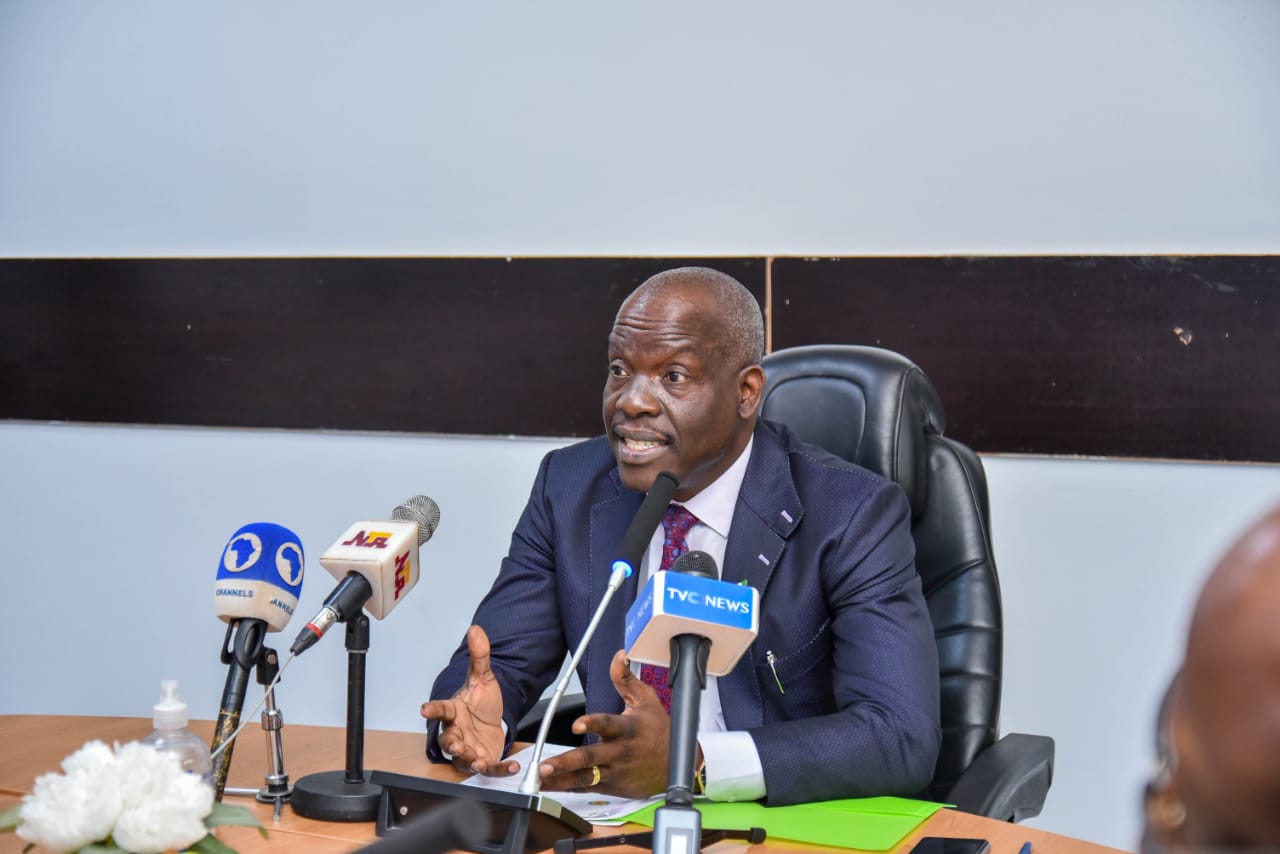
Nigerian Upstream Petroleum Regulatory Commission, NUPRC, has warned that oil block holders who fail to meet their development obligations risk outright revocation of their licenses, in line with the provisions of the Petroleum Industry Act, PIA.
Chief Executive of the Commission, Engr. Gbenga Komolafe, issued the warning while stressing that undeveloped acreages will not be allowed to lie fallow amid Nigeria’s drive to maximize hydrocarbon value.
“If you have been awarded an oil block and you refuse to develop it in accordance with the terms, it will be revoked”, Komolafe declared.
According to him, every oil block award comes with clear conditions, including timelines for exploration and development, which investors are expected to honour.
“Every award has very clear terms about its tenure, but the clear provisions of the PIA being the instrument that guides our regulatory activities is that unexplored acreages are expected to be relinquished, apart from the clear terms of the award itself”, the NUPRC boss explained.
The warning comes at a time when the Federal Government is under pressure to boost production volumes, attract fresh capital inflows, and shore up dwindling oil revenues.
The enforcement of relinquishment provisions could open up dormant acreages to more serious investors, thereby stimulating competition and accelerating production growth.
Komolafe reaffirmed that the NUPRC will continue to operate strictly within the framework of the PIA, noting that compliance with the law is non-negotiable.
The stance underscores the government’s bid to align regulatory practices with global standards, where idle assets are quickly reassigned to optimize resource development.
By enforcing these provisions, Nigeria hopes to unlock more investment in its upstream sector, improve crude output, and strengthen its fiscal buffers in a challenging oil market
Meanwhile the Minister of State for Petroleum Resources (Oil), Senator Heineken Lokpobiri, has cautioned that host communities in the Niger Delta risk sabotaging their own development by attacking pipelines and other oil assets.
Speaking at the 60th birthday celebration and book launch of HRM King Bubaraye Dakolo, Agada IV, Ibenanaowei of Ekpetiama Kingdom, in Yenagoa, Bayelsa State, Lokpobiri stressed that such actions directly cut into the 3% oil revenue allocation to host communities, as provided under the Petroleum Industry Act, PIA.
“When we blow up pipelines, we also blow up our accrued 3% of oil revenue, as enshrined in the PIA. This act of sabotage directly undermines our own development”, the Minister said.
Lokpobiri noted that one of the most commendable aspects of the PIA was not only the revenue-sharing mechanism but also the shared responsibility placed on host communities to ensure seamless and secure oil and gas operations in the Niger Delta.
He described the gathering in honour of King Dakolo, a prominent advocate of environmental justice and sustainability, as a timely platform to reinforce the message of shared accountability for Nigeria’s hydrocarbon wealth.
“This celebration of HRM King Dakolo presented a timely opportunity to reinforce this message. I urged all stakeholders present to take this conversation back to their communities and ensure that within their control, our national assets are safeguarded”, he stated.
Lokpobiri further highlighted what he described as the intentional commitment of President Bola Ahmed Tinubu to the progress of the Niger Delta. According to him, this is evident in the operationalization of the Host Community Development Trust Fund and other initiatives under the Renewed Hope administration.
He added that securing oil and gas infrastructure is critical to sustaining government revenues, investor confidence, and the delivery of projects that will transform the Niger Delta.
“Protecting our national assets supports the Federal Government’s efforts toward regional and national development”, the Minister declared.
Cooking Gas Prices Surge By 44% In One Year
Cost of cooking gas has continued its steep climb, as latest data from the National Bureau of Statistics, NBS, shows prices surged by nearly 38% and 44% year-on-year for 5kg and 12.5kg cylinders respectively.
According to the NBS Liquefied Petroleum Gas, LPG Price Watch for July 2025, the average retail price for refilling a 5kg cylinder of cooking gas rose by 37.98% to N8,243.79 in July, compared to N5,974.55 in the same month of 2024.
On a month-on-month basis, however, the report showed a marginal decline of 0.96% from the N8,323.95 recorded in June 2025.
State-by-state analysis revealed that Adamawa recorded the highest average price for refilling a 5kg cylinder at N9,011.36, followed closely by Rivers at N9,005.00 and Taraba at N8,945.43.
In contrast, Yobe posted the lowest average price at N7,612.00, while Niger and Nasarawa recorded N7,662.00 and N8,000.25 respectively.
Zonal breakdown showed that the South-South had the highest average retail price at N8,511.26, followed by the South-East at N8,321.16, while the South-West recorded the lowest average price at N8,073.92.
Similarly, the average retail price for refilling a 12.5kg cylinder rose sharply by 44.51% year-on-year, climbing to N20,609.48 in July 2025, from N14,261.57 in July 2024.
On a month-on-month basis, the price dipped by 1.91%, from N21,010.56 in June 2025.
Adamawa also topped the chart for 12.5kg refills at N22,528.39, followed by Rivers at N22,512.49 and Taraba at N22,363.57. Yobe recorded the lowest average at N19,030.00, trailed by Niger at N19,154.99 and Nasarawa at N20,000.62.
By zone, the South-South again recorded the highest average retail price at N21,278.14, followed by the South-East at N20,802.89, while the South-West posted the lowest at N20,184.79.
The NBS figures highlight the persistent year-on-year surge in cooking gas prices despite marginal declines in recent months, leaving many households struggling with rising energy costs.