…As NUPRC targets 2.5m barrels daily output, unveils sector roadmap
By Dickson Pat
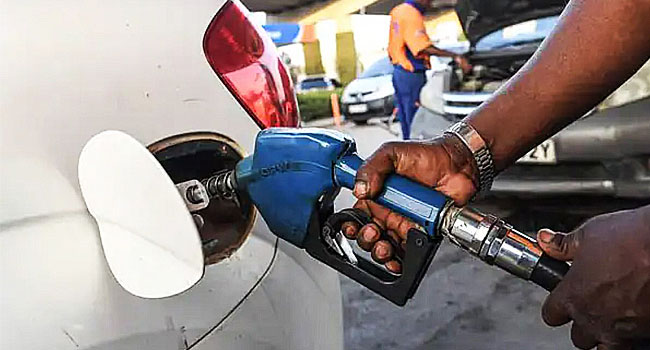
Federal Government, through the Nigerian Midstream and Downstream Petroleum Regulatory Authority ,NMDPRA, has announced the suspension of the proposed 15% ad-valorem import duty on Premium Motor Spirit ,PMS, and Automotive Gas Oil ,AGO, commonly known as petrol and diesel.
The Authority made this known in a statement issued yesterday, reassuring Nigerians that there is sufficient supply of petroleum products across the country despite the rising demand during the current peak season.
“It should be noted that the implementation of the 15% ad-valorem import duty on imported Premium Motor Spirit and Diesel is no longer in view”, the regulator stated.
Last month, President Tinubu approved a 15% ad-valorem import duty on diesel and petrol.
The approval was contained in a letter dated October 21, 2025, where Damilotun Aderemi, the Private Secretary to the President, conveyed the directive to the Federal Inland Revenue Service ,FIRS, and the Nigerian Midstream and Downstream Petroleum Regulatory Authority ,NMDPRA.
This was a move oil marketers have described as very challenging and would lead to an increase in the price of petroleum products.
They said the government is making it difficult for players who are importing petroleum products to make up for the shortfall from the local refiners, who they said are not producing enough to meet local demand.
According to the statement, the NMDPRA said that both domestic refineries and importation channels are providing a “robust and steady” inflow of petroleum products, including PMS, AGO, and Liquefied Petroleum Gas ,LPG, to ensure the market remains stable and retail stations are adequately stocked.
It further noted that the Authority is maintaining close surveillance of supply and distribution networks nationwide to prevent any disruptions or artificial scarcity.
“There is a robust domestic supply of petroleum products ,AGO, PMS, LPG etc, sourced from both local refineries and importation to ensure timely replenishment of stocks and storage deposits at retail stations during this period”, it added.
NMDPRA also cautioned marketers and depot operators against hoarding, panic buying, or arbitrary price increases that are not market-reflective, stressing that such practices could undermine stability in the downstream sector.
Dangote Petroleum Refinery has thrown its weight behind the federal government’s decision to impose a 15% ad-valorem import duty on petrol and diesel, describing it as a necessary measure to protect local refiners and curb the dumping of imported products.
The refinery said it currently has sufficient capacity to meet national demand, stating that it is loading about 45 million litres of petrol and 25 million litres of diesel daily, while working with regulatory agencies to ensure nationwide distribution.
Meanwhile, the Chief Executive of the Nigerian Upstream Petroleum Regulatory Commission ,NUPRC, Engr. Gbenga Komolafe, has announced that Nigeria is targeting a crude oil production level of 2.5 million barrels per day (bpd) by 2026, as part of a broad strategy to reposition the nation’s oil and gas industry for growth, transparency, and sustainability.
Komolafe made this known while delivering a keynote address at the 2025 Energy Correspondents Association of Nigeria ,ECAN, Conference in Abuja, themed “Four Years of the PIA: Achievements, Gaps and the Road Ahead”.
He said the NUPRC, under its Project One Million Barrels Initiative launched in 2024, is pursuing aggressive measures to boost production by reactivating dormant fields, fast-tracking regulatory approvals, and improving operational efficiencies across the upstream value chain.
“Through deliberate regulatory interventions and strategic collaboration with industry operators, Nigeria is steadily regaining lost production volumes”, Komolafe said. “Our current unreconciled daily output now averages between 1.7 and 1.83 million barrels per day, and with ongoing initiatives, we are on course to achieve 2.5 million barrels per day by 2026″.
According to him, the implementation of the Petroleum Industry Act (PIA) 2021 marked a major turning point for the country’s oil and gas industry, providing the foundation for transparency, fiscal stability, and global competitiveness.
He noted that since the establishment of the NUPRC, the Commission has issued 19 key regulations to operationalize the provisions of the Act, streamline operations, and improve investor confidence.
Komolafe explained that fiscal reforms, including new royalty regimes and tax incentives, have been instrumental in attracting fresh capital inflows and ensuring project viability. “We have introduced competitive royalty rates, zero hydrocarbon tax for certain projects, and other mechanisms designed to enhance investor appeal”, he stated.
On the Commission’s efforts to tackle crude oil theft and losses, the NUPRC boss disclosed that the approval of 37 new evacuation routes and strengthened collaboration with security agencies have significantly reduced illegal activities and improved accountability in the value chain.
He also highlighted the enforcement of the Domestic Crude Supply Obligation ,DCSO, as part of the Commission’s plan to ensure local refineries have adequate feedstock, thereby strengthening Nigeria’s internal energy security and economic resilience.
Speaking on the country’s gas-focused transition agenda, Komolafe said the Commission is advancing key programmes such as the Decade of Gas, the Nigerian Gas Flare Commercialisation Programme ,NGFCP,, and the Presidential CNG Initiative aimed at achieving zero routine gas flaring by 2030 and cutting methane emissions by 60% by 2031.
“Our gas-centric strategy reflects the global shift toward cleaner fuels”, he explained. “With over 209 trillion cubic feet of proven reserves and an upside potential exceeding 600 trillion cubic feet, Nigeria is well positioned to lead Africa’s gas industrialisation and energy transition”.
He noted that the NUPRC’s Regulatory Action Plan ,RAP, has been instrumental in driving transparency and operational efficiency, focusing on production optimization, digitalization, and environmental stewardship.
Komolafe also disclosed that the Commission has revitalized the National Data Repository ,NDR, Africa’s largest digital petroleum data bank to enable seamless access to geoscientific data, thereby enhancing investment decisions and de-risking exploration.
The NUPRC Chief further reaffirmed Nigeria’s commitment to reducing its carbon footprint through the Upstream Decarbonisation Framework and Blueprint, which integrates emissions monitoring, carbon capture, and access to climate finance.
On regional cooperation, Komolafe said Nigeria is taking the lead in harmonising energy regulations across the continent through the African Petroleum Regulatory Forum ,AFRIPERF, which promotes cross-border financing and infrastructure interoperability.
He commended the Energy Correspondents Association of Nigeria for its role in promoting accountability and professionalism in energy reporting, stressing that effective communication between regulators, operators, and the media is critical to building public trust in the sector.
“As we move forward, our focus remains clear to make Nigeria’s upstream oil and gas industry globally competitive, transparent, and sustainable”, Komolafe concluded. “We are determined to turn our natural resource wealth into lasting prosperity for all Nigerians”.
The Chief Executive Officer of the Major Energy Marketers Association of Nigeria ,MEMAN, Mr. Muhammad Al-Amin Kassim urged stakeholders to sustain the momentum of reforms under the **Petroleum Industry Act (PIA) to ensure tangible benefits for Nigerians.
Kassim commended the progress recorded since the PIA’s enactment in August 2021 but noted that effective implementation remains the sector’s biggest challenge.
He praised the creation of new regulatory bodies the Nigerian Upstream Petroleum Regulatory Commission ,NUPRC, and the Nigerian Midstream and Downstream Petroleum Regulatory Authority ,NMDPRA, which, he said, have improved transparency and investor confidence.
Kassim, however, called for greater coordination among institutions, capacity building, and the elimination of bureaucratic delays that discourage investment.
He proposed a six-point action plan centred on capacity development, streamlined processes, public-private collaboration, fair competition, measurable outcomes, and community development.
While acknowledging the global shift to clean energy, Kassim stressed that Nigeria’s immediate priority should be expanding access to affordable energy for citizens.
“The reforms are an opportunity, but their success depends on our collective will to act”, he said.
Delivering his welcome address at the event, ECAN Chairman, Mr. John Ofikhenua, described the conference as “a historic moment” and a platform to ignite a national conversation at the core of Nigeria’s economic development.
“This is not just an event; it is the beginning of a national conversation that sits at the very heart of Nigeria’s development story”, Ofikhenua declared. “Our theme Four Years of the Petroleum Industry Act (PIA): Achievements, Gaps and the Way Ahead is both timely and necessary”.
He said that four years after the passage of the PIA, it was important for stakeholders to take stock of the journey so far, celebrate progress made, identify gaps, and chart a path toward ensuring that the objectives of the Act are fully realized.
“As journalists who have covered this sector for many years, we remember the long and tortuous journey that brought us here”, he said. “For over two decades, we reported the hopes, frustrations, and persistence of stakeholders yearning for reform. The eventual passage of the PIA was a triumph of resilience”.
He recalled that before the PIA, Nigeria’s oil and gas industry was trapped in a cycle of inefficiency, discretion, and uncertainty that frustrated investment and policymaking. “There was a time when decisions were made by discretion rather than law; when even ministers lamented that their hands were tied”, he said. “We all remember those long queues at filling stations symbols of a broken policy framework”.
According to him, the enactment of the PIA in 2021 has since transformed the sector, bringing structure, predictability, and renewed investor confidence. “Today, we see a clearer separation of roles, stronger institutions, and a greater sense of accountability. Grievances from host communities have reduced, and there is a stronger sense of belonging”, the ECAN Chairman noted.
However, he cautioned that while much progress had been made, the work was far from complete. The PIA, he stressed, must remain dynamic to respond to emerging global realities such as energy transition, technological innovation, and sustainability imperatives.