By Our Correspondent
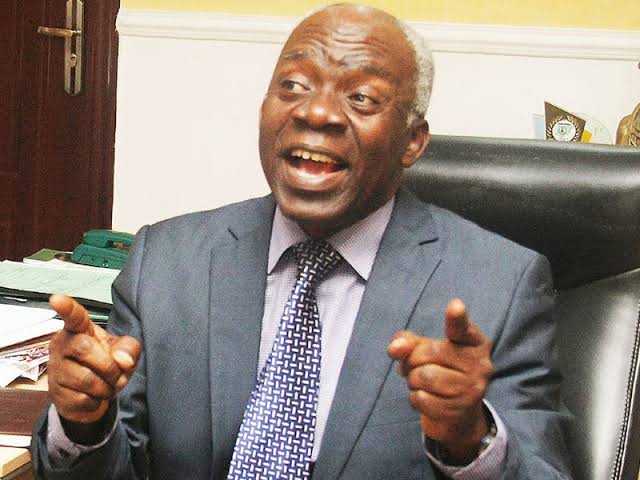
Human rights lawyer and Senior Advocate of Nigeria (SAN), Femi Falana, has alleged that the Federal Government’s decision to pardon Comfort Emmanson, the Ibom Air passenger involved in an unruly incident, was influenced by its earlier handling of a similar case involving Fuji music legend, Wasiu Ayinde Marshal, popularly known as KWAM 1.
In a statement issued on Wednesday, Falana said the government’s withdrawal of charges against Emmanson was tied to its “refusal to charge” KWAM 1 with the appropriate criminal offences following his controversial conduct at the Nnamdi Azikiwe International Airport, Abuja.
According to the SAN, the government’s actions have compromised its moral authority to prosecute any future cases of unruly behaviour at Nigerian airports. “The Federal Government has lost the moral right to prosecute any unruly passenger who commits an offence at any of the nation’s airports,” he stated.
Falana expressed concern over what he described as a hasty decision to pardon KWAM 1, pointing out that authorities accepted the musician’s apology without allowing the police to complete their investigation into the matter. The incident, which generated widespread discussion on social media, reportedly involved behaviour considered disruptive under aviation safety regulations.
“The government hastily accepted KWAM 1’s apology and granted him pardon without allowing the police to conclude its investigation,” Falana said, insisting that such selective justice undermines the rule of law.
He stressed that the principle of equality before the law demands that all citizens be treated the same, regardless of status or public influence. “Since citizens have equal rights, obligations, and opportunities before the law, the Federal Government will henceforth be accused of subjecting any unruly passenger to discriminatory treatment on the ground that KWAM 1 was ‘pardoned’ without any criminal trial whatsoever,” he said.
Falana’s statement has reignited debate on the perception of unequal justice in Nigeria, with some legal analysts warning that such decisions could weaken public confidence in law enforcement and embolden misconduct at airports.