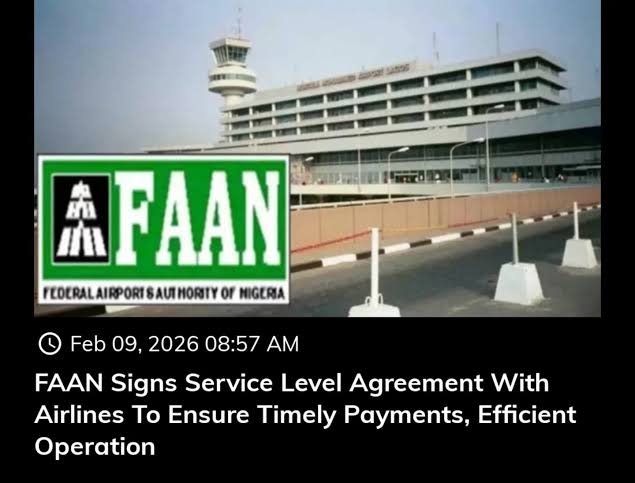
By Paul Effiong, Abuja
The Federal Airports Authority of Nigeria (FAAN) has vowed to eliminate revenue leakages across the nation’s airports through the full enforcement of electronic payment and collection systems, marking a significant shift in its financial and operational framework.
The Managing Director and Chief Executive Officer of FAAN, Olubunmi Kuku disclosed this in an interview with journalists after her appearance at the House of Representatives Committee on Finance.
The Committee, chaired by Hon James Faleke is currently undertaking a Revenue Monitoring Exercise covering the 2023–2025 fiscal years, with a focus on strengthening revenue accountability among government agencies.
Kuku explained that FAAN has deployed comprehensive mechanisms to ensure that all revenues generated at airports particularly at toll gates and other collection points are efficiently captured, transparently processed, and fully remitted to the Federal Government.
According to her, the move is in line with the Federal Government’s broader fiscal reform agenda aimed at plugging financial leakages, enhancing transparency, and improving internally generated revenue across Ministries, Departments, and Agencies (MDAs).
She noted that although the enforcement of the cashless regime has caused temporary inconvenience for some airport users, the reform is both strategic and long overdue.
“This initiative is about accountability and sustainability,” she said. “We are ensuring that every kobo due to the Federal Government is collected without leakages, while also improving operational efficiency.”
Kuku clarified that the transition did not begin abruptly. Preparatory steps, including public sensitization campaigns, advertisements, and stakeholder engagements, commenced in mid-2025 to adequately prepare airport users for the shift from cash transactions to electronic payments.
“The enforcement itself only commenced on Sunday,” she explained, adding that the renewed momentum followed directives to strengthen collection mechanisms and eliminate systemic leakages.
While acknowledging the traffic congestion witnessed at some airport toll gates in the early days of implementation, Kuku described the situation as a temporary adjustment phase.
She appealed to Nigerians for patience and cooperation, assuring that the system would stabilize as more users adopt the various electronic payment channels available.
“We understand the initial discomfort, but this is a transition that will ultimately benefit everyone,” she said.
Kuku also dispelled misconceptions that FAAN’s newly introduced cashless cards are the sole payment option. She stressed that the policy does not restrict users to a single platform but simply eliminates physical cash transactions.
Currently, four primary payment options are available at airport toll gates:
Annual E-Tags, designed for frequent users to enable seamless drive-through access without stopping for manual processing.
VIP Stickers, which provide expedited passage for approved users.
Personal bank ATM cards, including contactless/NFC-enabled cards that allow tap-and-go transactions.
FAAN-issued Cashless Cards, obtainable within airport premises and through designated partner banks.
She particularly encouraged Nigerians to check with their banks for contactless or NFC-enabled ATM cards, noting that these significantly reduce transaction time compared to traditional PIN-based cards.
Additionally, she confirmed that widely used domestic payment cards, including Verve cards, are compatible with the system.
“The fact that FAAN is introducing cashless cards does not mean that it is the only mode of payment. It simply means we are no longer collecting cash,” she clarified.
Kuku stressed that enhanced revenue collection would directly impact service delivery, infrastructure maintenance, and long-term airport modernization projects across the country.