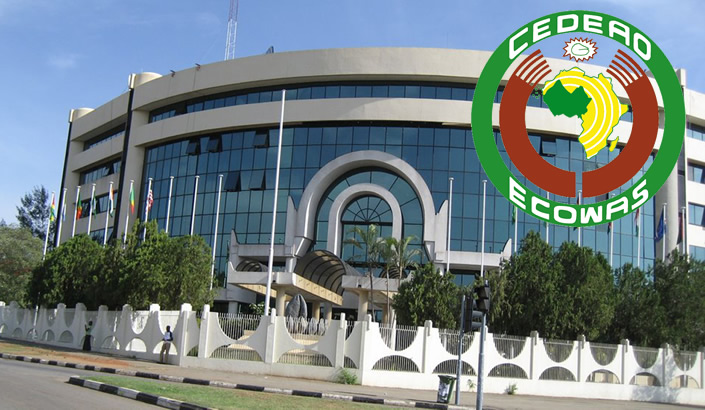
Economic Community of West African States, ECOWAS, said it is promoting integrated school feeding models worth 4.5 million euros to generate sustainable practices that can be scaled up across member states.
President of ECOWAS, Dr Omar Touray, stated this at the ongoing National Policy Forum on “Institutionalisation and Implementation of the Home-Grown School Feeding Programme for Sustainable Economic Growth and Financial Inclusion in Nigeria.”
The forum was organised by ActionAid Nigeria in collaboration with the Presidential Committee on Economic and Financial Inclusion, PreCEFI, and other partners.
Touray, represented by the ECOWAS Director of Agriculture and Rural Development, Alain Traore, said the initiative had supported 16 NGO-led field projects, including two in Nigeria, with results expected to inform improvements in existing school feeding programmes.
Touray commended President Bola Tinubu for his commitment to regional integration and support for achieving the ECOWAS Vision 2050 of “People: Peace and Prosperity for All.”
He stressed that food and nutrition security, especially school feeding, remain a strategic priority for the community.
According to him, school feeding based on local production is a promising approach to improve child nutrition, boost school performance, support local agriculture, stimulate rural economies and reduce poverty.
Citing data from the Global Child Nutrition Foundation, he said about 25 million children benefited from school canteens in West Africa in 2024, noting however that coverage remains low despite efforts by governments and partners.
“Greater political will, large-scale implementation and sustainability of school feeding programmes are therefore more than necessary,” he said.
He explained that the ECOWAS project, supported by Spanish cooperation, aims to institutionalise school feeding through inclusive approaches that cut across justice, agriculture, education, health, statistics, finance and budget.
“This unity in diversity demonstrates the strategic importance of school feeding and the need to preserve it as a national priority,” he added.
Also speaking, the Minister of Agriculture and Food Security, Senator Abubakar Kyari, said the home-grown school feeding programme stimulates domestic agriculture and food production.
Kyari, represented by the Director of Nutrition and Food Safety in the ministry, Dr Nuhu Kilishi, said empowering smallholder farmers through the programme would facilitate access to markets, increase their income and promote economic growth.
He assured that the ministry would continue to deliver on its mandate of ensuring food and nutrition security.
“Home-grown school feeding is a sure way of creating jobs, stimulate the economy, increase school enrolment, provide nutritious food for pupils and improve the local economy,” he said. NAN