- Tinubu charts new course from political to economic freedom
- Nigerians lament rising hardship, say governance must now deliver prosperity, hope
- Jobs, security, cost of living dominate public expectations
- As dividends remain elusive
Twenty-seven years after Nigeria’s return to civil rule, the promise of democracy remains elusive for millions, even as President Bola Tinubu seeks to redefine the nation’s journey from mere political emancipation to genuine economic freedom, write JULIET IBIMINA and CALEB ISHAYA.
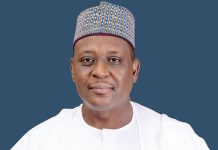
As Nigeria marked 27 years of uninterrupted democratic governance on Friday, President Bola Ahmed Tinubu declared that the country’s next great national assignment is to transform the hard-won political liberties of the June 12 struggle into enduring economic prosperity for all citizens.
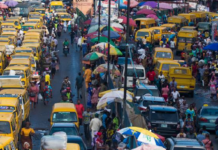
For many Nigerians, however, the anniversary was as much a moment for reflection as it was for celebration. While democracy has survived military interruption and expanded the frontiers of political participation, millions continue to grapple with rising living costs, insecurity, unemployment and shrinking household incomes, fuelling concerns that the dividends of democratic rule remain beyond the reach of the ordinary citizen.
Against this backdrop, Tinubu used his Democracy Day address to outline what he described as a new phase in Nigeria’s democratic evolution — one that places economic emancipation at the heart of national development.
According to the President, while the country’s founding fathers secured independence and the heroes of June 12 reclaimed democratic governance, the responsibility of the present generation is to build an economy capable of guaranteeing opportunity, dignity and shared prosperity.
“The generation of our founding fathers secured independence; the generation of June 12 secured democracy. Our generation must now secure prosperity,” Tinubu declared.
The President described June 12 as one of the defining chapters in Nigeria’s history, paying tribute to the pro-democracy activists, journalists, labour leaders, politicians, students and ordinary Nigerians whose sacrifices helped dismantle military dictatorship and enthrone civilian rule.
He argued that the most fitting tribute to those heroes is not merely the preservation of electoral democracy, but the creation of a nation where justice prevails, freedoms are protected, opportunities abound and government remains accountable to the people.
For Tinubu, democracy must ultimately be measured not only by the conduct of elections or the existence of democratic institutions, but by its impact on the daily lives of citizens.
“Democracy must be felt in the quality of people’s lives — in opportunities for our young people, in prosperous farmers, thriving entrepreneurs and workers who can live with dignity,” he said.
The President defended the economic reforms introduced by his administration since assuming office in 2023, maintaining that they were difficult but necessary measures aimed at stabilising the economy, restoring investor confidence and laying the groundwork for sustainable growth.
He said the reforms had strengthened public finances, improved fiscal transparency and increased revenues accruing to the federation, while investments in critical sectors such as agriculture, energy, manufacturing, technology, mining, transportation and the creative economy were beginning to gain momentum.
Tinubu also pointed to growing domestic refining capacity as a major step towards strengthening Nigeria’s energy security and reducing dependence on imported petroleum products.
On electricity, he highlighted the implementation of the Electricity Act, which gives states greater responsibility for power generation, transmission and distribution. According to him, efforts are also being intensified to bridge the country’s metering gap, clear legacy debts in the sector and expand off-grid and mini-grid solutions to underserved communities.
The President further disclosed that ongoing infrastructure projects across the country are opening up new economic corridors, creating jobs and connecting producers with markets. He added that the National Agricultural Development Fund would deploy 10,000 tractors over the next five years to boost mechanised farming, increase food production and improve agricultural productivity.
Yet, even as the administration projects optimism, the harsh economic realities confronting many Nigerians continue to dominate public discourse. Spiralling food prices, inflationary pressures and declining purchasing power have left many households struggling to make ends meet, prompting growing calls for governance to translate into visible improvements in welfare and livelihoods.
Acknowledging these challenges, Tinubu conceded that many citizens were still enduring difficult times, but insisted that his administration remained committed to reducing inflation, creating jobs, improving food security and ensuring that the benefits of ongoing reforms reach ordinary Nigerians.
“We remain focused on reducing inflation, expanding food production, creating jobs, improving living standards, rebuilding confidence in our economy and creating the conditions for sustainable prosperity,” he assured.
The President maintained that his government was steadily moving Nigeria “from uncertainty to stability”, adding that the next phase of his administration would be devoted to accelerating economic growth and broadening access to opportunities.
As the nation reflects on nearly three decades of uninterrupted democracy, Tinubu urged Nigerians to remain united and hopeful, stressing that the ideals of June 12 can only be fully realised when political freedom is matched by economic empowerment.
“June 12 revealed the possibility of a true Nigerian nation. The heroes of June 12 secured political freedom. Our challenge today is to secure economic freedom,” the President said.
And therein lies the unfinished journey of Nigeria’s democracy: a nation that has largely won the battle against authoritarian rule, but must now confront the harder task of making democratic governance deliver security, jobs, prosperity and renewed hope for its people.