
As the world searches for new answers to old and emerging diseases, one Nigerian scientist believes the future of healthcare may lie in the healing power of nature—and his about four-decade quest is drawing attention far beyond Africa’s shores, write DAVID MAXWELL and LOIS SAMBO.
As the global healthcare landscape grapples with an unprecedented convergence of drug-resistant superbugs, shifting climate-driven disease patterns, and a crippling burden of chronic illnesses, a quiet revolution is unfolding from the heart of Nigeria’s capital. The conversation surrounding Traditional, Complementary, and Alternative Medicine, TCAM, is gaining powerful momentum across Africa. Policymakers and researchers are increasingly asking a fundamental question: Can indigenous medical knowledge, backed by rigorous scientific validation, bridge the widening chasms in global healthcare delivery?
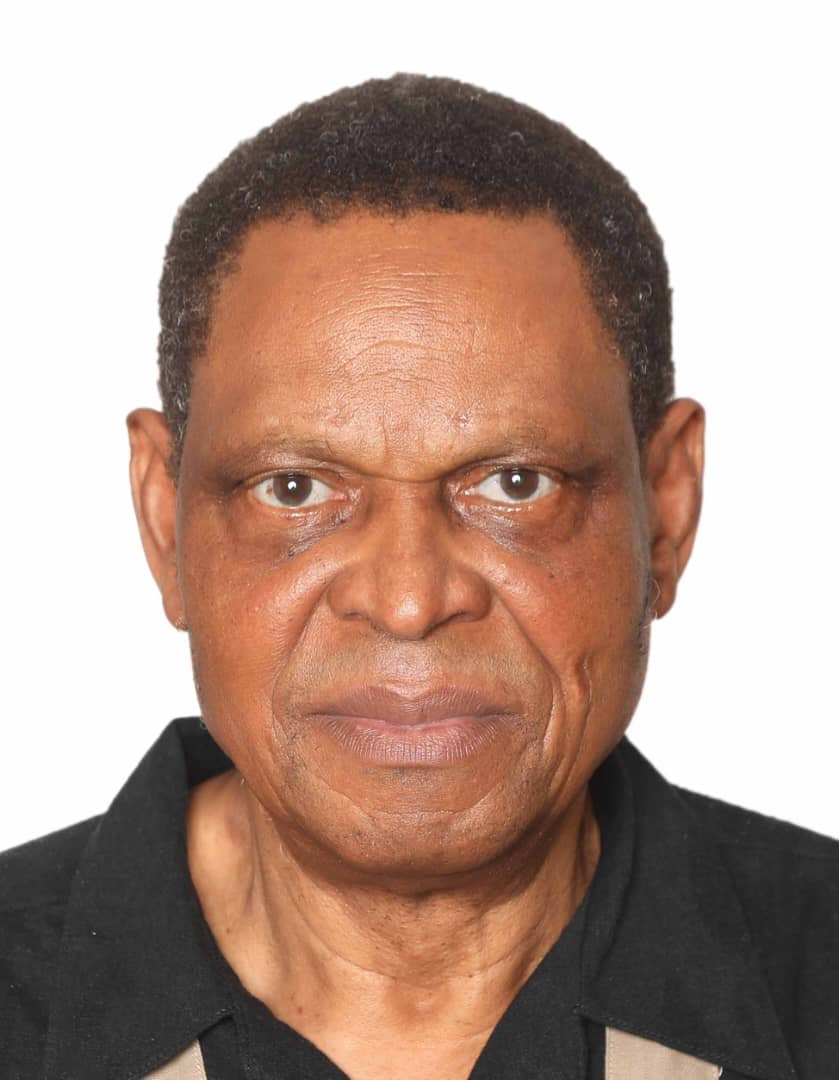
For over four decades, few people have championed this cause as passionately—or as persistently—as Professor Benjamin Amodu. Seated inside his modest, bustling laboratory in Abuja, the soft-spoken industrial pharmacist turned phytomedicine researcher speaks with the quiet confidence of a man whose life’s work is finally receiving the global recognition he always envisioned. “Our medications are thoroughly accepted, both here in Nigeria and abroad,” Professor Amodu says. We have been dispatching them not only across Africa, but also to countries in Asia, the Middle East, Europe, North America, and even Oceania.
Amodu’s journey into the world of natural remedies began at the prestigious Ahmadu Bello University, Zaria, where he graduated in Industrial Pharmacy during the 1979/1980 academic session. Now a Professor of Phytomedicine from the Triune Biblical University in the United States, Amodu is widely regarded as one of Nigeria’s foremost advocates of herbal healthcare.
His lifelong commitment to the discipline traces back to a prophetic message delivered by World Health Organisation, WHO, officials during his graduation ceremony more than forty years ago. “The officials spoke to us about the trajectory of medicine,” Amodu recalls. “They suggested that over time, certain synthetic medicines would begin to lose their efficacy, and that natural medicine would become increasingly vital. I took that warning to heart.”
Abandoning the conventional route of manufacturing synthetic pharmaceuticals, Amodu embraced herbal research. Decades later, with antimicrobial resistance threatening the bedrock of modern medicine, that early WHO prediction has become a stark reality.
One of Amodu’s most significant contributions to tropical medicine is SABMAL, a proprietary herbal anti-malaria formulation developed over two decades ago. When first presented at an international forum sponsored by the WHO and held under the auspices of the United Nations in Ethiopia, the formulation demonstrated a remarkable 97 per cent efficacy rate against malaria.
Since then, Amodu and his team have continuously refined the formulation to tackle increasingly resistant strains of the parasite. “Today, we are seeing routine cases where conventional treatments fail to yield the expected results,” Amodu notes. “Yet, many of the patients who come to us report significant relief within an exceptionally short window.”” But his research extends far beyond malaria. Having worked extensively on viral pathogens, including HIV/AIDS-related cases, Amodu’s laboratory has consistently focused on epidemic preparedness. Following international research projections, he anticipated the re-emergence of viral threats like Ebola long before recent outbreaks re-ignited fears in Central Africa.
Professor Amodu is a vocal advocate for integrating local researchers into national emergency response architectures. He argues that contemporary global challenges require local innovation. “These recurring outbreaks are becoming a major crisis for humanity,” Amodu warns, pointing to Nigeria’s concurrent battles with cholera and threats of exotic viral pathogens. “Climate change is fundamentally altering global disease patterns, creating the perfect conditions for old diseases to re-emerge and new ones to jump species.”
To combat this, particularly the rise of zoonotic diseases—those transmitted from animals to humans—Amodu stresses that medical formulations must be paired with preventative public health strategies:
- Environmental Sanitation: Striking at the breeding grounds of disease vectors.
- Enhanced Food Safety: Securing supply chains from contamination.
- Strict Personal Hygiene: Resurrecting rigorous hand-washing protocols established during the COVID-19 pandemic.
- Wildlife Buffer Zones: Reducing direct contact with wild animals that act as natural reservoirs for lethal pathogens.
Despite his growing international profile—shipping formulations smoothly to destinations including the United Kingdom, Germany, Canada, Saudi Arabia, Australia, and the Netherlands via international couriers—Amodu insists his greatest validation comes from ordinary Nigerians.
In the global South, public trust in traditional medicine remains deeply entrenched. Patients frequently bypass official regulatory endorsements, relying instead on the powerful testimonies of relatives and neighbours. Amodu recounts the case of an 81-year-old diabetic woman admitted to a public hospital with a severe, non-healing ulcer. Scheduled for a mandatory leg amputation, the patient secretly began taking one of Amodu’s herbal diabetic formulations. By the morning of the scheduled surgery, the attending physicians cancelled the operation, astonished to find the wound had healed so significantly.
For the veteran researcher, the ultimate goal of phytomedicine is not to replace orthodox medicine, but to forge a symbiotic relationship. The global success of artemisinin-based malaria therapies—originally extracted from the traditional Chinese medicinal herb Artemisia annua—stands as definitive proof that thoroughly researched herbal remedies can revolutionise modern medicine.
“In many developed countries, traditional and conventional medicine complement one another seamlessly,” Amodu observes. “The question we must ask ourselves is: why should it be any different here in Nigeria?”
As the nation searches for affordable, accessible, and self-reliant healthcare solutions, Professor Benjamin Amodu’s work ensures that indigenous knowledge remains central to the national conversation. Ultimately, moving from public acceptance to institutional integration will depend on the willingness of governments, regulators, and scientists to subject these ancient remedies to the exact same rigorous, evidence-based scrutiny that shapes modern medical science.