As Abuja settles into the quiet calm of the Eid-el-Kabir season, rising ram prices, inflation and shrinking household incomes are reshaping how many residents celebrate one of Islam’s most significant festivals, write LOIS SAMBO and NENGI ELIJAH.
As Muslims across Nigeria mark the 2026 Eid-el-Kabir celebration, Abuja has taken on an unusually calm appearance. The usually busy streets of the Federal Capital Territory are quieter, markets are less crowded, and commercial activities have slowed noticeably as residents travel to celebrate Sallah with families and loved ones outside the city.
From Wuse to Garki, Nyanya to Mararaba, many shops remained under lock and key while transport terminals recorded heavy movement as travellers hurried to beat the festive rush. Roads often associated with traffic congestion appeared unusually free, especially during the daytime. Yet beneath the temporary calm lies a deeper national conversation — one centred on the economy and the growing cost of celebrating one of the most important
festivals in the Muslim calendar.
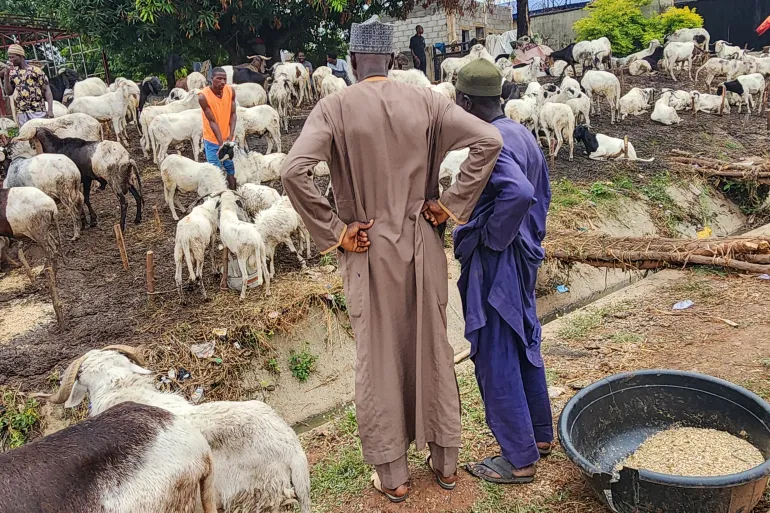
At major ram markets across Abuja and its outskirts, buyers and sellers spoke openly about the impact of inflation and rising living costs on this year’s Sallah celebrations. While some residents insisted that ram prices were slightly better compared to last year, many others described the situation as difficult and overwhelming.
“The prices are very high this year,” said Mr Umar, a resident interviewed at a livestock market in the city. “Families that used to buy very big rams are now settling for smaller ones because of the economy.”
For many Nigerians, the traditional ram sacrifice — central to Eid-el-Kabir — has become increasingly expensive. Traders attributed the rise in prices to transportation costs, expensive animal feed, and supply challenges affecting livestock movement into Nigeria.
At some Abuja markets, medium-sized rams now sell for between ₦500,000 and ₦800,000, while premium breeds cost well above ₦1 million. In contrast, many buyers recalled purchasing similar animals for nearly half those prices last year.
Still, not everyone agreed that prices were unbearable. “To me, prices are better than last year if you search properly,” another resident, Mr Usman, argued. “You can still get a good ram if you negotiate well and move around different markets.”
His position reflects the mixed reactions among Abuja residents, where bargaining has become more intense than ever. Traders confirmed that many customers now spend hours negotiating prices before eventually settling for smaller animals — or abandoning purchases entirely.
One ram seller explained that although patronage still existed, customers were clearly spending according to their financial capacity.
“People still want to celebrate Sallah, but many cannot afford the big rams anymore,” he said. “Most people now buy medium-sized animals.”
For lower-income earners, however, even smaller livestock remain difficult to afford. Some families opted for goats or chickens as alternatives, while others focused solely on prayers and spiritual reflection.
Kabir, a wheelbarrow pusher in Abuja, admitted he could not afford a ram this year.
“Allah knows my heart,” he said quietly. “I believe He understands my condition and will accept my prayers.”
Yet amid the hardship, there were also displays of abundance and lavish celebration. Amina, a housewife in Abuja, described how her family slaughtered several rams for the festivities.
“My husband had his ram, I had mine, my first son had his, while the younger children shared others,” she said.
Observers noted that politicians, government officials and wealthy individuals appeared largely unaffected by the economic realities confronting ordinary Nigerians. At some motor parks, transporters revealed that more rams than passengers were being conveyed to different destinations ahead of the celebrations.
“If I have passengers or not, I must carry these rams,” Ndibisi, a driver operating the Abuja-Kaduna route, remarked jokingly.
Despite the movement of livestock, transport operators acknowledged that human travel was lower than expected. Rising fuel prices and transport fares forced many residents to remain in Abuja rather than travel home. A one-way trip from Abuja to
Kaduna reportedly rose to about ₦25,000 during the festive period.
The impact of the economy extended beyond ram markets. Tailors, food vendors, poultry sellers and small business owners all complained of declining patronage.
Traditionally, Sallah is associated with new clothes, shoes, jewellery and festive outings for children. But this year, many families embraced modest celebrations and reduced spending.
At Millennium Park, children seen celebrating with relatives wore mostly simple or thrift outfits rather than elaborate festive clothing commonly associated with previous Sallah celebrations.
Tahir, a tailor in Garki Market, said he was surprised by the low number of customers this season.
“In previous years, people rushed to sew clothes before Sallah,” he explained. “This year has been very slow.” Food traders also lamented soaring prices of tomatoes, onions, pepper, rice and
vegetable oil. According to Mrs Amina Audu, a pepper seller,
transportation costs remain one of the biggest contributors to rising food prices.
“We are also suffering,” she said. “People think traders increase prices deliberately, but transport alone is very expensive now.”
Even amid the economic strain, the spiritual significance of Eid el-Kabir remained firmly intact. Religious leaders repeatedly reminded Muslims that the essence of Sallah lies not in the size of the ram but in sacrifice, obedience, compassion and faith.
Acts of charity also reflected that enduring spirit. In Abuja, the Federal Capital Territory Emergency Management Department and Near Foundation distributed meat packages to about 300 Internally Displaced Persons to enable vulnerable families celebrate the festival with dignity.
For many residents, the gesture symbolised the true meaning of Eid-el-Kabir — sharing with neighbours, supporting the needy, and preserving hope despite hardship.
As Abuja continues to experience its temporary festive calm, one reality remains unmistakable: while inflation and economic difficulties may have reshaped how many Nigerians celebrate Sallah in 2026, they have not diminished the enduring spirit of sacrifice, community and faith that defines the season.