Consul General of the People’s Republic of China in Lagos, Ms Yan Yuqing, said the outcome of her country’s recently concluded ‘Two Sessions’ signal expanded high-standard opening-up for Nigeria.
This, she said, will create greater trade, investments and cooperation opportunities for Nigeria and Africa at large.
Yuqing made this known yesterday at the Lagos Forum on China’s Two Sessions and symposium marking the 55th anniversary of China–Nigeria diplomatic relations.
The Two Sessions, China’s major political events, hold yearly in March and the 2026 meetings marked the beginning of China’s 15th Five-Year Plan covering 2026 to 2030.
According to Yan, the Government Work Report delivered by China’s Premier Li Qiang outlines an ambitious blueprint for high-quality development over the next five years.
She said it also demonstrates to the world China’s commitment to expanding high-standard opening-up, striking a resounding chord of deeper global integration and mutual benefit.
The Government Work Report was delivered at the fourth session of the 14th National People’s Congress on March 5 and outlined achievements in 2025 and China’s major tasks for 2026.
Some of these tasks include building a robust domestic market, moving faster to achieve greater self-reliance strength in science and technology, accelerating green transition, among others.
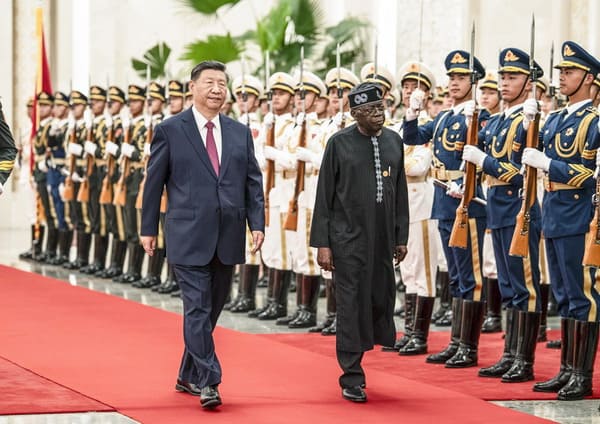
The envoy described Nigeria as an important strategic partner of China in Africa and a key participant in the Belt and Road Initiative.
“China’s high-standard opening-up is not just a promise on paper. It is reflected in concrete actions taken together with countries around the world, including Nigeria.
“Nigeria remains China’s largest engineering contracting market in Africa and its second-largest export market on the continent.”
According to her, Nigeria is also a major investment destination for China, reflecting the depth of economic ties between both countries.
The envoy noted that the global landscape was undergoing profound changes, with the rise of the Global South, represented by China and Africa, gaining momentum despite persistent geopolitical tensions.
She, however, warned against hegemonism and actions that undermine international law and the rights of developing countries, stressing the need for fairness, justice and stronger cooperation.
“In the face of a turbulent world, China and Africa must strengthen solidarity, mutual support and deepen exchanges,” she said.
Yan said in 2025, China-Africa trade reached a new record high of $348 billion, up 17.7 percent year on year.
“As the first year of the 15th Five-Year Plan, 2026 will see China continue to advance the Global Development Initiative, expand high-standard opening-up, and firmly uphold multilateralism and the international economic and trade order,” she said.
During a recent meeting with journalists, China’s Foreign Affairs Minister, Wang Yi, affirmed that China-Africa relations will see many new developments in 2026.
Notably, the full implementation of zero-tariff access for 100 per cent of African imports from May 1.
This, he said, will help Africa access enormous opportunities in the Chinese market.
2026 is also the year of People-to-People exchange and marks the 70th anniversary of the launch of diplomatic relations between China and African countries.
Director of Research, Nigerian Institute of International Affairs, Professor Joshua Bolarinwa, said developments within China, particularly those articulated during the 2026 Two Sessions, provide important insights into China’s policy priorities and its role in the global system.
Bolarinwa noted that China-Africa people-to-people exchange year emphasises the importance of cultural diplomacy, educational exchanges, and societal interaction in strengthening cooperation.
“By fostering deeper understanding among citizens, scholars, and young people, these initiatives help build the social foundations necessary for sustained cooperation,” he said.
According to him, beyond education, the people-to-people exchange year encourages cooperation in areas such as youth engagement, tourism, cultural festivals, academic research, and media interaction.
He said these exchanges would strengthen diplomatic goodwill and create social networks that complement state-to-state relations. (NAN)