By Dauda Ismail
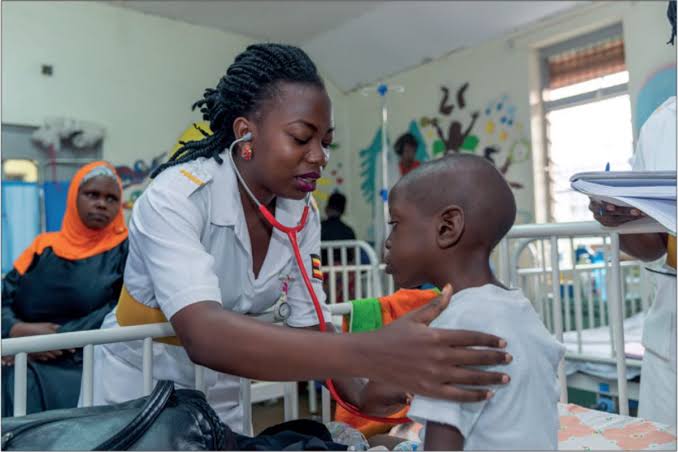
A group of cancers ranging from leukemia, brain and spinal cord tumors to lymphomas, solid tumors, among others, affects children from birth to 14 years and teenagers from 15 to 19 years. According to the World Health Organisation, WHO, cancer is the leading cause of death for children and adolescents, with an estimated 400,000 persons between 0-19 years developing cancer annually.
It says more than 80 per cent of children with cancer in high-income countries are cured due to accessible comprehensive services, while only 30 per cent in low and middle-income countries are cured, attributing the situation to lack of diagnosis, misdiagnosis or delayed diagnosis and poor access to care.
In Nigeria, the National Cancer Control Programme, Federal Ministry of Health and Social Welfare, FMoHSW, says children represent 7.2 per cent of the 127, 000 cancer cases recorded annually. Uchechukwu Nwokwu, National Coordinator, FMoHSW, said that childhood cancer survival rates could reach 80 per cent with early diagnosis, timely access to treatment, and a positive response to therapy.
Mrs Linda Jonathan, mother of six-year old Samuel, recounted her child’s experience. “He gradually started looking pale, easily gets tired, bruised, not eating well resulting to weight loss and we were always in and out of the hospital for frequent fever.It took a long time, several tests before he was later diagnosed of leukemia, which is cancer of the blood; but by then, it was too late for anything to be done,” she said.
Mr Sani Abdulkarim, whose five-year -old daughter was undergoing treatment at the National Hospital, Abuja, decried the cost implication of treatment, which had compounded the delay in accessing care.
“The government will will reduce the financial burden on us by establishing more oncology centres nationwide for early diagnosis and treatment, as well as adding most of the treatment under insurance scheme,” he said.
Similarly, Mrs Francesca Abu, a teacher, said her life changed drastically when her daughter was diagnosed with cancer, revealing that she was forced to stop work in spite of needing extra income to ensure her daughter’s medical care.
“I had to stop working because we are always in and out of the hospital. It was so difficult for us watching our daughter go through pains and not having money to ensure she gets some medication, especially for her father, who worked tirelessly with support from relatives and Church but it still was not enough. When I see her in pains, I always wish it can go away or be transferred to me, so that she gets some relieve,” she said.
Speaking on the cost implication of cancer care and treatment, Dr Oiza Tessy-Ahmadu, Head of Oncology Department, Federal Medical Centre, FMC, Jabi, noted the enormous strain of financing cancer care and treatment.
Tessy-Ahmadu, who is also a Consultant Radiation and Clinical Oncologist, said that 95 per cent of cancer patients paid out of pocket and were not under any form of insurance. “For those under insurance, it may not be covered; the National Health Insurance Authority, NHIA, covers some of these drugs. But how many patients access this? I can tell you that less than five per cent of my patients that I see are under one form of insurance or the other.”
She said that breast cancer patients spend not less than N20 million for chemotherapy and systemic therapy, apart from the surgery and radiotherapy aspects of the treatment. “We have not talked about the surgery, radiotherapy aspect of it.
“Once you have a patient that is diagnosed with the HER-2 to positive breast cancer, you know that that patient will be spending not less than N1.5 million to N2 million every three weeks for 18 cycles,” she said.
She, therefore, stressed the need for improving access to cancer health fund, investing more in cancer research and treatment, as well as ensuring that patients were relieved of most of the cost implication. “The financial implication is different for each of them; and a lot of time, we have patients fall off treatment; we have patients not being able to complete their treatment because of the financial implication. A lot is being done, but there is a lot more to be done to help cancer patients,” she added.
Also, Dr Adewunmi Oyesakin, Chief Consultant Paediatrician and Head of Unit at the National Hospital, Abuja, said establishing more cancer diagnostic centres would ensure early and accurate detection of the disease. According to her, such early detection will improve management, treatment, and survival rates, particularly for children battling cancer.
“Currently, patients in the FCT are forced to travel to cities like Lagos for critical diagnostic services such as Positron Emission Tomography, PET, scans, which delays treatment and increases cost. We need diagnostic centres where special tests for early and prompt diagnosis can be done. There is not a single PET scan facility in Abuja; children have to fly all the way to Lagos, and this is the Federal Capital Territory.”
Oyesakin also called for the creation of a dedicated unit where blood and blood products would be readily available to enhance the survival chances of cancer patients, highlighting the high cost of cancer care as a major barrier as many families discontinued treatment due to financial constraints, which often led to complications.
“There is a need for financial support, especially for chemotherapy. Making the cost subsidised will help ensure children continue treatment. Blood and platelet products are expensive, and supporting the creation of a dedicated unit for blood services will be a major boost to patient survival,” she said.
She further recommended a more comprehensive inclusion of cancer care under the National Health Insurance Scheme (NHIS), saying it should go beyond basic tests and cover holistic treatment.
On her part, Ms Kemi Adekanye, Founder and Chief Executive Officer, Okapi Children Cancer Foundation (OkapiCCF), stressed the need for more awareness and advocates for increased support for childhood cancer, while emphasising the importance of early detection and care. “There is currently no structured support or government intervention for children with cancer. We are helping to reduce some of their financial burdens by covering part of their treatment costs and offering psychological support, just like we are doing here today.
“We all need to come together to raise awareness and support for these children; even for those who are not yet diagnosed, cancer is more common in children than most people realise,” she said.
The fight against childhood cancer in Nigeria requires sustained efforts and commitment from government, healthcare professionals, and the civil society. With continued collaboration and investment, experts say Nigeria can improve survival rates and provide hope for children battling cancer.
Professor Benjamin Amodu, Nigeria’s leading phytomedicine expert of the Triune Biblical University, USA, said parents have a great role to play in both prevention and management of childhood cancers. “You see, because many of these children do not yet know what is actually happening and can’t take care of themselves, the parents must be very observant to detect it early since early detection increases the chances of survival.
“Also, pregnant mothers must be very careful of what they consume, be they medications, hard drugs and even cosmetics, as the exposure to harmful chemicals either as a fetus or early childhood have been found to increase the risk factors for cancer, chronic kidney disease, and other chronic diseases in children.”
He however said that at the HALAMIN Herbal Centre as well as the African Alternative Medicine Hospital, they treat children and pregnant women specially. “While our prices are far lesser than what the hospitals charge, we still reduce it further for children, pregnant women and the elderly,” he said.
Prof Amodu then continued: “I’m however surprised that after the Nigerian government had recognised my research into cancer cure over a decade ago and sent me to Cuba when that country claimed it had found an alternative cure for the disease, it seemed to have forgotten about the same research they once recognised after the research was concluded on a most favourable note.
“Though the Federal Government sent me to Cuba about a decade ago when they said they had found an alternative cure for cancer since I was work on a similar research, but when I concluded my research and came up with a very effective cure for breast, prostrate, bronchial, liver, abdominal and other forms of cancer, the same government seems to have turned a blind eye to my efforts, despite the fact that our work has gone viral and has gained recognition across the globe.
“Let us look inward for solutions to the health issues disturbing our people so we can begin to attract medical tourism to Nigeria,” he concluded.”
According to Amodu, if the Nigerian government looks inward to harmonise and incorporate our herbal treatments into our healthcare, not only will be country tackle most of these health issues, but Nigeria would become a health hub for other countries.