
By Ameh Ameh
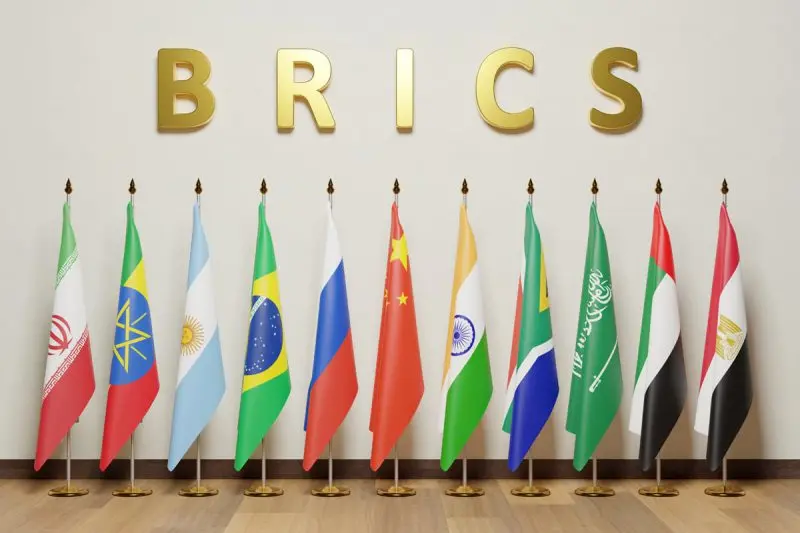
Federal government has thrown its weight behind BRICS call for the reform of international financial institutions and South-South cooperation that empowers developing nations.
Permanent Secretary of the Ministry of Foreign Affairs, Ambassador Dunoma Ahmed, said this while delivering Nigeria’s statement at the 18th BRICS Foreign Ministers Meeting yesterday in New Delhi, India.
Ahmed represented the Minister of Foreign Affairs, Ambassador Bianca Odumewgu-Ojukwu, at the meeting which centered on the reforms of global governance and multilateral systems.
The theme of the meeting is: “Building for resilience, innovation, cooperation and sustainability.”
He explained that Nigeria’s vision firmly aligned with BRICS commitment to a multipolar world order, saying it shared the call for inclusive representation.
He said Nigeria also supported the reform of international financial institutions, and for a strengthened South-South cooperation that empowered developing nations.
Ahmed said Nigeria believed that the global financial system must be restructured to give emerging economies a stronger and more credible voice.
According to him, this will ensure that development financing is fair, accessible and responsive to the needs of the Global South.
“We align with BRICS in promoting balanced trade, resisting protectionism and advancing regional integration.
“Nigeria’s leadership in the African Continental Free Trade Area demonstrates our commitment to building bridges across the Global South, in harmony with BRICS vision of shared prosperity, ” he said.
He reiterated that the calls for unity of purpose and clarity of vision has become important as the world confronts current realities to shape a system that is just, equitable and resilient.
He said Nigeria stands ready to lead and to contribute to achieve set targets.
“We are committed to ensuring that global governance evolves into a true instrument of peace, fairness, and progress, one that reflects the aspirations of all nations and secures Africa’s rightful place of decision-making.
“Nigeria’s voice is resolute. Reform is essential, inclusivity cannot be compromised and the choices we make today will shape our collective future,” he said.
This, according to him, will determine whether global governance truly becomes an instrument of peace, fairness and progress.
The permanent secretary said conflicts and insecurity have destabilised regions, as well as geo-economic rivalry have destabilised trade and widened inequality.
He noted that trust in institutions undermine confidence in multilateralism.
However, he described global governance and multilateralism as pillars of cooperation, saying it should not be ignored as the world faced existential challenges.