By Dickson Pat
Bureau of Public Enterprises has unveiled plans to float two electricity Distribution Companies and one Generation Company on the Nigerian Stock Exchange through an Initial Public Offering.
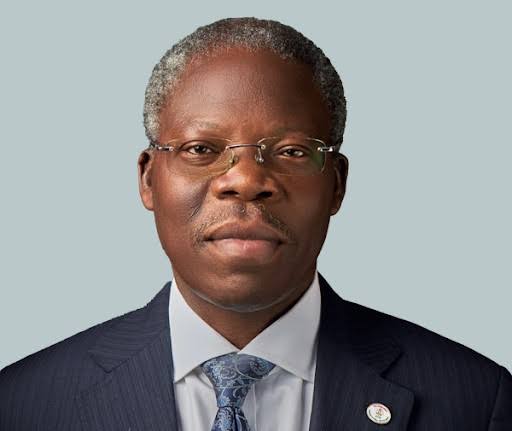
The Director-General of BPE, Ayodeji Gbeleyi, disclosed this on Tuesday during a media briefing in Abuja.
He explained that the move is part of the federal government’s broader strategy to deepen private sector participation in the power sector and attract long-term investment that would boost efficiency and service delivery.
Gbeleyi, however, declined to reveal the identities of the companies set to be listed, stressing that such information was bound by corporate confidentiality.
He further revealed that shareholders’ loan agreements had recently been signed for 10 out of the 11 DisCos, a development he described as critical to stabilizing the operations of the firms. According to him, the disbursement of the loans would commence in the coming weeks.
Addressing concerns about the delayed privatization of five GenCos, the BPE chief said the process was being slowed by exchange rate volatility, rising inflation, and other macroeconomic uncertainties.
He added that the GenCos were yet to fully adopt the eligible customer regulation due to persistent transmission bottlenecks, which continue to hinder power evacuation and distribution.
On the status of Nigeria’s ailing refineries, Gbeleyi emphasized that the Bureau would align with any government policy or expert advice aimed at reducing financial leakages and curbing recurrent losses.
“The debate has gone beyond whether to privatize the refinery”, he said, suggesting that conversations should now focus on how best to reposition the facilities to deliver value to Nigerians and stop the drain on public resources.
The planned listing of the DisCos and a GenCo on the stock exchange is expected to provide Nigerians an opportunity to invest directly in the power sector, a move analysts say could help strengthen transparency, corporate governance, and accountability in the industry.
The Federal Government had in May this year lamented the poor performance of electricity distribution companies in the Nigerian Electricity Supply Industry, NESI, describing it as disappointing.
The Minister of Power, Chief Adebayo Adelabu who expressed this position at a two-day retreat organized by the Senate Committee on Power, noted the DisCos have been frustrating the efforts by the government to improve power supply.
Adelabu spoke on the persistent crisis threatening to derail progress in the sector which is chronic underinvestment in distribution infrastructure, which continues to cripple service delivery nationwide in spite of landmark reforms in the electricity sector.
The Minister revealed glaring disparities in distribution company performance, with aging networks, rampant electricity theft, and poor investment deepening reliance on unsustainable subsidies and leaving millions in darkness.
“We need to get tough with the DisCos, as they can easily frustrate all the gains we have made. They have disappointed us in performance expectations. Whatever we do in generation does not mean anything to consumers if it is frustrated at the distribution points”.
He noted that in the 2003 restructuring of the sector, the DisCos were supposed to have technical partners, but a lot of them showed partnership with foreign companies for that purpose which lasted for about three months.
“Immediately they took over, those companies left. So we need utility companies that can invest in the sector to improve infrastructure, improve service”, adding that, “a lot of them went to the banks to take loans to buy the assets, after taking over, instead of providing infrastructure they are taking out the money to pay the loans”.
According to the Minister, despite tariff adjustments that boosted market liquidity by 70% raising sector revenue from N1tn in 2023 to N1.7tn in 2024 the distribution segment remains the weakest link.
The sector also faces a N4tn subsidy backlog owed to generation companies, including N1.94tn for 2024 alone. With monthly subsidy shortfalls now hitting N200bn, the Minister warned that maintaining current tariffs is “unsustainable”, straining public funds needed for infrastructure upgrades.