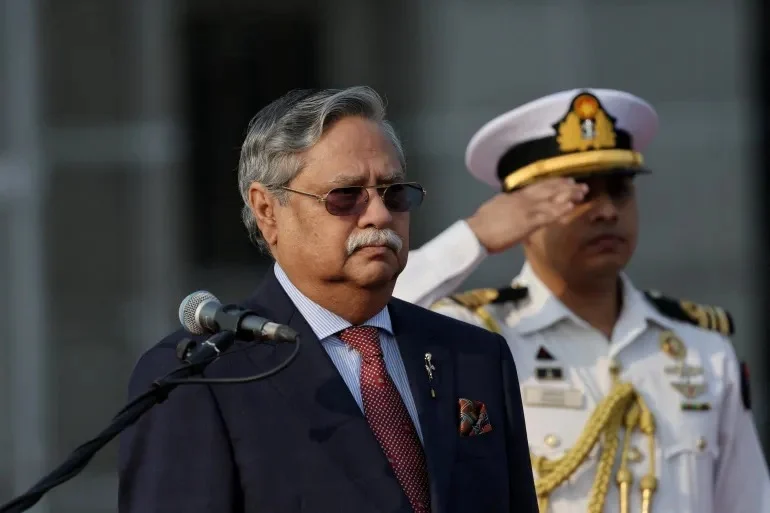
Bangladesh’s President Mohammed Shahabuddin has resigned from office, citing worsening health, bringing an early end to his tenure as the country’s largely ceremonial head of state.
Shahabuddin, a close ally of former Prime Minister Sheikh Hasina, confirmed his resignation in a telephone conversation with AFP on Friday amid widespread speculation that he intended to leave office before the expiration of his term in 2028.
“Yes, I have resigned,” Shahabuddin told AFP when asked about reports of his decision.
The 76-year-old president did not provide additional details regarding his resignation during the brief conversation.
However, in a resignation letter addressed to the Speaker of Parliament and seen by AFP, Shahabuddin said his deteriorating physical and mental condition had made it impossible for him to continue carrying out the responsibilities of the presidency.
“Due to worsening physical and mental incapacity… it is no longer possible for me to properly discharge the responsibilities of an important constitutional office such as the presidency,” the letter stated.
Popularly known as “Chuppu,” Shahabuddin was elected president by parliament in 2023 with the backing of the Awami League, the party led by former Prime Minister Sheikh Hasina.
Pressure on the president intensified following the 2024 student-led uprising that forced Hasina from power after months of political unrest and widespread protests.
Following her removal, several political groups and activists called for Shahabuddin to step down, arguing that his close association with the former administration undermined confidence in the presidency.
The president also came under scrutiny earlier this year after allegations emerged that he held a telephone conversation with Hasina while receiving medical treatment in London in May.
Shahabuddin denied the allegation.
Just a day before the resignation became public, Bangladesh’s Home Minister, Salahuddin Ahmed, of the ruling Bangladesh Nationalist Party (BNP), told journalists that the government had not received any formal notice indicating the president intended to resign.
“If he wants to resign, he would have to submit his resignation letter to the speaker in accordance with the Constitution,” Ahmed said on Thursday.
With Shahabuddin’s resignation now confirmed, attention is expected to shift to the constitutional process for appointing or electing his successor as Bangladesh navigates its evolving political landscape.