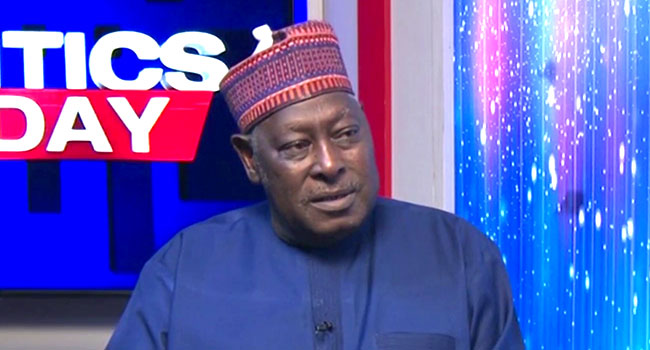
Former Secretary to the Government of the Federation, Babachir Lawal, has announced his resignation from the African Democratic Congress (ADC), alleging that the party’s recently concluded primary elections were manipulated to favour former Vice-President Atiku Abubakar and his political allies.
In a statement released on Monday, Lawal expressed dissatisfaction with the conduct of the party’s primary elections, describing the process as deeply flawed and lacking fairness. According to him, the exercise did not reflect the democratic principles expected within a political party preparing for a major national election.
The former SGF claimed that the primaries were deliberately structured to guarantee the emergence of Atiku Abubakar as the party’s presidential candidate while also creating an advantage for individuals aligned with him within the party structure.
Lawal alleged that the exercise was “massively rigged,” insisting that the outcome had been predetermined long before party members participated in the voting process. He argued that the actions of the party leadership undermined confidence in the electoral process and weakened the credibility of the ADC as a platform for democratic competition.
His resignation comes amid growing internal disagreements within the party following the conclusion of its primary elections. The development is expected to generate further debate regarding the transparency and legitimacy of the process that produced Atiku Abubakar as the ADC’s flagbearer for the 2027 presidential election.
The former SGF maintained that his decision to leave the party was based on principle and concerns over what he described as the abandonment of internal democracy. He suggested that political parties must uphold fairness, transparency and equal opportunities for all aspirants if they are to earn the trust of members and the wider electorate.
Lawal’s departure represents another significant twist in the evolving political landscape ahead of the 2027 general elections, particularly as opposition parties continue to reposition themselves in preparation for the contest.