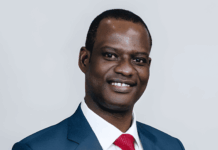
The Chief of Army Staff (COAS), Lieutenant-General Olufemi Oluyede, has identified growing instability across the Lake Chad Basin, the Sahel region and the Gulf of Guinea as major factors fuelling Nigeria’s security challenges, stressing that the military must adopt innovative strategies to counter evolving threats.
Oluyede made the remarks on Saturday while delivering a lecture during the Nigerian Army Day Celebration 2026 in Port Harcourt, Rivers State.
The Army Chief said Nigeria’s security landscape has become increasingly complex, requiring fresh approaches to effectively protect lives, property and national interests.
According to him, the country continues to grapple with insurgency, terrorism, banditry, cybercrime, transnational organised crime and conflicts linked to natural resources.
He added that the widespread proliferation of small arms, porous borders and the manipulation of ethnic and religious differences have further complicated the nation’s security situation.
Oluyede noted that developments beyond Nigeria’s borders continue to worsen the country’s internal security concerns.
“Beyond Nigeria’s borders, instability within the Lake Chad Basin, the Sahel Region and along the Gulf of Guinea continues to influence and exacerbate the domestic threat environment,” he said.
The Army Chief also pointed to rapid technological advancements as another factor reshaping modern warfare.
According to him, cyber operations, artificial intelligence, unmanned systems and other emerging technologies have transformed the character of conflicts globally, making it necessary for the Nigerian Army to continually adjust its operational strategies.
Despite these challenges, Oluyede said the Nigerian Army has maintained resilience through stronger collaboration with other security agencies, improved intelligence gathering and enhanced community engagement.
He explained that the military has also invested significantly in modern equipment, personnel development and a balanced combination of kinetic and non-kinetic operations designed to disrupt criminal networks and restore peace in troubled communities.
The Army Chief stated that current military operations now place greater emphasis on protecting civilians, respecting human rights and strengthening public trust.
According to him, the establishment of Human Rights Desks across formations, expanded civil-military cooperation programmes and strict adherence to rules of engagement that prioritise civilian safety demonstrate the Army’s commitment to responsible military operations.
He further disclosed that personnel continue to receive specialised training in urban warfare, counter-insurgency operations and cyber defence to enhance operational effectiveness.
Oluyede added that the Nigerian Army has continued to support internally displaced persons through humanitarian assistance while also participating in reconstruction and peace-building initiatives across conflict-affected communities.
Looking ahead, the Army Chief said the Nigerian Army would sustain its transformation agenda by embracing innovation, professionalism and stronger collaboration with regional and international partners.
He stressed the importance of deploying emerging technologies, including artificial intelligence, unmanned systems and data analytics, to improve operational efficiency and strengthen situational awareness on the battlefield.
Oluyede also reaffirmed the Army’s commitment to its “Soldier-First Culture,” describing military personnel as the institution’s most valuable resource.
According to him, the welfare, motivation and ethical conduct of soldiers will remain central to the Army’s efforts as it continues to confront Nigeria’s changing security landscape.