Dozens of protesters opposed to illegal immigration marched through a township near Johannesburg on Monday, a day after South African President Cyril Ramaphosa pledged firm government action against groups accused of fueling xenophobic violence across the country.
The demonstration took place in Kwa-Thema, a township located about 40 kilometres southeast of Johannesburg, where participants sang, chanted, and called for stricter enforcement of immigration laws. Some protesters were seen carrying sticks as they moved through the community, according to footage broadcast by the South African Broadcasting Corporation (SABC). Despite heightened tensions nationwide, the march itself remained largely peaceful.
The protest comes amid rising public anger over undocumented migration and renewed activity by vigilante groups that have issued ultimatums demanding that foreign nationals without legal status leave South Africa by June 30.
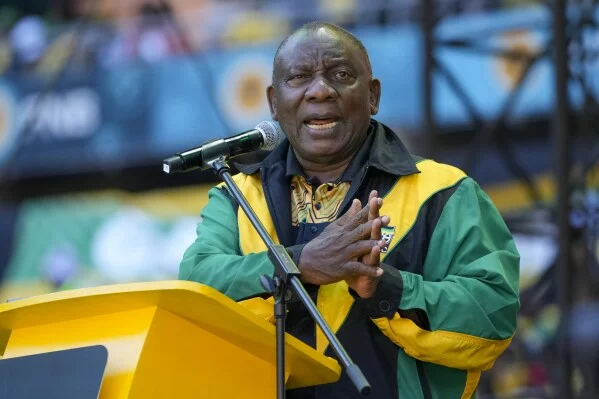
President Cyril Ramaphosa, addressing the nation on Sunday, acknowledged widespread public concern about illegal immigration but strongly condemned any attempts to take the law into private hands.
“We will and must not allow groups to use the legitimate concerns of South Africans to destabilise our country through inciting lawlessness and violence,” he said.
He further warned that authorities would act decisively against individuals or organisations exploiting immigration concerns for political, personal, or criminal motives.
“We will act against forces who are exploiting the concerns of our people about illegal immigration to further their own political, personal or criminal agendas,” Ramaphosa added.
While organisers of the Kwa-Thema march welcomed the president’s acknowledgment of the issue, they insisted that their campaign would continue.
South Africa, one of Africa’s largest economies, hosts more than three million foreign nationals—representing just over five percent of its population. However, the country continues to struggle with unemployment rates exceeding 30 percent, a key driver of social tension between locals and migrant communities.
These economic pressures have contributed to recurring outbreaks of xenophobic violence over the years, with the most severe incidents in recent memory occurring in 2008, when 62 people were killed. Additional waves of violence followed in 2015, 2016, and 2019, highlighting the persistent nature of the crisis.
Authorities have reported at least two deaths among Mozambican nationals in the latest unrest linked to anti-immigrant sentiment.
The current tensions have also triggered coordinated responses from several African countries seeking to protect their citizens in South Africa.
Last month, hundreds of foreign nationals—including citizens from the Democratic Republic of Congo, Rwanda, and Somalia—sought refuge in Durban, claiming they were being pressured to leave by local residents.
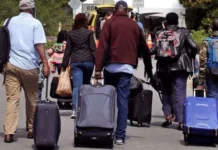
In response, Ghana has organized repatriation flights for hundreds of its citizens, while Malawi and Mozambique have arranged bus transport for voluntary returnees.
South Africa’s border management authorities confirmed on Monday that more than 600 Ghanaians were processed for departure over the weekend, bringing the total number of returning nationals to 995.
The first group of Nigerian citizens is also scheduled to leave on Wednesday as part of ongoing evacuation arrangements.
Kenya, Lesotho, and Zimbabwe have meanwhile issued advisories urging their nationals in South Africa to remain cautious amid the rising tensions.