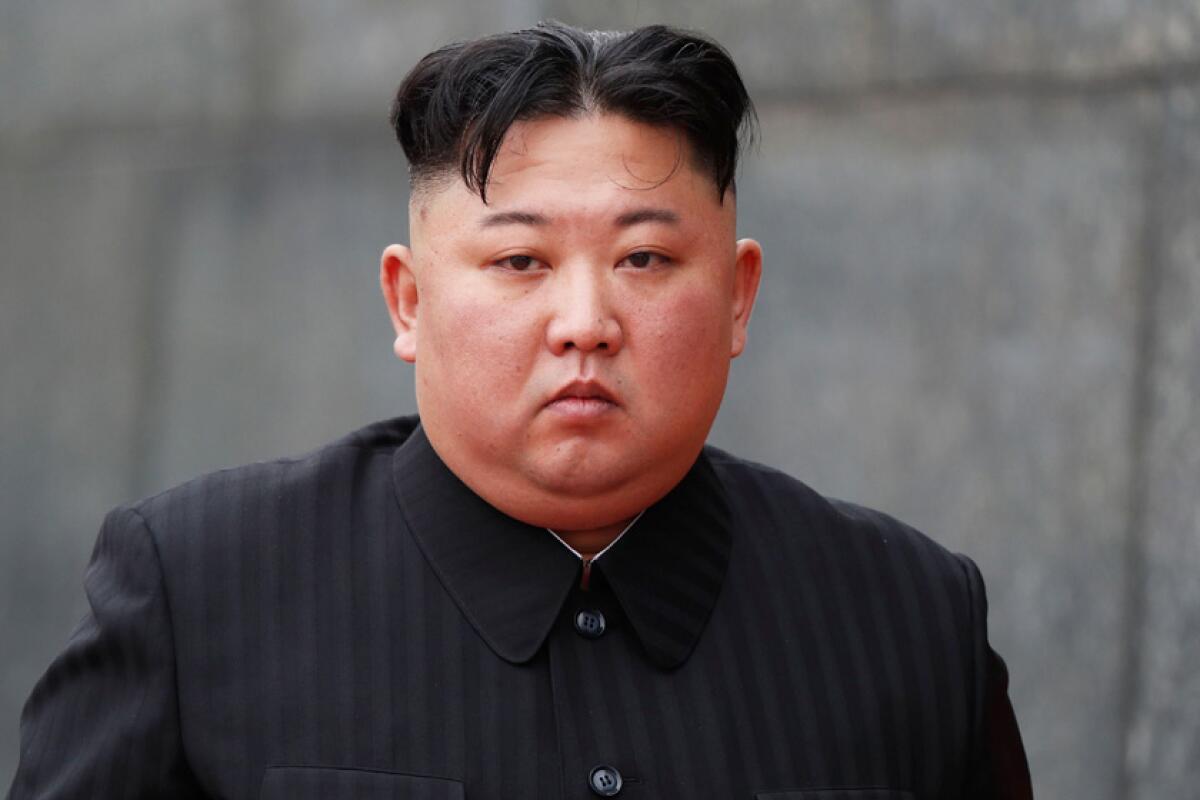
North Korean leader Kim Jong Un has reaffirmed his country’s commitment to significantly expanding its nuclear capabilities, pledging an “exponential” increase in the nation’s nuclear military strength following a visit to a newly commissioned atomic production facility.
According to reports released on Wednesday by the state-run Korean Central News Agency (KCNA), Kim toured a newly inaugurated factory dedicated to the production of nuclear materials, where he outlined plans aimed at substantially strengthening North Korea’s strategic deterrence capabilities.
The visit comes as North Korea continues to reject international calls for denuclearisation and maintains that its nuclear weapons programme remains central to its national security strategy.
During his inspection of the facility, Kim reportedly praised what he described as major achievements in the country’s nuclear development efforts, noting that production capacity for weapons-grade nuclear materials has more than doubled over the past five years.
KCNA reported that the North Korean leader highlighted what he called an ambitious roadmap designed to accelerate the growth of the country’s nuclear forces at an unprecedented pace.
The development underscores Pyongyang’s determination to expand its nuclear arsenal despite sustained international sanctions and diplomatic pressure, particularly from the United States and its allies.
North Korea has consistently maintained that its nuclear weapons programme is non-negotiable, describing its nuclear status as permanent and irreversible.
Although state media did not reveal the exact location of the facility visited by Kim, several analysts believe the site is likely a newly completed uranium enrichment plant located in Yongbyon, one of the country’s most significant nuclear complexes.
North Korea is widely believed to operate uranium enrichment facilities at three primary locations, including Yongbyon, Kangson and Kusong, all of which are considered key components of the country’s nuclear infrastructure.
Experts suggest that the public disclosure of Kim’s visit may have been strategically timed to send a message to the international community regarding North Korea’s future nuclear ambitions.
Former President of the University of North Korean Studies, Yang Moo-jin, said the visit could serve both operational and political objectives if the facility is indeed located in Yongbyon.
According to Yang, North Korea may be deliberately showcasing its expanding nuclear production capabilities as global attention remains focused on nuclear negotiations involving Iran and the United States.
He noted that Pyongyang appears intent on signalling that denuclearisation is not an option in any future discussions with Washington.
Analysts also argue that the latest announcement reflects North Korea’s efforts to strengthen its position amid shifting global security dynamics and growing geopolitical tensions.
Hong Min, a researcher at the Korea Institute for National Unification, said the most significant aspect of Kim’s visit was the indication that North Korea is increasing the production of nuclear materials to support a larger stockpile of nuclear weapons.
According to him, the country has already unveiled numerous tactical nuclear weapon systems in recent years, creating increased demand for additional warheads capable of deployment on short-range and tactical missile platforms.
North Korea has continued to advance its missile development programme throughout 2026, conducting eight missile tests so far this year.
Security analysts believe these tests demonstrate Pyongyang’s determination to further consolidate its nuclear status while taking advantage of what it perceives as weakening international efforts to restrain its weapons programme.
The country remains one of the world’s most heavily sanctioned nations due to its nuclear activities and missile development programmes.
North Korea withdrew from the Treaty on the Non-Proliferation of Nuclear Weapons in 1993 and has since conducted six nuclear weapons tests despite repeated condemnation from the international community.
The country has been subjected to multiple sanctions imposed by the United Nations Security Council over its nuclear programme and ballistic missile activities.
Despite these measures, intelligence assessments suggest that North Korea possesses dozens of nuclear warheads and continues to expand both its production capabilities and delivery systems.
The latest remarks by Kim further reinforce the country’s long-standing position that nuclear weapons remain a cornerstone of its defence strategy, signalling that Pyongyang intends to continue expanding its arsenal regardless of international opposition.