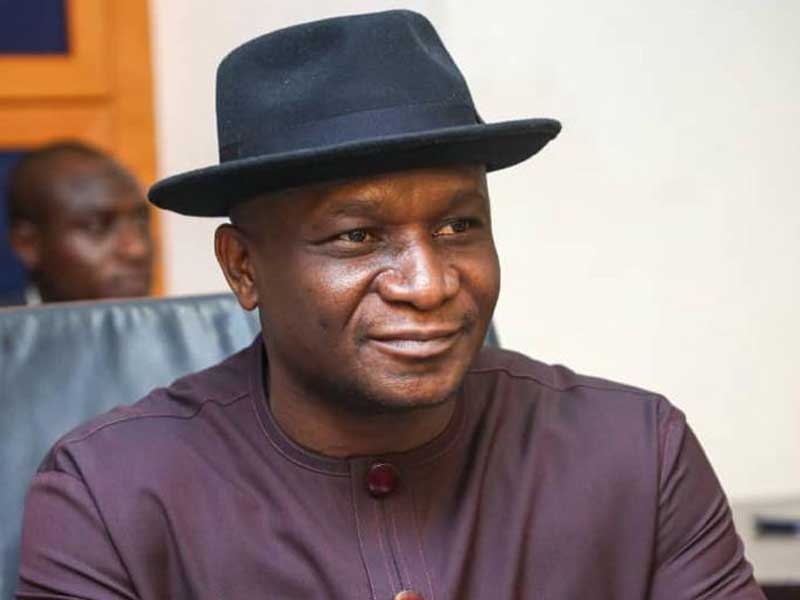
In a crucial moment for development leadership in the Niger Delta, Dr Samuel Ogbuku emerges as Most Outstanding Public Servant at the Aljazirah Africa Leadership and Good Governance Award 2025 – a recognition shaped by delivery, reform and restored institutional confidence, GEORGE EMINE writes.
At moments when public institutions are tested by expectation as much as by performance, leadership is ultimately measured not by declarations but by delivery. It is within this context that Dr Samuel Ogbuku emerged as the Most Outstanding Public Servant at the Aljazirah Africa Leadership and Good Governance Award 2025 a recognition shaped not by symbolism, but by measurable institutional renewal at the Niger Delta Development Commission, NDDC.
His emergence above other distinguished nominees reflects a leadership trajectory defined by credibility restoration, legacy project completion, governance reform and human capital investment across Nigerias most strategically sensitive development region.
More importantly, it reflects a public service philosophy anchored on continuity of responsibility rather than administrative convenience.
When Dr Ogbuku assumed office as Managing Director and Chief Executive Officer of the NDDC in January 2023, the Commission stood at a critical crossroads. Across the Niger Delta, communities expected more than policy assurances; they expected visible progress capable of restoring confidence in a mandate created to address decades of developmental imbalance.
Rather than approach the assignment as routine institutional transition, his leadership introduced a deliberate shift from expectation-centred administration to delivery-centred governance. Within a relatively short period, inherited infrastructure corridors once stalled began moving towards completion, stakeholder engagement channels reopened, scholarship programmes stabilised and monitoring systems strengthened.
It was this convergence of direction, delivery and institutional discipline that distinguished his stewardship nationally and regionally. Recognition, therefore, followed performance.
Across the Niger Delta, unfinished projects had gradually become symbols of interrupted development promises. Dr Ogbukus early decision to prioritise completion of inherited infrastructure represented not merely an operational adjustment but a confidence-building strategy.
Road corridors linking previously isolated communities regained momentum. Solar-powered electrification initiatives expanded night-time economic activity. Rural water supply schemes improved public health conditions. Healthcare facilities transitioned from abandoned structures into functional community assets.
In development administration, continuity is credibility.
By completing projects initiated before his tenure, he reinforced an institutional message that commitments survive leadership transitions, and communities noticed.
Infrastructure delivery alone does not transform institutions; governance culture does, so working with internationally respected consulting partners, including KPMG, the Commission introduced Key Performance Indicators and Standard Operating Procedures across its statutory directorates. These reforms strengthened transparency, improved implementation monitoring and aligned planning structures with measurable outcomes.
For an interventionist agency operating across nine mandate states, such reforms represented a decisive institutional reset. They also repositioned the Commission as a more credible partner for development stakeholders, donor institutions and regional governments. In contemporary public administration, credibility is not proclaimed, it is structured.
Unlike many administrators who engage development challenges from policy distance, Dr Ogbukus leadership reflects lived familiarity with the Niger Deltas realities. Born in Ayakoro in Bayelsa State, his formative experiences unfolded within communities that sustained Nigerias petroleum economy while awaiting infrastructure parity. That background shaped a development philosophy centred on inclusion, opportunity expansion and youth engagement.
His earlier service as Public Relations Officer of the Ijaw Youth Council (Central Zone) strengthened his understanding of the relationship between development intervention and regional stability. Later administrative experience under Timipre Sylva at Government House, Yenagoa deepened his coordination capacity within executive governance structures confronting similar development challenges.
These experiences collectively produced a leadership profile that blends activism, administration and institutional strategyan uncommon combination in regional development management.
Under his stewardship, the Commissions intervention programming increasingly aligned with the Renewed Hope Agenda of Bola Ahmed Tinubu. This coordination strengthened synergy between federal infrastructure priorities and regional implementation frameworks.
Roads, electrification projects, healthcare interventions and educational investments began reflecting a more integrated planning architecturereducing duplication and improving delivery efficiency across the Niger Delta.
Alignment of this nature transforms intervention agencies from isolated actors into national development partners.
Investing in People as the Foundation of Sustainable Development
Perhaps the most defining feature of Dr Ogbukus administration has been its balanced approach to developmentbuilding infrastructure while simultaneously expanding opportunity. The revitalisation of the Commissions Foreign Postgraduate Scholarship Programme restored confidence among families across the region that merit-based pathways remained open for global academic advancement. Local scholarship initiatives similarly strengthened domestic institutional capacity by supporting students within Nigerian universities.
Equally forward-looking has been the Commissions digital learning partnerships, which introduced technology-enabled classroom support across selected communitiesreducing ruralurban education exposure gaps and preparing a generation for participation in knowledge-driven economies.
In development planning terms, these interventions represent investment not merely in projects, but in futures.
Strengthening Stakeholder Confidence Across the Niger Delta
Public institutions function most effectively when communities trust their intentions and processes. Under Dr Ogbukus leadership, structured engagement with traditional rulers, youth organisations and civil society stakeholders strengthened communication channels across the mandate states.
These partnerships improved project acceptance levels, reduced implementation resistance and reinforced community ownership of development interventions.
Traditional institutions, in particular, were repositioned as strategic partners rather than peripheral observersan approach that enhanced legitimacy across sensitive project environments.
The return of stakeholder confidence remains one of the most significant indicators of institutional recovery.
Symbolic Timing, Strategic Leadership
In a remarkable convergence of milestones, the Commissions silver jubilee anniversary coincided with Dr Ogbukus own fiftieth birthday. Having witnessed the establishment of the NDDC as a university student following its creation by Olusegun Obasanjo in 2000, he now leads the same institution at a defining stage in its institutional evolution.
That continuity between expectation and responsibility has shaped a leadership narrative rooted in stewardship rather than tenure.
It also strengthened his determination to ensure that the Commissions next quarter-century will be defined by consolidation rather than interruption.
Awards rarely create performance; they acknowledge it, and Dr Ogbukus emergence as Most Outstanding Public Servant at the Aljazirah Africa Leadership and Good Governance Award, 2025 reflects a leadership phase during which the Niger Delta Development Commission has increasingly rediscovered its founding purpose:
completing inherited commitments
strengthening governance credibility
expanding educational opportunity
restoring stakeholder engagement
aligning regional development with national priorities
Together, these achievements represent more than administrative success. They signal institutional repositioning.
Across the Niger Delta today, public conversation about the Commission is gradually changing tone. Where once expectations dominated discourse, delivery now shapes perception. Where once abandoned infrastructure symbolised delay, completed corridors now represent possibility.
Such transformation does not occur spontaneously. It emerges from leadership that understands both the history of an institution and the urgency of its mandate.
For this reason, Dr Samuel Ogbukus recognition as Most Outstanding Public Servant, 2025 stands not merely as personal distinction, but as affirmation of a leadership model defined by restoration – restoration of confidence, continuity and purpose across one of Nigerias most strategically important development regions.
And in public service, few achievements carry greater national significance than this.