By Paul Effiong, Abuja
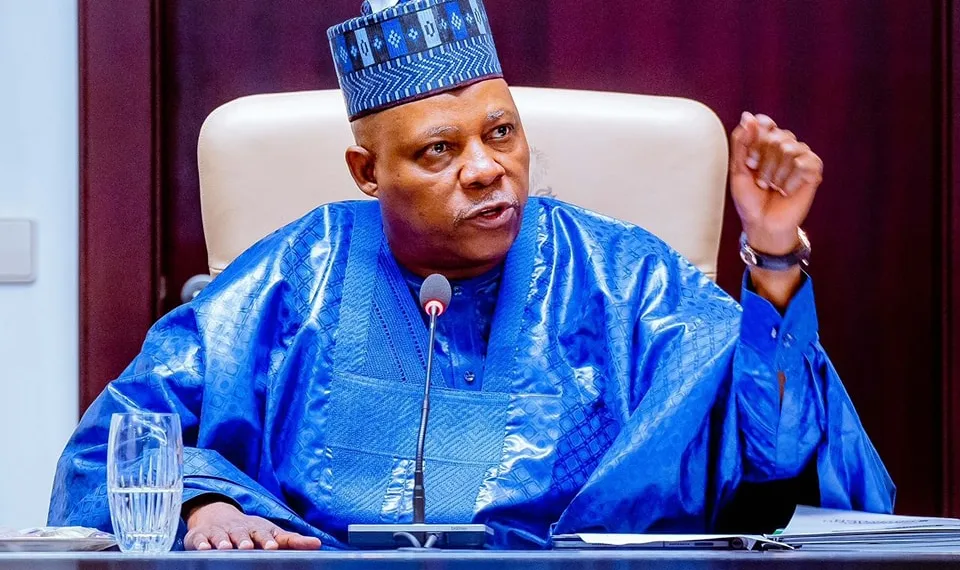
As Nigeria continue the push for a more credible and people focused budgeting system, Vice President Kashim Shettima has called on key stakeholders to deliver actionable recommendations that will reshape the nation’s fiscal direction.
Speaking during the opening ceremony of a two-day National Policy Dialogue in Abuja, Vice President Shettima further urged participants to rise above routine discussions and issuance of Communique but to proffer practical solutions that will guide government decisions and improve the lives of ordinary Nigerians.
Declaring the conference open, Shettima also emphasized that effective budget planning, projection, and implementation remain critical to national development under president Tinubu government even as he also commended the organizers for convening what he described as a timely and strategic forum meant to ensure prudent financial planning and management in Nigeria.
According to the Vice,President, budgeting is an essential aspect of government meant to address some basic economic challenges as well as sustain growth across sectors.
Represented by the Special Adviser on Economic Affairs to President Bola Ahmed Tinubu, Tope Fashua, the Vice President equally highlighted some ongoing reforms under the current administration in Nigeria.
He indormed that the incumbent government is repositioning the budgeting process to make it more inclusive, transparent as well as people-driven.
Vice President also explained that the government is currently working on ways to improve the budget process in order to broader the airms and objectives in accordance with the Renewed Hope Agenda.
He maintained that the national budget must go beyond figures and projections, serving instead as a forward-looking document that reflects the aspirations of Nigerians.
He, however explained that reforms, including those tied to the Tax Reform Act, are all designed to ensure fiscal discipline while improving service delivery and long-term planning.
Shettima used the opportunity to reaffirm President Tinubu administration’s commitment to increasing funding in critical sectors such as healthcare services and provision of water among others.
He observed that investments in healthcare services among other critical areas are vital to improving human development indicators and reducing inequality across the country.
In his remarks, Senate President Godswill Akpabio, represented by Deputy Chief Whip Peter Nwebonyi, applauded the initiative behind the dialogue even as he also expressed optimism that the recommendations emerging from the engagement would be effectively utilized to strengthen legislative contributions to the budgeting process.
However, concerns over implementation gaps took center stage during the presentation of lead paper by Director-General of the Nigerian Institute of Social and Economic Research, Prof. Antonia Simbine as she painted a sobering picture of Nigeria’s socio-economic realities.
She cited data from the National Bureau of Statistics where 62.9% of Nigerians about 133 million people are currently living in multidimensional poverty, underscoring the urgent need for more effective policy execution.
Simbine further used the opportunity to highlight persistent challenges undermining budget performance in Nigeria such as weak integration between planning and budgeting, poor institutional coordination as well as frequent deviations from fiscal projections.
She, however warned that the Medium-Term Expenditure Framework,MTEF, which is designed to bridge planning gaps, is often weakened by political interference and vested interests, calling for stronger governance structures to ensure accountability and results if Nigeria will succeed like her counterparts across the world.
The two day National Policy Dilogue is with the theme: The Imperatives of National Development Plant and Effective Budgeting System For Sustainable Growth of the Nigerian Economy”.