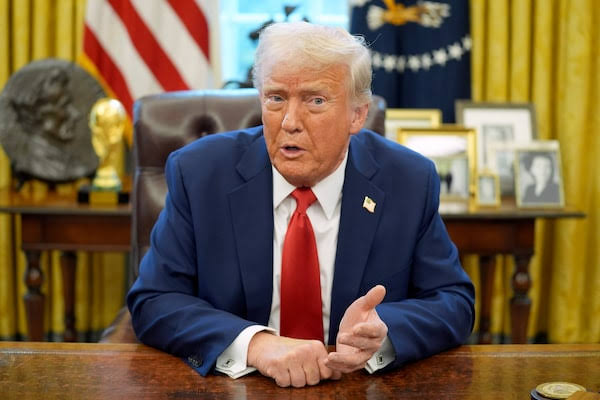
US President Donald Trump announced a 25 percent tariff on any nation conducting business with Iran, intensifying pressure on Tehran as a rights group reported at least 648 deaths in the ongoing crackdown on nationwide protests.
In a social media post on Monday, Trump stated the tariffs would take effect “immediately” against countries that trade with both the United States and Iran. He did not name specific nations, but Iran’s primary trading partners include China, Turkey, the United Arab Emirates, and Iraq, according to economic data from Trading Economics.
The move comes amid more than two weeks of demonstrations across Iran, initially triggered by sharp price increases and the collapse of the rial currency. The protests have since grown into one of the most significant challenges to the Islamic Republic’s leadership since the 1979 revolution.
Iran Human Rights (IHR), a Norway-based monitoring group, confirmed 648 deaths during the unrest, including nine minors, and warned the true figure could exceed 6,000 based on some estimates. The organisation also reported around 10,000 arrests. IHR director Mahmood Amiry-Moghaddam urged the international community to protect civilian protesters against mass killings.
Near-total internet blackouts imposed by authorities have made independent verification extremely difficult, the group said.
Trump has repeatedly threatened military intervention if demonstrators are harmed. On Sunday he told reporters the US was “watching very closely” and warned of severe consequences if killings continued.
Israeli Prime Minister Benjamin Netanyahu publicly expressed solidarity with the Iranian people, saying Israel stands with their struggle for “freedom, liberty, and justice.”
Iran’s foreign ministry accused Trump and Netanyahu of inciting violence and attempting to undermine national unity.
On Monday, Iranian authorities organised nationwide pro-government rallies. Supreme Leader Ayatollah Ali Khamenei, 86 and in power since 1989, described the turnout as proof that the protest movement had been defeated and called it a “warning” to the United States.
In Tehran, parliament speaker Mohammad Bagher Ghalibaf told crowds at Enghelab Square that Iran was engaged in a “four-front war”—economic, psychological, military (against the US and Israel), and against “terrorists” (a reference to protesters). He vowed the military would deliver an “unforgettable lesson” if attacked.
Foreign Minister Abbas Araghchi said Iran was not seeking war but was “fully prepared” for it, while calling for “fair” negotiations. Spokesman Esmaeil Baghaei confirmed a communication channel existed between Araghchi and Trump’s special envoy Steve Witkoff despite the absence of formal diplomatic ties.
Reza Pahlavi, the US-based son of the ousted Shah, told CBS News the government was trying to deceive the world into believing it was open to talks. He described Trump as “a man that means what he says” and said the regime had crossed a clear red line.
The European Union voiced support for the protesters and said it was considering additional sanctions on Iran over the crackdown. The European Parliament banned all Iranian diplomats and representatives from its premises.
French President Emmanuel Macron condemned “state violence that indiscriminately targets Iranian women and men who courageously demand respect for their rights.”
Russia criticised what it called attempts by “foreign powers” to interfere in Iran’s internal affairs, according to state media.